
THE STRAY DOG STOOD OVER THE MISSING LITTLE BOY ALL NIGHT AND NO ONE KNEW WHY
The town of Blackwater Bend sat low against the Louisiana marsh, where the roads sweated in summer and the evening air carried the smell of wet reeds, diesel, and river mud. Houses stood on pilings where they could, and the older ones sagged close to the ground as if they had given up arguing with the weather years ago. At the end of Rookery Lane, beside a drainage canal choked with cattails, there was a narrow shotgun house with green paint lifting off in curls.
That was where six-year-old Ansel Pike lived with his mother, Corinne, and his grandfather, LeRoy.
The house had two front steps that always tilted a little under a person’s weight, a screened porch patched with mismatched wire, and wind chimes made from old spoons that clicked softly when there was no breeze at all. Corinne worked double shifts at St. Brigid Parish Care Center, mostly nights, changing sheets and lifting patients and swallowing her own tiredness before she reached the front door. LeRoy had once run shrimp lines and skiffs in the backwater channels, but a bad hip and a bitter heart had pinned him to a kitchen chair for long stretches of the day.
Ansel moved through that small house like a bright thing no one could quite catch.
He had a round face browned by the sun, a stubborn cowlick that stood up no matter how hard Corinne wet it, and a habit of tucking treasures in his pockets until every pair of shorts he owned clicked or rattled when he walked. Bottle caps. Flat stones. Rusted screws. A white feather. Once, half a toy soldier with no legs. He talked to things under his breath as if they needed encouragement.
The thing broken in the house was not money, though they never had enough of it. It was not only LeRoy’s hip or the roof stain over the hallway. It was the empty shape where Ansel’s father used to be before he drifted out west with promises that became shorter and then stopped. No calls for months. No child support unless the state found him. Corinne had learned to keep moving so she would not think about all the ways somebody could leave.
LeRoy filled silence with hard opinions.
“Boy needs rules,” he would say from the kitchen table.
“He has rules,” Corinne would answer, tying her shoes for another shift.
“He needs a man.”
“He needs supper and sleep.”
“He needs to stop bringing junk inside.”
At that, Ansel would press his pocket with one small hand, as if protecting a whole kingdom.
What nobody admitted was that the child had begun wandering farther than he should. Not running away exactly. Just following sounds. A frog’s croak beyond the ditch. The splash of a turtle. The whine of a distant train. He wanted to see where things came from. He wanted to know what was on the other side of every stand of brush, every leaning fence, every patch of water reflecting sky.
Corinne tried to watch him. She truly did. But sleep debt sat on her shoulders like another body. Some mornings she came home after twelve hours on her feet and found him already dressed, already asking questions before she had even taken off her shoes.
“Can I see the canal?”
“Not alone.”
“Can I stand by it?”
“No.”
“Can I look from the porch?”
“Yes, from the porch.”
He would accept the porch with a solemn nod, then inch down the steps later, then to the gate, then to the edge of whatever rule had just been spoken.
The dog had been around for weeks before anyone paid attention.
He was a rangy hound mix with a rib-thin body, sandy fur muddied dark along the legs, one torn ear, and yellow-brown eyes that seemed older than the road. He moved between lots like a shadow with a limp. People on Rookery Lane called him all kinds of things depending on their mood and whether their garbage had been tipped over.
“Filthy stray.”
“Marsh mutt.”
“Trash dog.”
Mrs. Duvall from across the lane threw water at him when he nosed near her azaleas. Mr. Hebert at the bait shack kicked gravel in his direction. The dog never barked back. He only flinched and retreated, then returned later to the edge of sight like hunger itself.
Ansel noticed him immediately.
“He’s watching,” he whispered one afternoon from behind the porch screen.
Corinne, exhausted and sorting scrubs for the wash, did not look up. “Don’t feed him.”
“Why?”
“Because then he’ll stay.”
Ansel considered this. “Maybe he wants to stay.”
LeRoy snorted from the kitchen. “Then he can stay somewhere else.”
But the child kept peering through the patched screen. The dog never came onto the porch. He stood by the ditch under the hackberry tree, head low, alert and still. When Ansel lifted a hand, the dog’s torn ear twitched.
The first time Ansel snuck out a biscuit, LeRoy saw the crumbs on the porch boards and banged the screen door so hard it rattled in its frame.
“You feeding that thing?”
Ansel froze.
“That dog’s got mange or worms or both. He’ll bite you soon as look at you.”
“He didn’t bite.”
“He ain’t yours.”
Ansel looked down at the half biscuit in his hand. “I didn’t say he was.”
That answer somehow made LeRoy angrier. “No more. You hear me?”
Ansel nodded, but his eyes went to the yard. The dog had vanished.
By late August the air had turned heavy enough to feel chewed before breathing it. Thunderheads built over the marsh every afternoon. The forecast on Corinne’s cracked phone warned of flash flooding after days of rain. Ditches brimmed. Water climbed over roots. Mosquitoes rose in whining clouds at dusk.
On the Friday night it happened, Corinne was called in unexpectedly because another aide’s child had a fever. LeRoy complained, then agreed to watch Ansel.
“He’ll be in bed by eight,” Corinne said, pulling on her scrub jacket at the door.
LeRoy grunted.
Corinne crouched in front of her son and smoothed his cowlick with her palm. “No porch after dark. No yard. Stay inside for Pawpaw.”
Ansel held up a flat blue marble he had found behind the tool shed that morning. “Can I keep this by my bed?”
“Yes. But no pockets in your pajamas tonight.”
He smiled. “Okay.”
She kissed his forehead and left before she could think too long about the storm clouds swelling beyond the canal.
Rain started just after nine, hard and sudden. LeRoy later said he had dozed in his chair only for a minute, maybe two. The television was muttering low. The storm slapped branches against the roof. When he woke, the house felt wrong.
Too quiet.
He looked toward the hallway.
“Boy?”
No answer.
He checked the bathroom, then the bedroom where the small blanket lay twisted and empty. The blue marble sat on the pillow like an eye.
LeRoy’s chest went cold.
The front screen door was not latched.
By the time Corinne answered her phone at the care center, LeRoy’s voice had lost all of its hardness.
“He’s gone.”
She did not remember driving home, only the blur of headlights in rain and the taste of metal in her mouth. Neighbors were already outside under umbrellas and ponchos, flashlights cutting white lines through the downpour. Somebody had called the sheriff’s office. Somebody else said the canal was high. Someone shouted that children drown quietly.
Corinne ran barefoot into the yard before anyone could stop her.
“Ansel!”
Rain soaked her scrubs to her skin. Water rushed through the ditch and over the lane in thin, shining sheets. The marsh beyond the last houses had become one dark breathing thing.
“Ansel!”
LeRoy limped after her, white-faced and useless with panic.
Deputies arrived with high-beam trucks and search lights. A volunteer fire crew came with ropes. Mrs. Duvall stood under her porch roof with a hand over her mouth. Men spread out along the canal bank. They called the boy’s name into reeds, into water, into blackness.
No answer came back.
Then someone pointed toward the marsh edge beyond the drainage culvert.
“There,” a deputy said. “That dog again.”
At first all Corinne could see was a shape in the rain.
Then lightning flashed far off, and for one silver second she saw a thin dog standing rigid on a raised patch of mud in the cattails, facing everyone, not moving, as if he had been waiting there all along.
Disclaimer: Mention of any brand or trademark is for identification only and does not imply partnership or endorsement
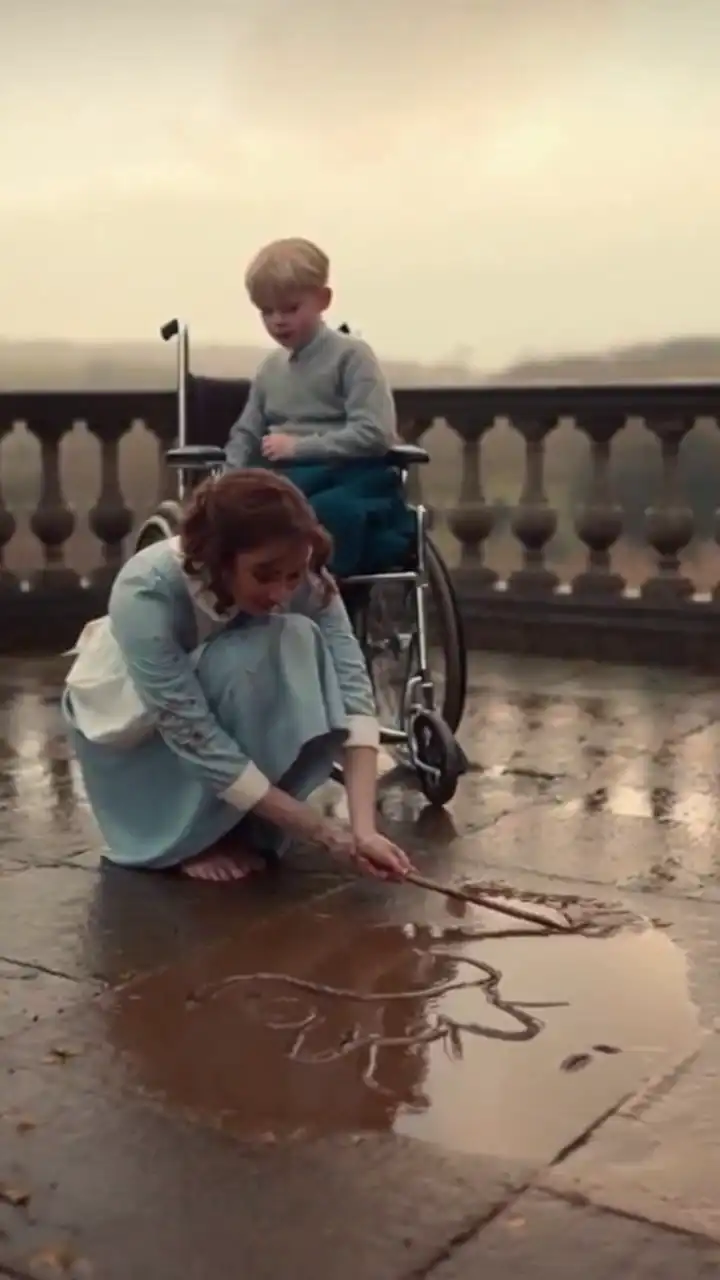
WHEN THE BILLIONAIRE’S SON DRAGGED HIS USELESS LEGS INTO THE MUD FOR THE FIRST TIME, HIS FATHER’S GIRLFRIEND SCREAMED FOR THE NANNY TO STOP

WHEN THE RICHEST MAN ON THE HILL HIRED THE WRONG NANNY, HIS SILENT SON CRAWLED ACROSS THE FLOOR FOR HER
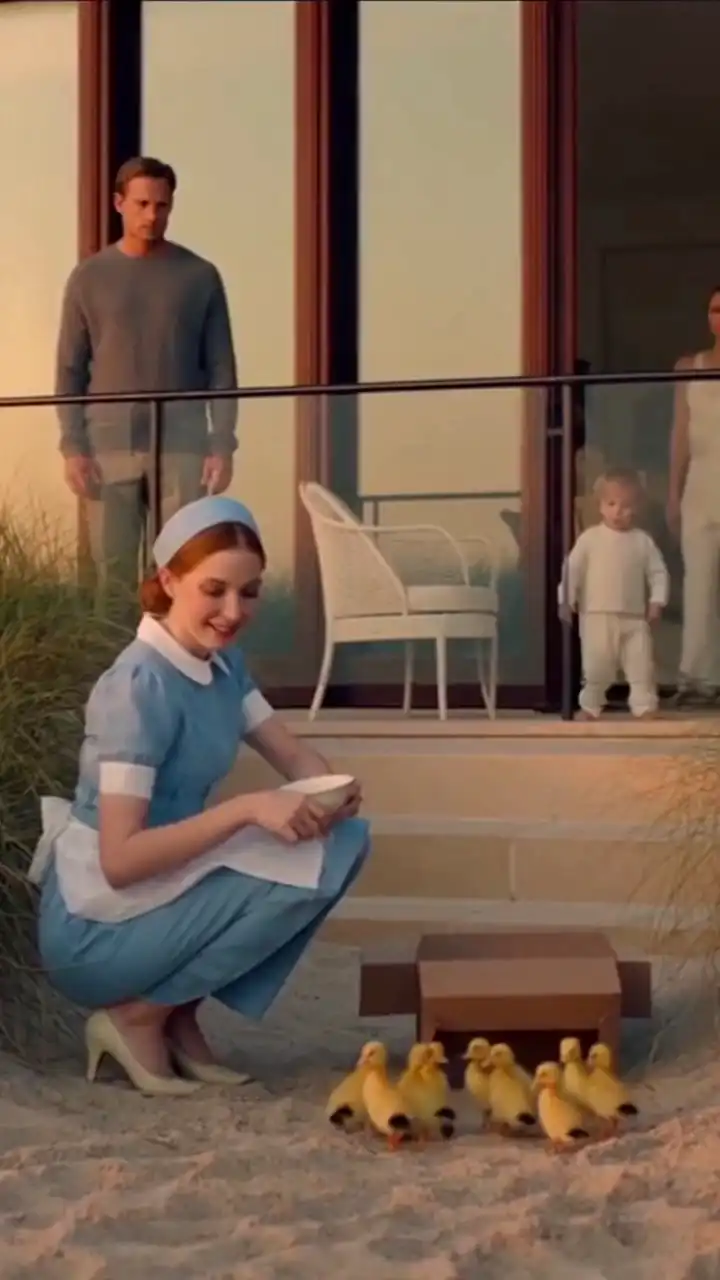
THE NANNY WHO BROUGHT DUCKS TO THE OCEAN HOUSE AND MADE A CHILD WALK TOWARD LIFE