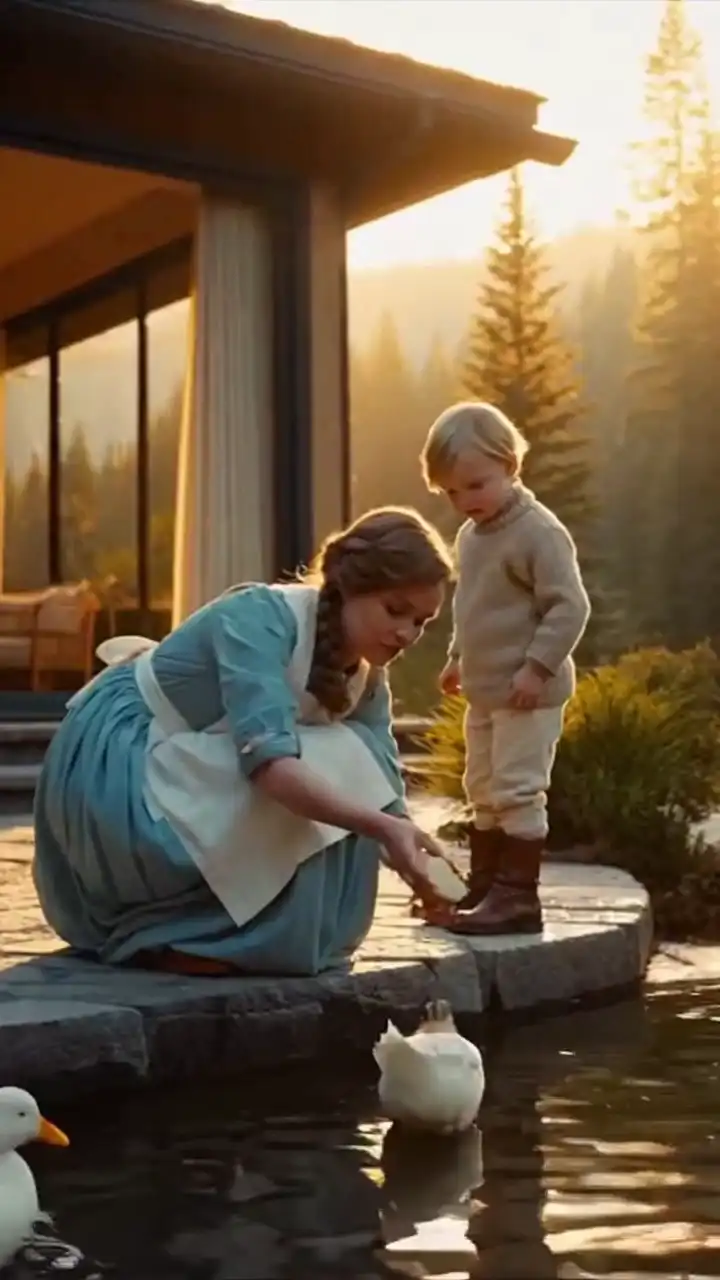
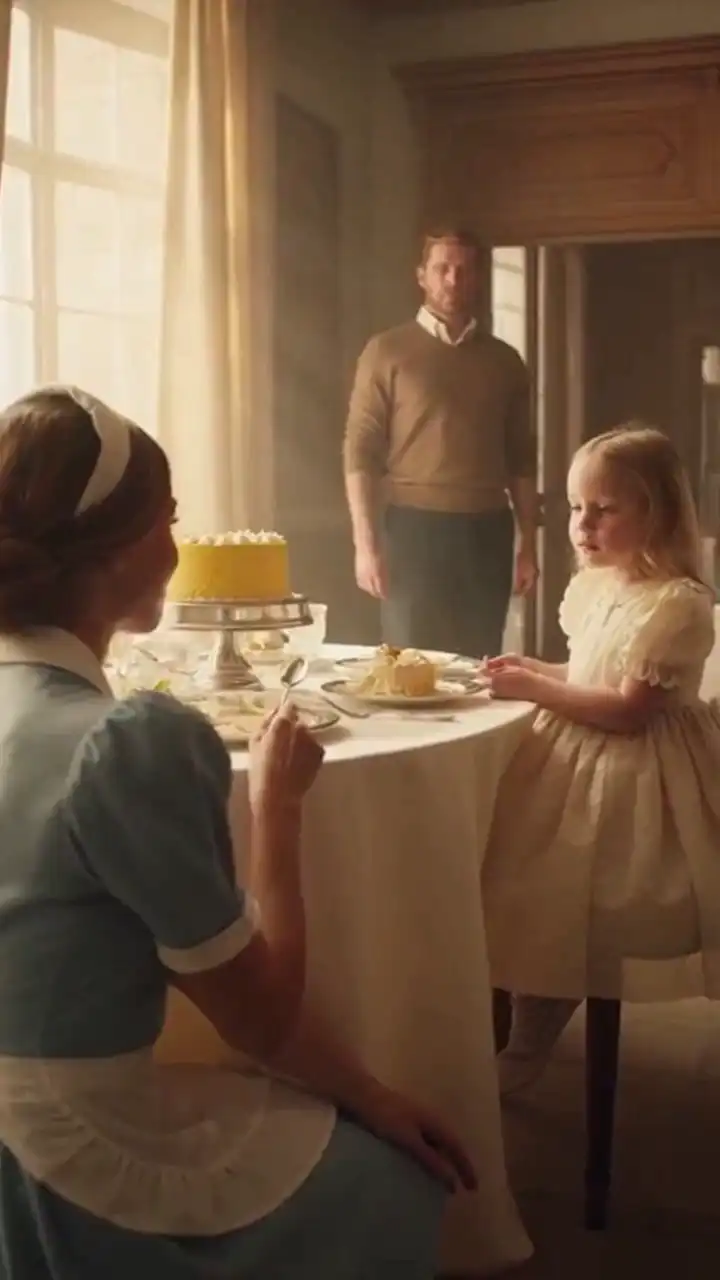
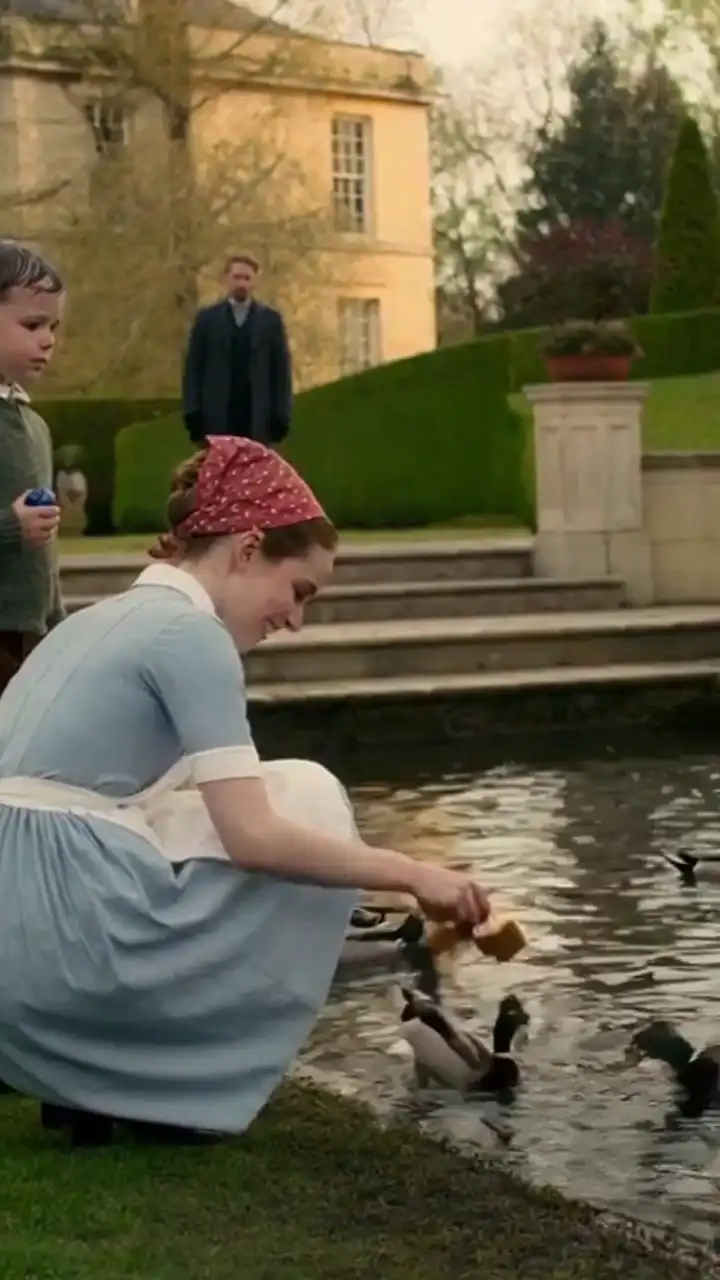

WHEN THE BILLIONAIRE’S SON DRAGGED HIS USELESS LEGS INTO THE MUD FOR THE FIRST TIME, HIS FATHER’S GIRLFRIEND SCREAMED FOR THE NANNY TO STOP
The security guard never made it outside.
Ethan lifted one hand, and the man stopped at the terrace door.
For a second, nobody moved except Noah.
It wasn’t a clean, graceful movement. It was messy, desperate, almost wild. His body tipped forward, arms shaking, one foot dragging badly against the chair support. He looked like he might collapse.
Vanessa rushed toward him. “Ethan, do something!”
But Lily moved slower than everyone else.
That was what made Ethan stop.
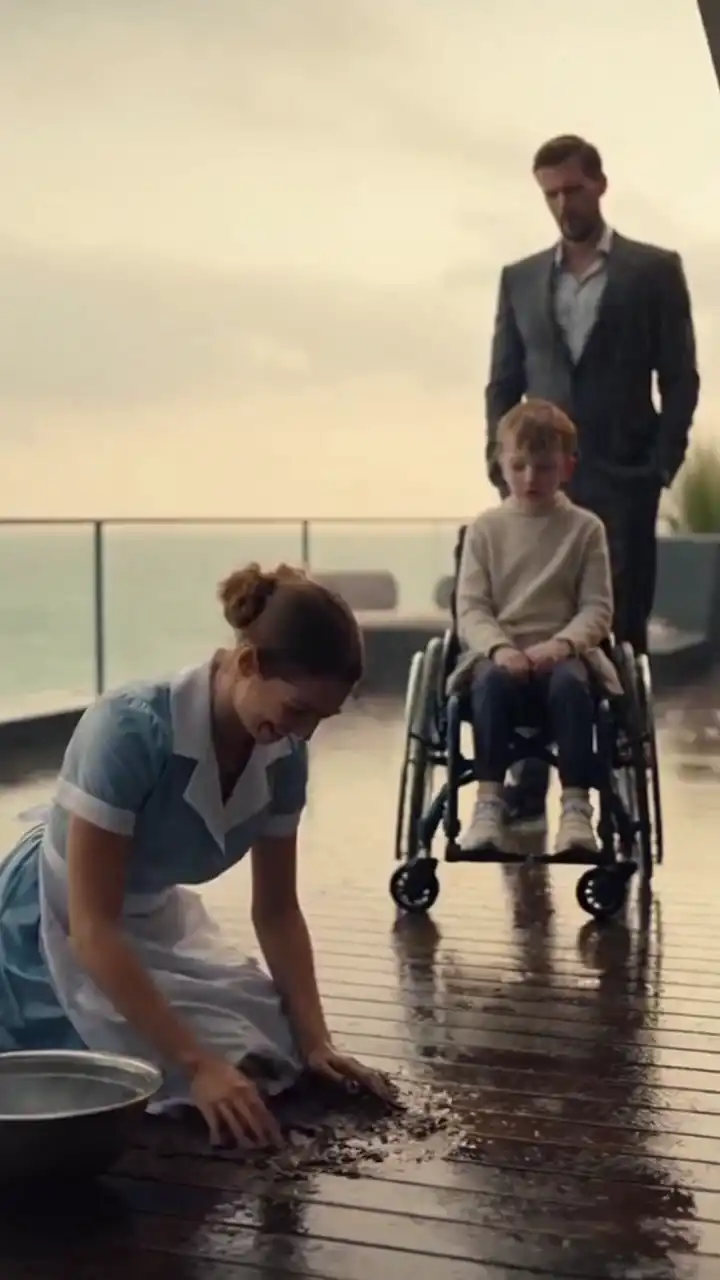
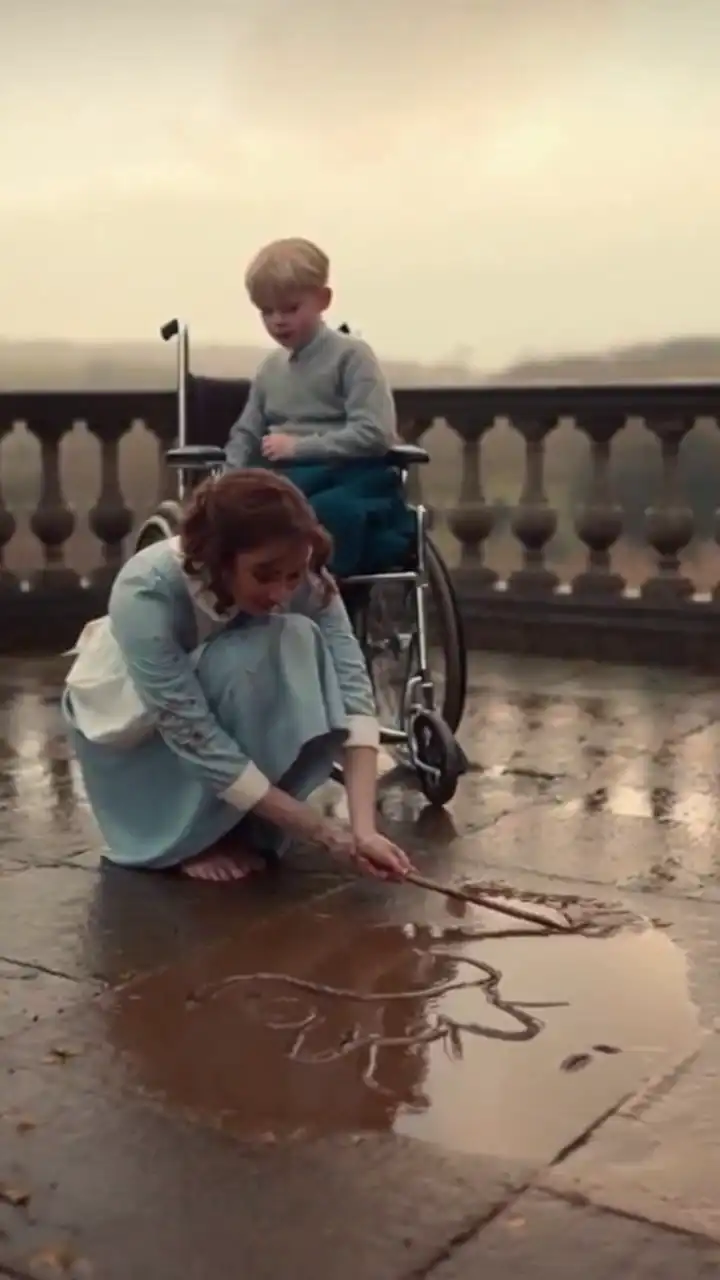
She didn’t lunge for Noah like he was falling glass. She crouched in the mud a few feet away and lowered herself until she was small, quiet, and easy to reach.
“No rush,” she said softly. “The ugly dog is still getting away.”
Noah’s eyes locked on her.
Not past her. On her.
Ethan felt something crack open in his chest at the sight. Every specialist had told him to encourage, reinforce, support, direct. Every room in the house had become a place where adults watched Noah and waited for him to fail or succeed.
This girl in the mud wasn’t waiting for a performance.
She was inviting him into a game.
Noah made a rough sound in his throat and pushed again. One knee buckled. His expensive pants hit the wet stone first. Then his hands. Then, with a grunt so fierce it startled everyone, he dragged himself over the terrace edge and into the mud.
Vanessa actually screamed.
The housekeeper looked ready to faint.
Ethan took one step forward, then stopped again.
Noah was filthy in seconds. Rain dotted his hair. Mud streaked his sleeves. One of his braces twisted crooked. But he was moving. Not because someone positioned him. Not because a therapist counted reps.
Because he wanted the stupid mud dog.
Lily backed up through the puddle, laughing with him, not at him. “He’s fast. This might be the end for us.”
Noah made that sound again. Half-laugh, half-gasp.
Then he dragged himself another foot.
And another.
The laugh came easier the next time. Loud enough to echo under the stone arch over the terrace.
Ethan had not heard that sound since Claire was alive.
He put a hand over his mouth and looked away too late.
Vanessa saw.
She turned from Noah to Lily with naked disgust. “This is insane. He could be hurt.”
Lily finally looked at her. Her voice stayed calm. “He’s already hurt.”
That landed harder than shouting would have.
Vanessa folded her arms. “He needs standards. Safety. Professional care.”
“No,” Lily said. “He needs a reason.”
Ethan should have stepped in then. It was his house, his son, his staff, his life. Instead he stood there in a dress shirt and thousand-dollar shoes, watching his child claw through a puddle toward a girl who had known him less than seventy-two hours.
Noah reached Lily’s boot.
He grabbed it with both hands like a trophy.
Then he laughed again, head tipped back into the rain.
Lily didn’t hug him at once. She didn’t smother the moment. She just put her muddy hand under his elbow and asked, “Want to catch him again?”
Noah slapped the puddle.
It was clumsy, but clear.
Yes.
That night the household doctor came, checked Noah’s legs, and confirmed there was no injury. He was exhausted, chilled, and oddly bright-eyed. He even resisted being taken upstairs, craning his neck toward the back lawn until Lily promised the ugly dog would still be there tomorrow.
Vanessa waited until Noah was asleep to start.
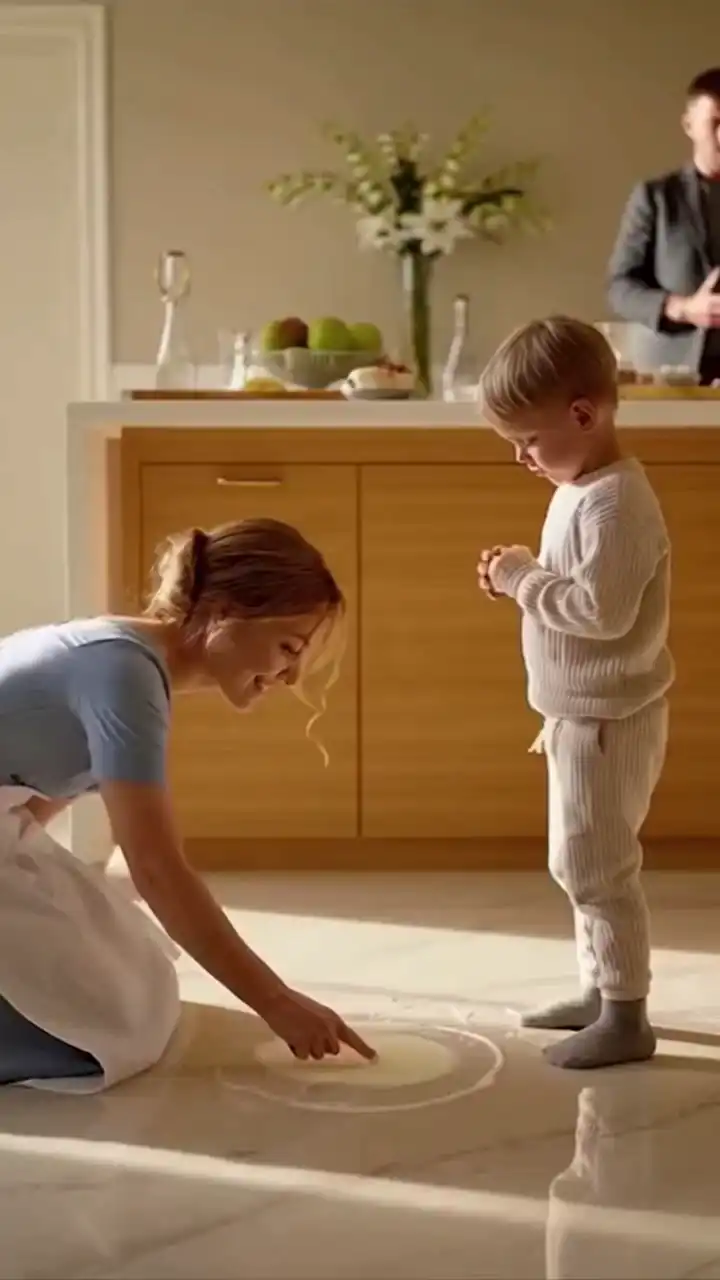
She found Ethan in the kitchen, still in his work clothes, staring at a pair of small muddy fingerprints on the marble island. A maid had tried to wipe them off. He had told her not to.
“This cannot continue,” Vanessa said.
Ethan didn’t answer right away.
She took that as permission. “You’re grieving, and you’re projecting something onto that girl because she got one reaction out of him.”
“One reaction?” he said quietly.
“She broke every rule.”
He looked up. “And my rules did what?”
Vanessa’s face tightened. “That’s unfair.”
“No,” Ethan said. “What’s unfair is that my son has been trapped in this house like a museum piece, and today he moved because someone stopped treating him like an emergency.”
Vanessa stepped closer. “She embarrassed you. In front of staff. She made your son crawl in dirt like—”
“Like a child?” Ethan cut in.
The kitchen went still.
Vanessa had always fit neatly into his life. She knew which forks to use at donor dinners, how to greet investors, how to host without asking questions. After Claire died, her polished calm had felt useful. Respectable. Quiet.
Now Ethan saw what that quiet had cost.
The next morning Vanessa ordered the gardeners to rope off the wet lawn.
Lily found the yellow barriers and laughed under her breath.
Noah was in his chair on the terrace, staring at the blocked patch of earth like someone had boarded up his only door.
Lily wheeled him to the side path instead.
The estate had an old service garden behind the garages, half ignored by the main household. The ground there was uneven. The tools were cheap. Herbs grew wild in cracked beds. It smelled like soil and tomatoes instead of floral arrangements.
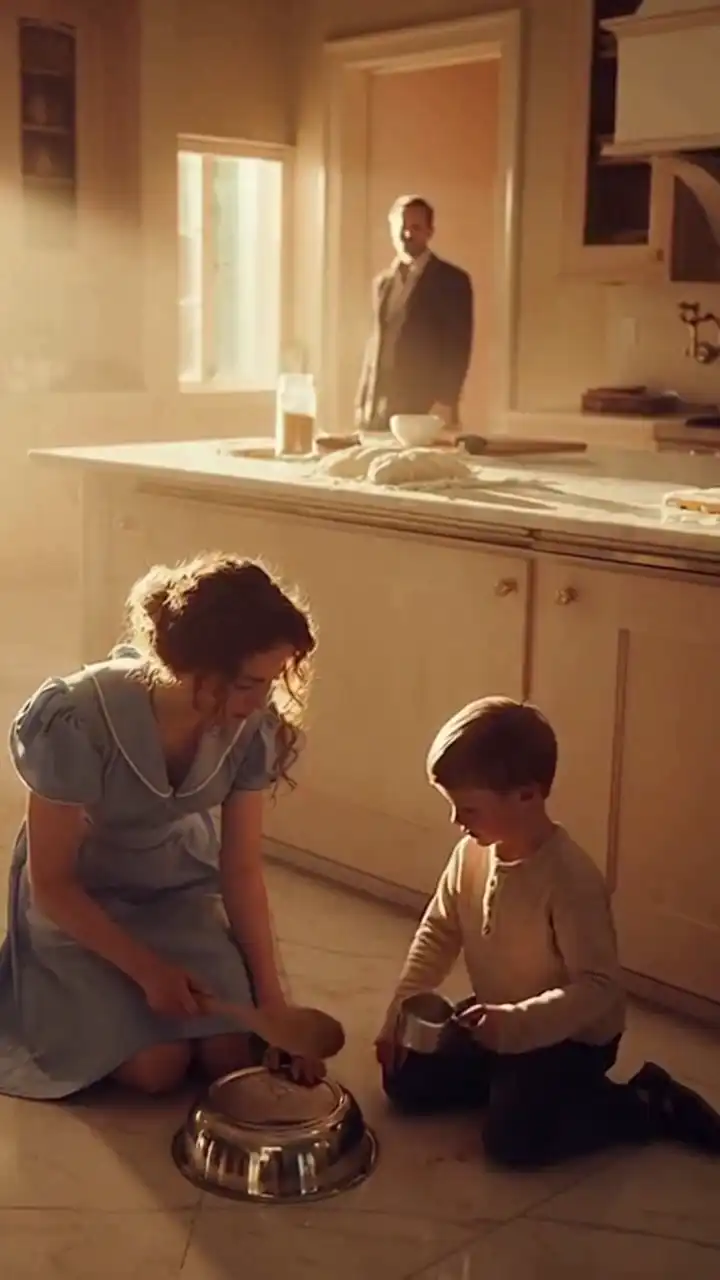
Lily sat Noah on an old quilt and put metal bowls, spoons, dirt, water, and broken terracotta around him like ingredients.
At first he only watched.
Then she started making “soup” with mud and rosemary, narrating it in a grave chef voice so ridiculous that even one of the gardeners snorted.
Noah’s fingers opened.
He leaned.
He dipped his whole hand into the bowl.
When the cold mud hit his skin, he jerked, then looked at Lily.
She copied his expression exactly: shock, suspicion, then a grin.
Noah pushed his hand in deeper.
The sessions changed after that.
They weren’t called sessions by Lily, which annoyed everyone but Ethan. She called them “missions,” “jobs,” “bad restaurant days,” “dog rescue weather,” anything except therapy.
But there was a pattern to them, though Ethan only understood it slowly.
Lily never demanded movement first.
She built rhythm.
She tapped spoons on bowls until Noah tapped back. She poured water from cup to cup until his eyes tracked the stream. She dragged her hand through dirt in little roads and waited until his fingers followed. She matched his breathing when he froze. She went quiet when he shut down. She made the world interesting enough that reaching for it felt safer than staying still.
The physical therapist Ethan trusted most came one afternoon expecting disaster and found Noah on a tarp in the service garden, knees dirty, using both hands to push a floating leaf down a gutter of rainwater Lily had made with bricks.
“This is not standard,” the therapist said.
“No,” Ethan answered. “It’s not.”
But the therapist watched Noah pivot his torso to reach again, brace one arm, shift weight, and initiate movement without being prompted.
Then the therapist crouched beside Ethan and said, very carefully, “Whatever she’s doing, she’s reducing his defensive freeze.”
Ethan glanced at Lily, who was currently arguing with Noah about whether leaves could be employees.
That night he asked her to explain.
She was washing mud out of a stack of plastic bowls in the back sink because the formal kitchen staff still hated having “garden mess” near the main prep area.
Lily shrugged. “He lost his mom, and after that every adult around him got tense whenever he moved.”
Ethan leaned against the counter. “Because he’d fall.”
“Exactly. So movement started meaning fear. Everyone’s face changed when he tried. Everyone’s hands came in too fast. Everyone wanted progress so badly that moving became pressure.”
She rinsed a bowl. “He doesn’t trust his body. He doesn’t trust the room either. So he shuts down before he can fail.”
“And mud fixes that?”
A small smile touched her mouth. “Not mud. Play. Mess. Choice. Something bigger than the watching. Mud just doesn’t care if he does it wrong.”
Ethan stood very still after that.
Because she was right, and because he hated how right she was.
Claire had been the parent who got on the floor, who let paint drip, who baked lopsided cupcakes and let Noah crack eggs with both fists. Ethan had loved them both fiercely, but from the edge of things. From meetings, calls, gifts, plans, solutions.
After Claire got sick, he had turned the whole world into a system to survive her dying. Then he had kept the system after she was gone.
It had nearly buried their son.
Vanessa’s resistance got sharper once it became obvious Lily wasn’t a brief phase.
She started with little things.
Correcting Lily in front of staff. Complaining about her clothes. Calling her “the girl” instead of using her name. Suggesting Noah looked overstimulated whenever he smiled too hard or came in dirty.
Then she escalated.
One afternoon Ethan came home early and heard raised voices in the conservatory.
Vanessa stood near Noah’s chair holding a brochure from a private pediatric residential program in Connecticut.
“The specialists there are world-class,” she said. “Twenty-four-hour supervised care. You can’t build your life around backyard games.”
Noah’s whole body had gone stiff.
He wasn’t crying. That was the terrifying part. He was doing the old thing again—breath shallow, hands locking, eyes fixed.
Lily was kneeling in front of him. “Noah. Look at the spoon.”
She had one in her hand, tapping lightly against a ceramic pot. A small sound. A familiar rhythm.
Vanessa snapped, “Stop undermining me.”
Ethan walked in then. “What is this?”
Vanessa turned, relieved for half a second. “Good. Tell her this has gone too far.”
Ethan took the brochure from her hand, looked at it once, and set it on the table.
“Noah is not being shipped away.”
Vanessa stared. “You cannot be serious.”
He looked at his son first. “He can hear every word.”
Noah’s fingers had started twitching toward the spoon. Lily kept the rhythm steady, not looking up.
Vanessa’s voice thinned. “So that’s it? The nanny wins?”
The words hung ugly in the glass room.
Lily finally looked up, confused and tired. “This isn’t a game.”
But for Vanessa, it was exactly that.
She had imagined herself becoming the stable woman in Ethan Cole’s household. The tasteful answer to chaos. The one who could restore order after tragedy. Lily’s muddy presence ruined the picture. Worse, Noah wanted her there.
Vanessa laughed once, sharp and joyless. “Of course it isn’t. She gets to play savior, and you get to feel forgiven.”
Ethan went cold. “Enough.”
Vanessa looked from him to Lily, then to Noah.
At the exact wrong moment, she said, “This child is attached because she indulges him. That isn’t healing.”
Noah made a small broken sound.
Lily went still.
Ethan had heard enough adults discuss Noah over his head. He had done it himself. He would never forget the way his son looked in that second—present, listening, trapped.
“Leave,” Ethan said.
Vanessa blinked. “Excuse me?”
“Leave the room.”
She searched his face for softness and didn’t find any.
“I’m trying to help you.”
“No,” he said. “You’re trying to restore a version of this house that makes you comfortable.”
Vanessa’s cheeks flushed. “And what is she restoring?”
Before Ethan could answer, Noah moved.
Not toward Ethan. Toward Lily.
He pushed against the side of the chair, slid badly, and nearly tumbled out in his rush to get to her.
Lily caught him under the arms, and Noah clung to her shirt with a strength that looked almost angry.
The room went silent.
He had never done that with Vanessa. Barely did it with Ethan. Not since Claire died.
Vanessa saw it too. Saw the answer before anyone said a word.
She set her jaw, picked up her bag, and walked out without another sentence.
That should have solved everything.
It didn’t.
Three days later Lily told Ethan she was leaving.
He found her in the service garden packing sketchbooks, spare leggings, and a chipped mug into a canvas tote while Noah sat on the quilt beside her, tense enough to snap.
Ethan’s heart dropped. “Why?”
Lily kept folding. “Because he’s getting attached, and your household still sees me as staff until I do something inconvenient.”
“You are staff,” Ethan said automatically, then hated himself.
Lily gave him a flat look. “Exactly.”
He rubbed his face. “That’s not what I meant.”
“I know,” she said. “But it’s still true.”
She nodded toward the house. “The kitchen complains about me. The house manager asks if I’m crossing boundaries. Your girlfriend—ex-girlfriend, I guess—treated me like I was contaminating the furniture. And every time I help Noah, half this place acts like I’m one muddy day away from being blamed for everything.”
Noah let out a strained little sound.
Lily reached back and touched his knee without looking, grounding him.
Then she said the part Ethan had not let himself think about.
“If I stay, I need to stay in a real way. Not as the disposable girl everyone tolerates while she gets results.”
Ethan looked at Noah.
The boy’s breathing had changed. Fast. Shallow. His hands were clawing at the quilt.
Separation.
That was still the live wire underneath all of it.
Lily must have known it too, because she whispered, “Easy. Nobody’s disappearing this second.”
But Noah had already heard enough.
He looked at the tote bag. Then at Lily. Then at the stone path leading back to the house.
And something in him panicked.
He threw himself forward off the quilt.
Ethan lunged, but Lily stopped him with one hand. “Wait.”
Noah hit the ground hard on his palms, dragged one knee under him, then another. He was breathing in rough bursts, face red with effort, fury, fear.
He started pulling himself after the bag.
“Come on, baby,” Lily whispered, tears suddenly standing in her eyes. “Show him.”
Noah didn’t crawl the way therapists had tried to train. He fought his way across the dirt like he was chasing the one person he could not lose.
Then he grabbed Lily’s tote and would not let go.
When she gently tried to lift it, he made a sound Ethan had not heard since before Claire died.
“No.”
It came out cracked and small and absolutely clear.
Everyone froze.
Noah’s whole body shook. He clung harder to the bag, then to Lily’s leg.
“No,” he said again, louder this time, furious with the word itself until it worked.
Lily dropped to her knees in front of him and cried openly.
Ethan turned away for one second because his own face had broken.
The first full word. Not Mama. Not pain. Not help.
No.
A refusal to be left again.
When Ethan looked back, Noah was still gripping Lily like a lifeline. Mud streaked his shirt. His braces were crooked. His hair stuck to his forehead. He had never looked more alive.
Ethan crouched in front of them both.
“I was wrong,” he said, and this time he was not speaking to an investor, a doctor, or a woman he was trying to keep peace with. “About the house. About him. About you. I kept trying to manage grief like a business problem.”
Lily said nothing.
He deserved that.
So he kept going. “If you stay, it won’t be like this.”
She held Noah against her and waited.
“You won’t answer to a woman worried about marble floors or dinner seating. You won’t be treated like a temporary risk. I want you on Noah’s care team in name, in pay, in authority. If you need training, education, certifications, I’ll fund it. If you need the whole household reorganized, I’ll do it.”
Lily’s eyes narrowed slightly. “Why?”
Ethan looked at his son, who still had one fist twisted in her shirt.
“Because he just told me more clearly than anyone else has in a year.”
The changes after that were not magical. They were real.
Ethan dismissed the house manager who kept undermining Lily. He converted the unused glass potting room into a play studio with washable floors, low shelves, cheap supplies, clay, buckets, music, and space to fail in. He attended Noah’s morning routines himself three times a week, then every day he could. He learned not to rush in every time Noah wobbled. He learned how to get on the ground.
Lily stayed.
Not in the hidden, blurry way staff are expected to stay in wealthy homes, serving without imprint.
She stayed with a contract, a title, respect, and a voice.
Noah changed in inches, then in leaps.
He started initiating movement to follow sound. Then to chase rolling balls. Then to get to the muddy dog drawings Lily made just out of reach. He began tolerating braces longer because they now led somewhere fun. He used spoons as drumsticks, bowls as boats, rain boots as goals. He learned to transfer from chair to floor with help, then with less help. He started sleeping through the night if Lily read nearby and Ethan sat in the doorway instead of hovering over him.
He laughed often now. Demanded things with his eyes. Then with gestures. Then with words that came one at a time, stubborn and precious.
Ethan’s favorite was not “Dad,” though the first time Noah said it, he had to leave the room and compose himself.
It was “Again.”
Because that was the word of a child who believed tomorrow existed.
By spring, Ethan hosted a small charity dinner at the estate for pediatric grief rehabilitation. He hated charity speeches, but this one mattered.
The guests expected polished remarks and tasteful sadness.
Instead, halfway through dessert, Noah insisted on going outside.
Lily looked at the dark clouds rolling in and smiled. “Bad timing.”
Noah grinned back and tapped the window. “Rain.”
He could stand now with support and take assisted steps over short distances. That night he used a small walker on the terrace while donors in formal clothes pretended not to stare.
Then the rain started.
Noah looked at Lily. Lily looked at Ethan.
Months earlier, he would have said no before anyone asked.
Now he took off his suit jacket, loosened his tie, and said, “Get the boots.”
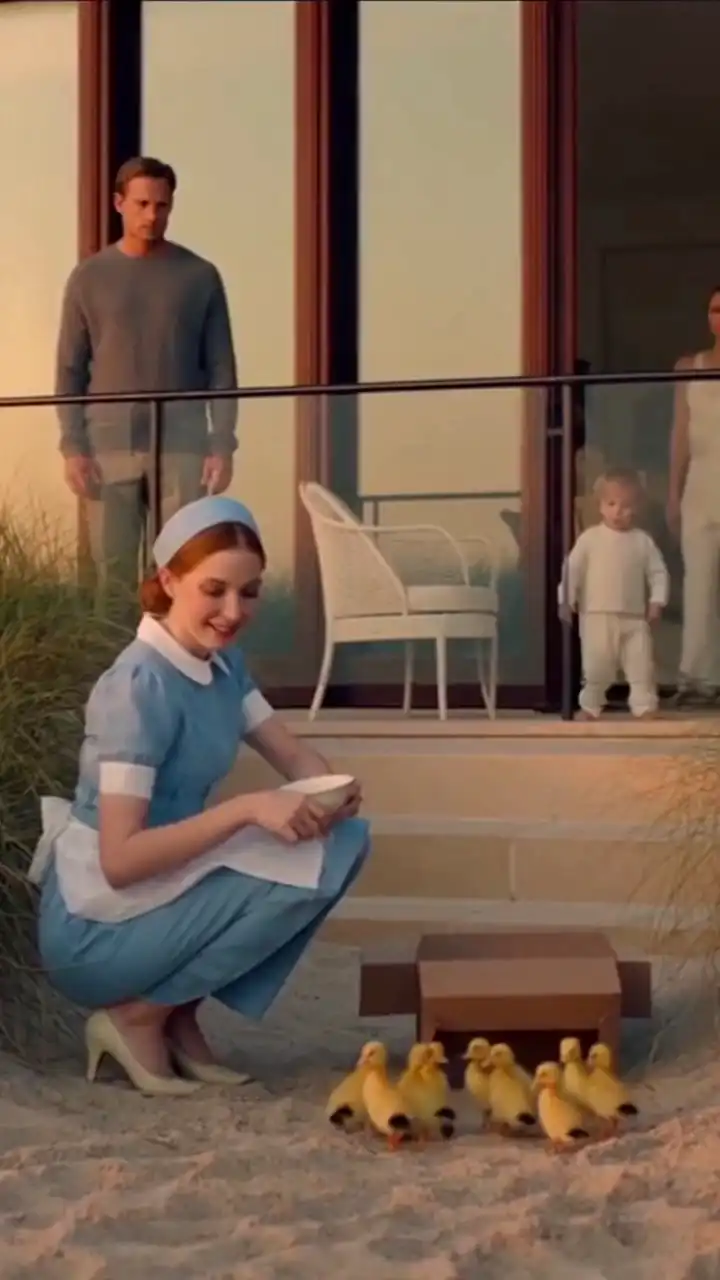
The donors watched the billionaire and his son go onto the terrace with a young woman in rolled-up jeans carrying a bucket and a ridiculous plastic dog.
Noah laughed so hard he nearly folded in half.
And when his walker wheels hit the edge of the puddle, Ethan steadied it, then let his son choose the next move.
Noah stepped.
One shaky foot. Then the other.
Straight into the mud.
The terrace erupted in startled applause from people who finally understood they were not watching a messy embarrassment. They were watching a child return.
Lily stood close, hands ready but not grabbing.
Noah turned his head toward the house, searching.
For his father.
Ethan was already there.
At the end of the night, after the guests left and the staff gave up trying to restore order before morning, the three of them sat wrapped in blankets in the warm potting room, with muddy boots by the door and the plastic dog floating upside down in a bucket.
Noah rested against Lily’s side, one hand clutching Ethan’s sleeve.
The estate was still huge. The future was still complicated. Claire was still gone.
But the boy who had once sat strapped and silent by a window now left muddy tracks through half the house.
And nobody hurried to wipe them away.
Lily stayed on through the summer, then the fall, then the next year. By then no one called her “the girl” anymore. Staff asked her before changing Noah’s routines. Therapists coordinated with her instead of talking over her. Ethan stopped introducing her as help and started introducing her by name, with the kind of respect wealthy people usually save for experts they had to pay twice as much to hear.
In the end, she did remain in the Cole house.
Not because she was convenient. Not because Ethan was lonely. Not because a rich family needed a warm face.
She stayed because Noah reached for life through her first. Because Ethan finally learned that love was not management. Because in one impossible season, a muddy young nanny had broken the rules of a dead house and made it worth living in again.
Disclaimer: Mention of any brand or trademark is for identification only and does not imply partnership or endorsement