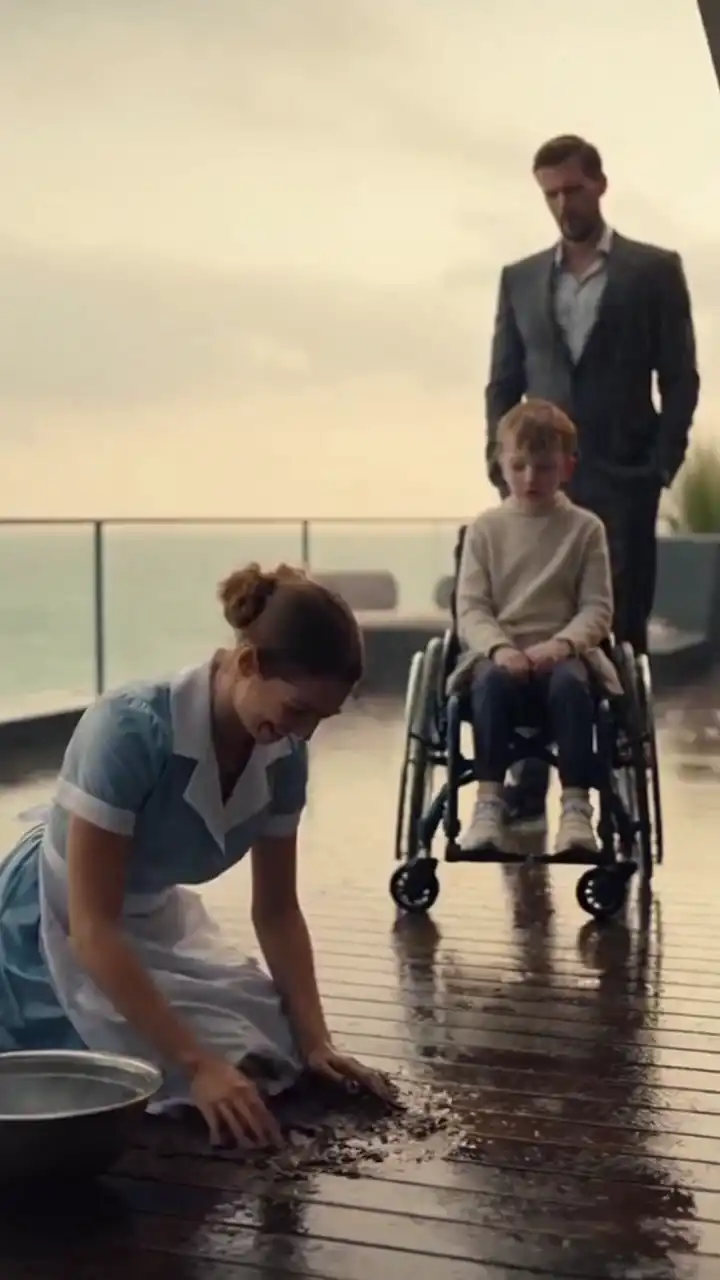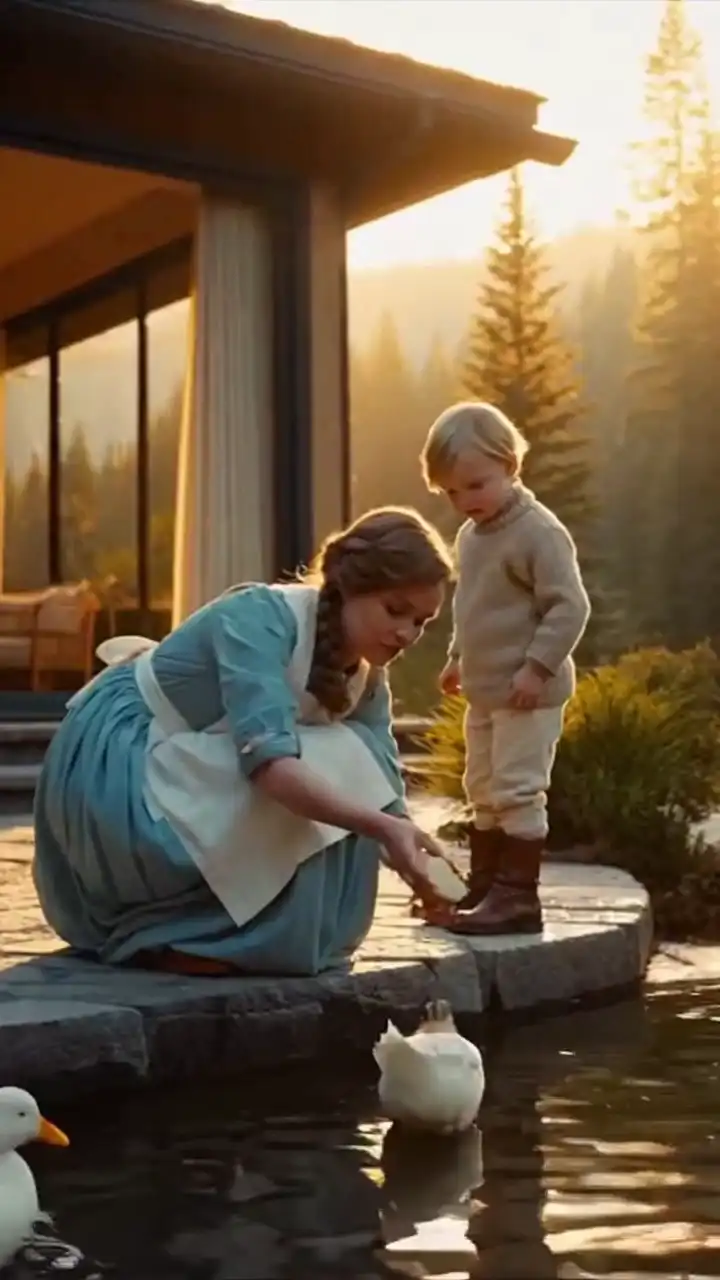
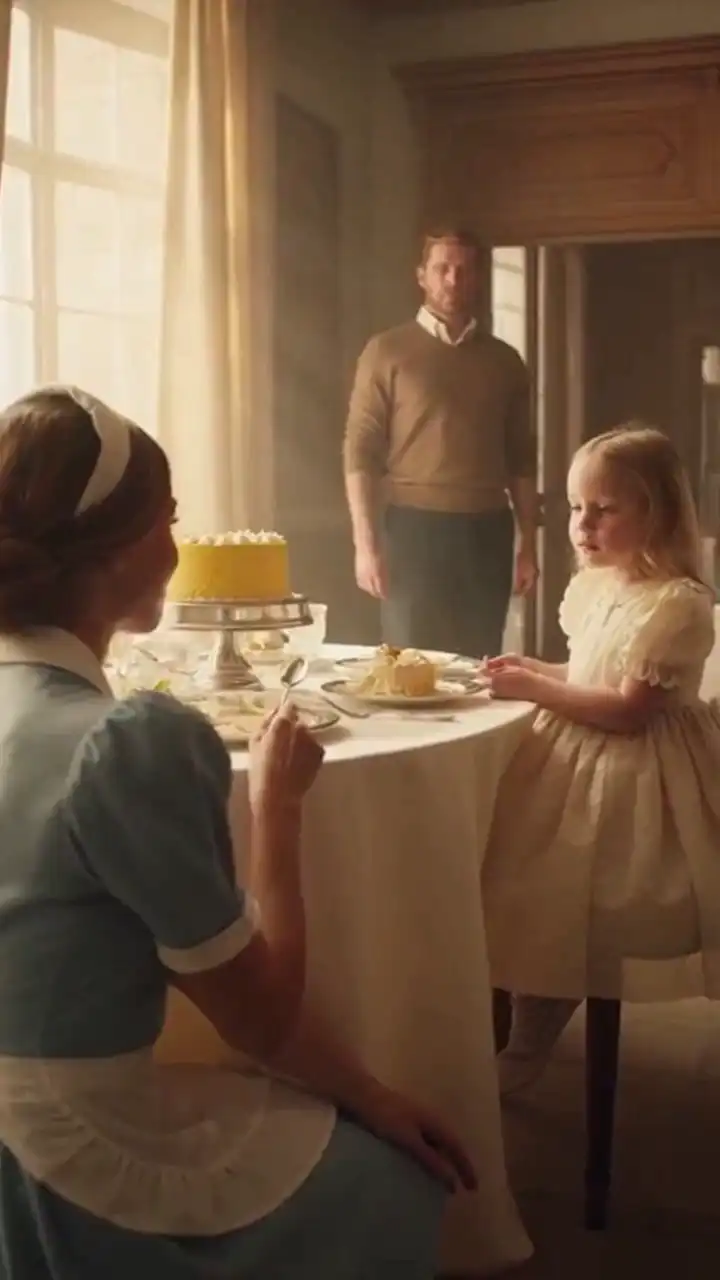
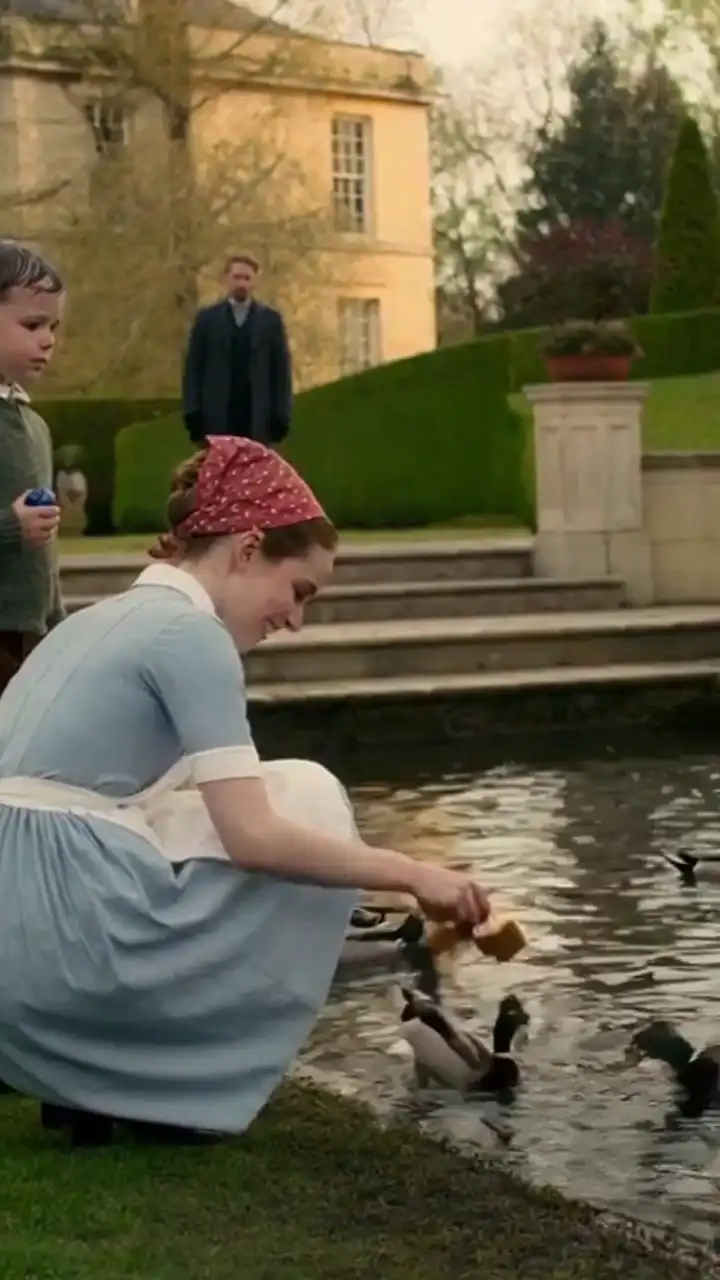

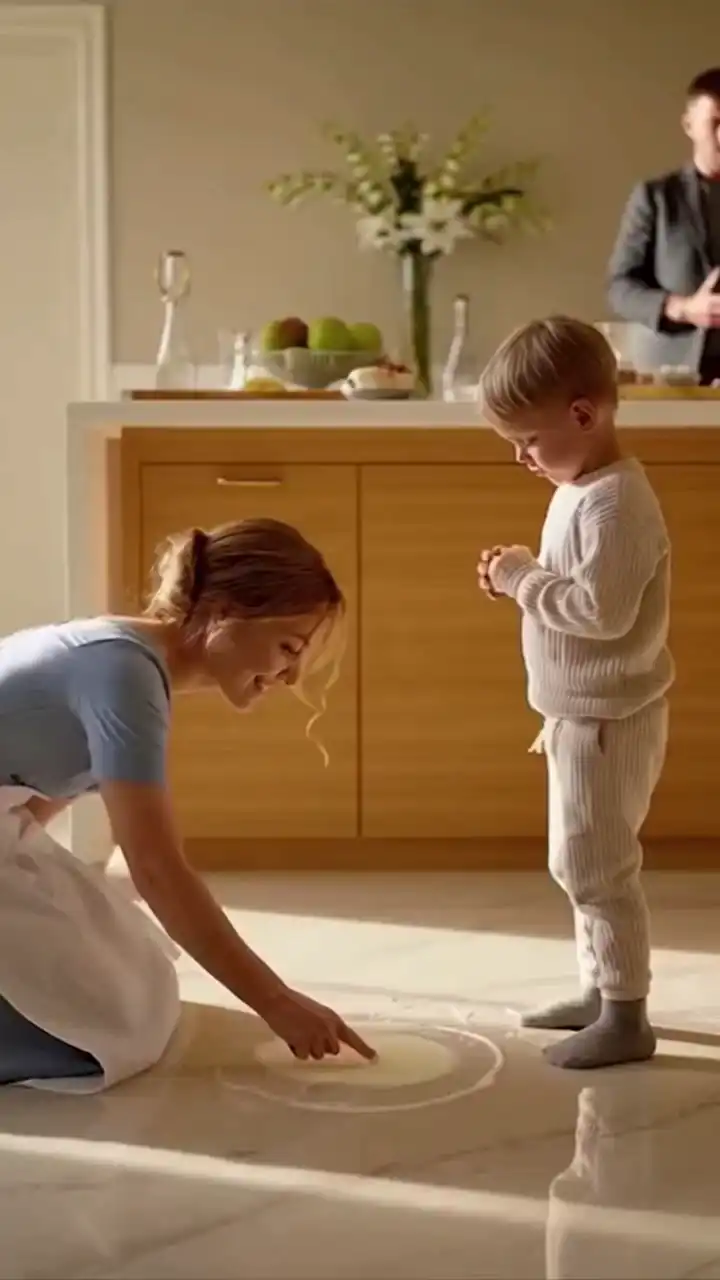
WHEN THE RICHEST MAN ON THE HILL HIRED THE WRONG NANNY, HIS SILENT SON CRAWLED ACROSS THE FLOOR FOR HER
Grant didn’t stop them.
That was the first change.
His whole life ran on intervention. Fix the problem. Replace the person. Escalate the service. Control the variables. That was how he built his company, and after his wife Amelia got sick, that was how he tried to survive his house too.
But in that kitchen, with melted ice cream shining on imported tile and his son clutching the sleeve of a nanny who had broken every instruction he’d given her, Grant did nothing.
Lena looked up at him from the floor.
He expected a speech. An apology. Some argument about instinct.
Instead, she said quietly, “He followed the play, not me. If he feels trapped, he’ll pull back.”
Then she looked at Noah again, not like he was fragile, not like he was a project. Just present. “You can let go when you want.”
Noah did not let go.
That afternoon the staff waited for Grant to fire her.
He didn’t.
He told the housekeeper to leave the kitchen as it was for another ten minutes.
The woman stared at him as if he had spoken another language.
For the first time in months, Noah ate more than four bites of anything. Not at the table. Not properly. He sat on the pantry floor with Lena and licked vanilla from a spoon while she tapped rhythms on upside-down mixing bowls.
He still didn’t speak. He still wouldn’t look at Grant for long. But he stayed in the same room with another human being without folding inward. That counted as a miracle in that house.
The next morning, Grant found Lena in the mudroom with every expensive boundary already under attack.
Noah sat on the bench in rain boots two sizes too big, his body stiff with hesitation. Lena was on the floor in front of him, blowing warm breath onto the glass door and drawing roads in the fog with her finger.
Outside, rain had soaked the lawn into dark, soft ground.
“We’re not going out there,” Grant said at once.
Lena glanced back. “Then he’ll keep watching life through glass.”
Grant hated how fast that landed.
Noah’s whole year had become glass. Windows. Screens. Doorways. Observation without entry. Adults had been praising calm when what they really meant was absence.
Still, Grant said, “He doesn’t like wet clothes.”
“He doesn’t like pressure,” Lena corrected.
There was a difference, and somehow she kept making him hear it.
Noah touched the fog drawing she made. Just one fingertip through the road.
Lena opened the door.
Cold air rolled in. Rain smell. Dirt. Grass.
Noah’s shoulders jumped, and Grant saw the retreat begin — the tiny shutdown he had come to know too well. The fixed stare. The breath held too high. The body preparing to vanish.
Lena didn’t coax.
She sat down right on the threshold, one leg inside, one outside, and rolled a rubber ball into a puddle.
It came back with a stripe of brown water.
She made a face like the ball had become famous.
Noah watched.
She rolled it again. This time it hit mud and stuck.
“Well,” she said lightly, “that’s a problem.”
Noah blinked at the stranded ball.
A small thing. A stupid thing. But it was a problem you could see and solve, not the giant invisible kind adults kept dragging around him.
Lena crawled out, got her hand dirty, and exaggerated her shock. “Now my hand’s ruined forever.”
Noah made a sound.
Not a word. Barely even a laugh. More like a trapped breath that forgot to stay trapped.
Grant gripped the doorframe.
Lena looked at Noah with calm interest, not triumph. “I know. Tragic.”
Noah slid off the bench.
His boots hit the mat. Then the wet stone.
He stood there shaking, rain mist touching his hair.
Grant almost reached for him, almost did what he always did — hurry in, save him from discomfort, put him back inside before the attempt failed.
Then he saw Lena not touching him.
Waiting without demanding.
Noah took one step into the drizzle.
Then another.
He stared at the ball half-buried in mud. Lowered himself awkwardly. Touched it. Pulled his hand back at once as if the cold shocked him awake.
Lena pressed her own muddy palm to her sweatshirt and left a handprint.
Noah stared at the mark.
Slowly, he pressed his muddy fingers to the front of his own sweater.
Grant actually laughed once under his breath, short and startled, because Amelia would have laughed too. She had always said the house was too precious for a child.
That laugh nearly broke him.
Lena heard it. She didn’t turn around. She didn’t make a moment out of it. But something shifted in Grant when he realized the sound had come from him and not from some old recording in his head.
The next days were not a straight line up.
That was the second thing Lena forced him to understand.
Noah would do something impossible one hour and shut down the next. He would follow her around the kitchen while she kneaded bread dough, then spend an afternoon under a console table, knees tucked up, staring at the grain in the wood. He would breathe circles onto windows for her to draw in, then slap his own hand away if she got too close too fast. He once climbed onto a hallway runner and crawled after the vacuum cord she dragged like a snake, only to panic so hard at dinner that he had to hide in the laundry room.
Grant called it regression.
Lena called it surfacing.
“He’s not getting worse,” she told him one night after Noah finally fell asleep curled on a blanket outside her bedroom door in the staff wing. “He’s feeling more, so it looks messier.”
Grant stood in the hall, jacket still on from work, staring at his son asleep on the floor instead of in the themed bedroom that had cost more than Lena made in a year.
“He has a room,” Grant said weakly.
Lena looked tired, but not intimidated. “He knows that. He came here because this door stayed open.”
Grant had no answer for that.
Noah began trailing life instead of hiding from it.
He sat on the kitchen counter while Lena washed berries and let him drop the bruised ones into a bowl with dramatic splashes. He followed her into the laundry room and watched shirts spin behind the round glass door. He lay under the grand piano while she dusted and hummed off-key. He started waiting at the bottom of the back stairs for her in the morning, not touching her, just being there before she appeared.
The specialists tried to reclaim the progress.
One therapist arrived, watched Noah knead pizza dough with both fists while flour covered his black T-shirt, and said, “This is highly unstructured.”
Lena, without looking up, said, “That’s why he’s still in the room.”
Grant should have corrected her tone.
He didn’t.
Instead he asked the therapist, “Has he ever stayed with you this long?”
The woman fell silent.
Grant started canceling appointments.
Not all at once. Just the ones that turned his son into a case file every time he entered the room.
That was when the real conflict arrived.
It didn’t come from staff or therapists or social expectations. It came from Noah himself, because healing was dragging him toward the place he least wanted to go.
His mother.
No one said her name in front of him anymore unless a professional advised it. The photos had mostly been moved from shared rooms because Grant couldn’t survive the sight of them and because every mention seemed to make Noah go blank.
Lena noticed something the others had missed.
Noah never passed the closed morning room at the end of the west hall.
It had once been Amelia’s favorite room — the one with the garden view, the deep couch, the books she read during chemo, the throw blanket that still hung over one arm because Grant had told staff not to touch it and then never entered again.
Whenever a game or task took Noah near that hallway, he turned his whole body away.
One rainy afternoon, after a better week than Grant had dared hope for, the retreat hit hard.
Lena was making grilled cheese in the kitchen. Noah had been standing on a stool beside her, handing over slices of bread, smearing butter with clumsy concentration. Then the smell of tomato soup hit the air.
Everything stopped.
Grant had just walked in from a call when he saw it happen. Noah’s face went empty. His hands flattened against the counter. His breath shortened. Then he slid off the stool and backed away so fast he bumped a drawer handle.
Tomato soup had been Amelia’s food in the final months. Sometimes the only thing she could swallow.
Noah bolted.
Not screaming. Not crying. Worse.
Silent panic.
He ran down the back hall, knocked over a basket of folded linens, and wedged himself into the narrow space between the wall and the table in the closed morning room corridor, arms wrapped around his head.
Grant followed on instinct. “Noah.”
The boy flinched like the name itself hurt.
Grant crouched. “Buddy, come on.”
Nothing.
Lena arrived but stopped several feet away.
Grant looked at her, furious in the old way because fury felt cleaner than helplessness. “Do something.”
“I am,” she said.
“You’re standing there.”
“He already ran. If they chase him now, he learns that fear owns the whole house.”
Grant wanted to shout that this was his house, his son, his grief, his disaster.
Instead he heard the hard truth under her words. Everyone had spent a year helping Noah avoid the wound so completely that the wound had grown roots through the walls.
Lena disappeared for a minute.
Grant thought she had given up.
Then she came back with two mugs, one empty pot, a wooden spoon, and a dish towel tucked over her shoulder like some diner waitress putting on a show.
She sat on the floor where Noah could see her if he looked, but far enough away not to crowd him.
Then she started making invisible soup.
She tapped the empty pot. Stirred loudly. Blew on the mug. Pretended to sip and burned her tongue in exaggerated silence.
Grant stared at her as if she had lost her mind.
Noah did not move.
Lena kept going.
She tore bread into tiny pieces and dropped them into the empty mug one by one. Then she covered the mug with the dish towel and whispered dramatically, “Needs fixing.”
Noah’s shoulders twitched.
Grant saw it. Barely. But it was there.
Lena slid the wooden spoon across the floor. Not at him. Just into the middle space.
Noah looked at it.
He was trapped between terror and curiosity, exactly where trauma lived. Lena was giving him something ordinary enough to cross on.
He didn’t take the spoon.
Lena nodded as if that was fine. She picked up her own invisible mug and walked to the closed door of the morning room.
Grant’s chest tightened at once. “Don’t.”
She looked back at him. “Why not?”
Because Amelia died there in all the ways that mattered. Because his son had watched pieces of her disappear in that room. Because he had locked the door and called it respect when really it was surrender.
Grant couldn’t say any of that.
Lena set the mug down, opened the door, and let the stale quiet out.
Noah made a low, wounded sound.
Grant moved instantly, but Lena lifted one hand without taking her eyes off Noah. Not commanding. Just asking for one more second.
The room beyond was untouched. Gray light. Books. The blanket. The faint smell of old lavender from sachets Amelia once hid in drawers.
Lena stepped inside and sat on the rug just past the doorway.
Then she placed the invisible soup in front of her and waited.
A full minute passed.
Then another.
Grant’s knees hurt from crouching. His throat burned.
Noah looked from the spoon to Lena to the open room.
Slowly, still shaking, he crawled out from behind the table.
Not toward Grant.
Toward the spoon.
He grabbed it. Held it so tight his knuckles whitened. Then, inch by inch, he crossed the hall on his knees.
Grant stopped breathing.
Noah reached the doorway and froze there, body trembling so hard the spoon rattled against the wood floor.
Lena did not tell him he was brave. Did not say Mommy. Did not explain grief.
She simply touched the floor beside the invisible mug.
Noah looked into the room where his mother had slowly vanished from him.
Then he dragged himself across the threshold.
Grant turned away and covered his mouth with his hand.
Inside, Noah crawled to Lena, dropped the spoon in the empty mug, and then did the one thing Grant had dreamed of and dreaded in equal measure.
He climbed into Lena’s lap and buried his face in her shoulder.
A hot, ragged sound tore out of him.
It was not speech.
It was the first real sob.
The whole house had waited for silence to break in some beautiful way. A word. A smile. A perfect turning point.
It broke ugly.
It broke right.
Grant leaned against the wall and cried where his son could not see.
Noah’s backward slide lasted three days after that.
He would only sleep if Lena sat on the floor near his bed. He refused meals unless they came in mugs. He started carrying Amelia’s old dish towel around the house like a flag from another country. He stopped following Grant at all.
Grant took it personally for one terrible evening.
Then he remembered what Lena had said: surfacing looks messier.
So he stayed.
Not efficiently. Not as a provider. As a father.
He sat on the floor outside Noah’s room with a stack of contracts on his lap and never opened them. He let Noah watch him make bad toast. He learned how to wait through silence without filling it. He sat beside Lena during evening wind-down while she and Noah drew faces in steamed bathroom mirrors after baths. Sometimes Noah let Grant add crooked eyebrows to the fog people. Sometimes he wiped them away.
That, too, counted.
The first word came on a night no one expected anything.
A storm had rolled over the estate, cutting power to half the house. Backup systems kept the main lights low, but the west wing stayed dim and unfamiliar. Thunder shook the windows.
Noah hated storms since Amelia’s last hospital drive had happened in heavy rain.
Grant found him crouched under the library table, hands over his ears, breathing in hard little jerks. Lena was already there, not pulling him out, just lying on her stomach on the carpet so her face was level with the opening.
She exhaled slowly onto the polished floor and drew a tiny heart in the fog of her own breath.
Noah stared at it, then at her.
Another thunder crack hit. His body lurched.
Lena whispered, “It’s okay.”
Grant knelt on the other side of the table, feeling useless again.
Noah’s eyes moved between them.
Then the smallest sound came out, scraped raw from a place that had been sealed shut for almost a year.
“Stay.”
Grant closed his eyes.
Lena answered first, gentle and immediate. “Okay.”
Then Grant said it too. “I’m here.”
Noah looked at him for a long second. Not through him. At him.
That night he fell asleep wedged between the table legs on a pile of library cushions because neither adult dared move him too soon. Lena stayed until his breathing deepened. Grant stayed even longer.
In the weeks that followed, the estate changed in ways no redesign consultant could have managed.
There were fingerprints on lower windows from fog drawings. Flour in cracks near the kitchen baseboards. A basket by the back door filled with dirty rubber boots. Mugs in rooms where mugs had never belonged. Staff moved quieter around Noah, but not in that strained museum way anymore. The place had sounds now. Drawers. Water running. Lena humming. Noah’s footsteps, then his quick little floor-crawls when words still felt too far away.
Grant softened in public, which shocked people more than any mess.
He left meetings early. He stopped apologizing for his son’s behavior. He told one specialist, “If your plan needs him to become less alive to count as progress, I’m done paying for it.”
Noah began speaking in fragments. “Cold.” “More.” “No spoon.” “Lena there.”
Grant never corrected the grammar.
Then came the ending no one in the house wanted.
Lena had not lied in her interview. She had only left things out because desperate people sometimes hire what they would never choose if they had options.
She had applied to a pediatric occupational therapy program months earlier, before the Holloway family called. A state university in Oregon. The acceptance letter arrived in a thin envelope she tucked into her bag and tried to ignore.
Grant found out by accident when the letter slipped onto the mudroom bench.
He read only enough to understand.
When he looked up, Lena was standing in the doorway, caught.
“You were going to leave,” he said.
She didn’t pretend otherwise. “That was always the plan.”
The words hit him with a force he hadn’t prepared for. Not because he imagined he owned her loyalty, but because the whole house had started balancing around her without admitting it.
Noah heard voices and appeared in the hall, dish towel in one hand.
He looked from Grant to Lena and instantly sensed danger.
Children like Noah became experts at weather.
Lena crouched to his height. “I have to go to school.”
He went still.
Grant wanted, for one selfish second, to offer anything. More money. Better housing. A private program nearby. A position with benefits and tuition and whatever else would keep her under his roof where his son could find her.
Then he saw how that would repeat the worst part of himself — solving fear by controlling the person who made life possible.
So he asked the only decent question.
“When?”
“Three weeks.”
Noah backed away.
Not dramatic. Not loud. Just that terrible inward folding, the original wound trying to close around him again.
This time Grant moved before Lena did.
But not to stop the feeling. To join him in it.
He sat on the floor in the hallway and put his back against the wall, leaving space beside him.
Noah stood frozen.
Grant said, “He hates when people leave. I do too.”
Lena looked at him sharply. He had never said anything that plain in front of the child.
Grant kept going, voice rough. “But leaving isn’t the same as disappearing.”
Noah’s breathing stuttered.
Grant patted the floor once.
After a long moment, Noah sat. Not touching. Just near.
Lena sat on the other side.
For the next three weeks, they prepared in ways wealth had never taught Grant to value.
They made a countdown chain from cheap construction paper and hung it in the kitchen where formal flower arrangements used to stand. They recorded Lena reading bedtime stories so Noah could hear her voice after she was gone. She left handwritten picture cards in drawers all over the house: boots by the back door, bread by the mixer, stars by the library cushions, steam hearts by the bathroom mirror.
She took Noah to the morning room every day for five minutes, then ten, then twenty, until it no longer belonged only to loss. They read there. Ate toast there. Opened windows. Let the room become a room again.
Grant went with them.
On Lena’s last night, Noah refused his own bed and curled on the rug outside the guest room she used. Grant found them there past midnight: Lena sitting against the doorframe half-asleep, Noah leaning against her shin, both under Amelia’s old blanket.
Grant carried a pillow out and sat across from them in the dim hall.
None of them spoke much.
They didn’t need to.
Morning came clean and cruel.
A car waited by the front steps. One suitcase. One backpack. The staff hovered, suddenly too interested in flowers and doors.
Noah stood in the foyer with both hands wrapped around a travel mug Lena had given him. His face had gone pale in that frightening way Grant knew.
Lena knelt. “You can be mad.”
Noah’s jaw worked.
“You can miss me,” she said. “You can still do things.”
He stared at her, fighting for ground inside himself.
Then, with the effort of someone lifting something enormous, he held out the mug.
“For... road,” he said.
Lena pressed her lips together hard.
She took it with both hands like it was priceless. “Thank you.”
Then Noah did one more impossible thing.
He stepped forward on his own and hugged her first.
Not grabbing in panic. Not clinging to survive.
Choosing.
Grant looked away for exactly one second because the sight was too much.
When Lena stood, Grant walked her to the car.
He handed her an envelope.
She frowned. “I said no bonus.”
“It’s not a bonus.”
Inside was a letter from his foundation’s board and a tuition grant in her name, enough to cover what scholarships did not. Not charity hidden as gratitude. An actual educational endowment for the program she had already earned.
She looked at him, stunned. “You didn’t have to do this.”
“I know.”
He meant more than the money.
He meant the open door. The mess. The waiting. The fact that she had walked into a deadened house and refused to act impressed by it.
Grant’s voice lowered. “You gave my son back his way into the world. The least I can do is stop acting like people like you should have to save families on scraps.”
Lena laughed once through tears. “That sounded almost rebellious.”
“It’s been a strange year.”
She looked toward the front door where Noah stood with his mug and his father just behind him.
“Take him outside when it rains,” she said.
“I will.”
“Let him sit on kitchen floors.”
“I will.”
“Keep the doors open.”
Grant nodded. “I will.”
She got into the car.
Noah did not run after it. That was the miracle.
He cried, yes. Hard enough that his chest shook. Grant crouched beside him on the steps of the grand front entrance while the car rolled down the long drive through wet green fields.
Noah said, broken but clear, “Come back?”
Grant answered honestly. “Maybe to visit.”
That nearly undid the child again.
So Grant added, “But she didn’t vanish.”
He put a hand out, palm up, not forcing.
After a second, Noah placed his smaller hand in it.
Weeks later, on the first real storm of fall, Grant found Noah at the back door in rubber boots, waiting with two mugs and a towel over one shoulder.
Grant smiled despite himself. “Soup?”
Noah nodded.
They sat in the threshold together while rain darkened the lawn.
Grant rolled a ball into the puddles.
Noah watched it stick in the mud, and this time he laughed before the rescue even started.
When they came back inside, dripping and dirty, Grant found a new drawing on the fogged glass by the door: three crooked figures holding hands under rain lines.
One tall. One small. One with wild hair.
Lena was gone.
But the life she brought had stayed.
Disclaimer: Mention of any brand or trademark is for identification only and does not imply partnership or endorsement
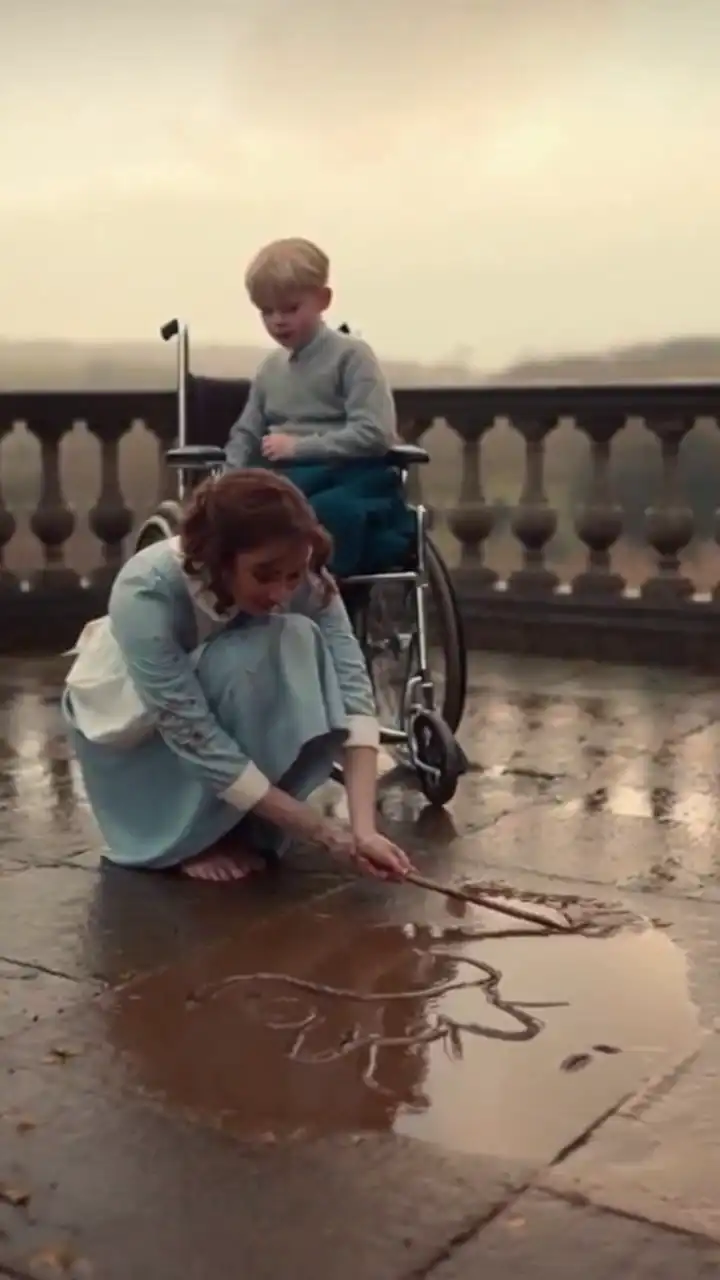
WHEN THE BILLIONAIRE’S SON DRAGGED HIS USELESS LEGS INTO THE MUD FOR THE FIRST TIME, HIS FATHER’S GIRLFRIEND SCREAMED FOR THE NANNY TO STOP
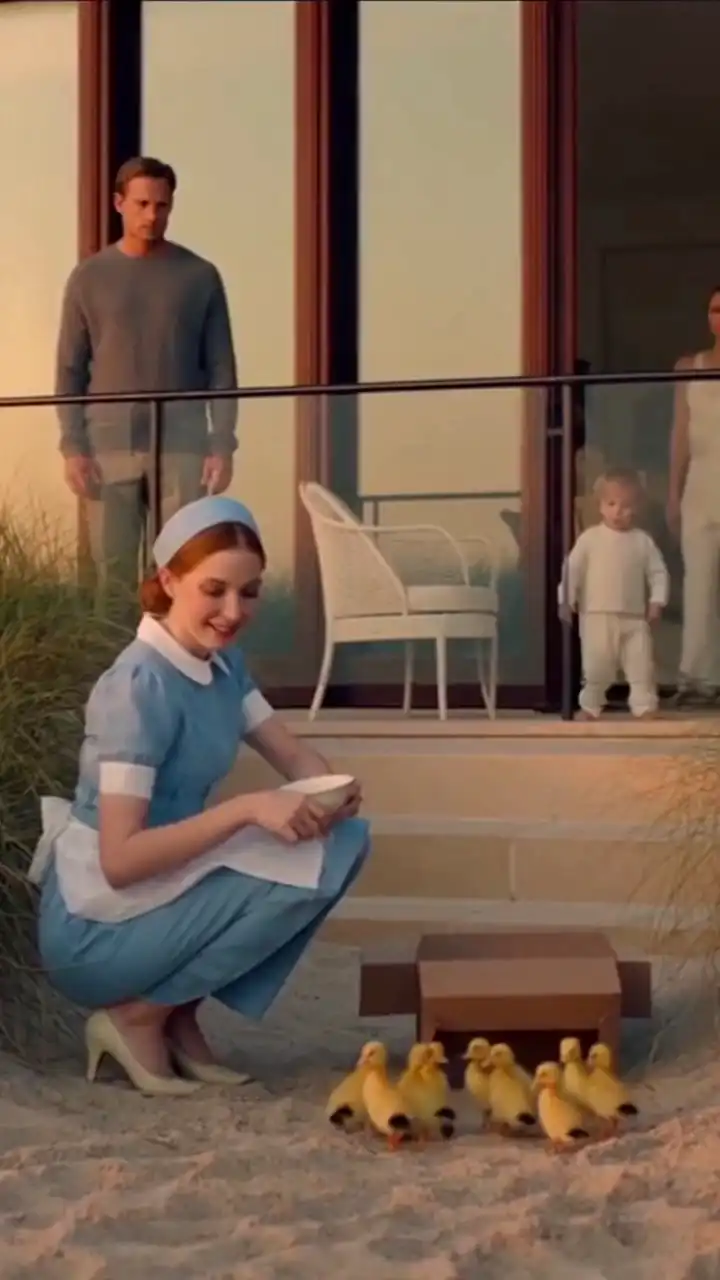
THE NANNY WHO BROUGHT DUCKS TO THE OCEAN HOUSE AND MADE A CHILD WALK TOWARD LIFE
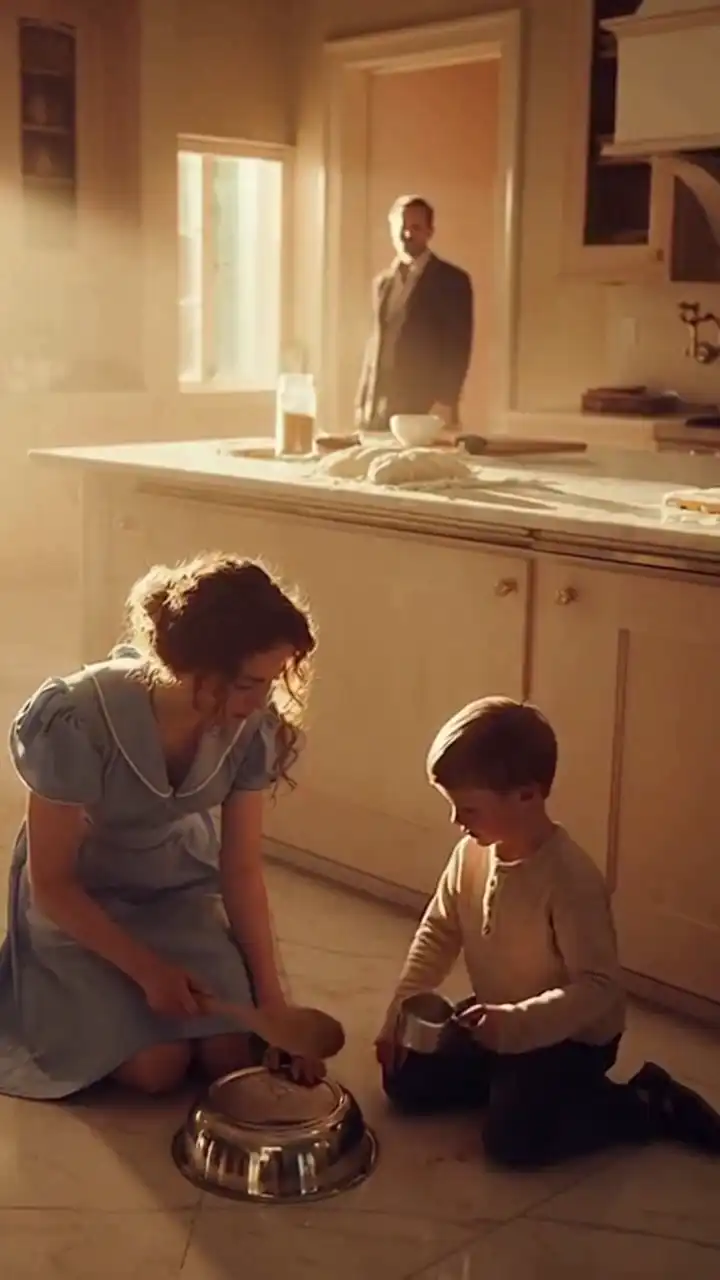
THE YOUNG NANNY BANGED ON POTS IN A MILLION-DOLLAR KITCHEN—AND THE SILENT BOY SPOKE FOR THE FIRST TIME