
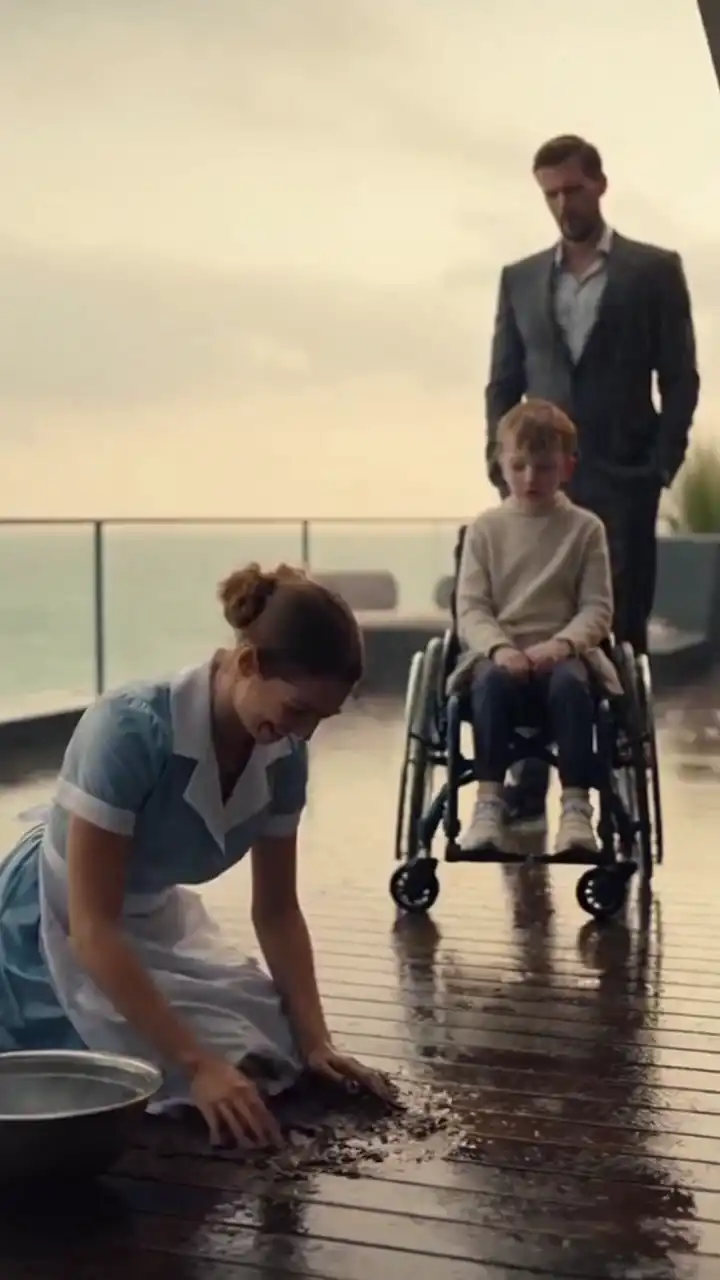
HE LEFT HIS SON IN A WHEELCHAIR BESIDE A PRIVATE OCEAN AND THOUGHT MONEY WAS CARE—UNTIL THE YOUNG NANNY DRAGGED HIM INTO THE MUD
The laugh didn’t stop when the rain got harder.
It came out broken at first, rusty, like Noah had forgotten what his own joy sounded like. Then it came again when Lena dragged both palms through the mud and painted a thick line across the terrace.
“Come on,” she said, not in the bright fake voice the others used, but like she was letting him in on something.
Vanessa stepped forward in her cream sweater and bare feet, horrified. “Ethan, enough.”
But Ethan was no longer looking at her.
He was watching Noah brace both hands on the armrests. Watching his son’s shoulders shake with effort. Watching one sneaker press against the chair footplate, then the tile.
Noah had done exercises like that for months in clinical rooms with mirrored walls and careful voices. He never initiated any of it. Not once.
Now he was trying because he wanted to get closer.
Ethan moved instinctively to help, but Lena held one muddy hand up without taking her eyes off Noah.
“Don’t grab him unless he falls.”
Vanessa stared at her. “You do not give orders here.”
Lena finally looked back. Rain ran down her face and into the collar of her sweatshirt. “Then fire me later.”
Noah gave another rough little laugh.
It cut through all of them.
He pushed upward again, half-standing for one second, then dropped back into the chair with a gasp. His legs trembled. His breath came quick. But he did not shut down. He did not fold inward and vanish.
He slapped one muddy hand onto the wheel and shoved himself another foot forward.
Ethan felt his chest tighten so hard it hurt.
For months he had sat through meetings where specialists explained muscle response, trauma response, motivation deficits, somatic guarding. They always gave him binders. Charts. Home protocols. New devices to order.
Not one of them had told him his son might need permission to be wild.
Lena crawled backward another few feet until she reached the edge of the lawn where the rain had turned the grass into a patchy muddy slide above the beach path.
“Noah,” she said gently, “I’m right here.”
Noah stared at her.
Then, in one clumsy, desperate movement, he shoved his body forward again and nearly pitched out of the chair.
This time Ethan lunged.
He caught Noah under the ribs.
Noah didn’t flinch from him.
That alone almost brought Ethan to his knees.
The boy’s whole body shook, but his hands clawed toward the wet ground. Not away. Toward it.
Lena lowered herself fully into the mud, sat in it, and thumped the ground beside her. “It’s okay. We can be ugly out here.”
Noah looked at her, then at Ethan.
For the first time in almost a year, there was choice in his face.
Ethan looked down at his thousand-dollar shoes, his pressed pants, his son’s shaking legs, the mud, the rain, the staff frozen behind the windows, Vanessa burning holes in all of them with her stare.
Then he did the one thing he had not done since his wife died.
He stopped trying to stay composed.
He crouched down into the mud with Noah.
Vanessa said his name like a warning. “Ethan.”
He ignored her.
Together, he and Noah slid from the chair.
Noah collapsed to his knees first. Ethan grabbed for him, but Lena said, “Wait.”
Noah’s palms hit the wet ground.
He froze.
Ethan held his own breath.
Thunder rolled again over the ocean.
Noah looked up at the sky.
Then he slapped the mud.
Once.
Twice.
Then he laughed so hard he almost tipped sideways.
Lena laughed with him. Not at him. With him.
Ethan did too, but his laugh broke halfway through and turned into something else.
The staff inside started crying before he did.
Vanessa went back into the house.
That was only the first crack.
By evening, the terrace looked wrecked. The wheelchair was spattered. Ethan had canceled two investor calls and barely noticed. Noah was exhausted, soaked, and calm in a way Ethan had not seen in months. He let Rosa wrap him in towels. He even kept one hand twisted in Lena’s sleeve while she walked beside him to his room.
Vanessa waited in the bedroom with a glass of wine and a face like polished stone.
“She manipulated a vulnerable child on a traumatic date,” she said.
Ethan was peeling mud off his watchband. “He moved.”
“He was dysregulated.”
“He was alive.”
Vanessa set the wine down too hard. “You are letting some girl with no polish and no boundaries turn your house into a circus because you’re emotional.”
That word landed because it was true.
He was emotional. For the first time in a long time, he was.
Vanessa had entered his life six months after the funeral, when the house was full of flowers and legal paperwork and people speaking in careful tones. She was elegant, connected, excellent at restoring surfaces. She knew which schools took which donations, which designers softened grief with neutral fabrics, which therapists came recommended by people with homes in Aspen and Palm Beach.
She had also begun rearranging Noah’s world without ever entering it.
No crayons in the formal rooms. No loud cartoons. No kitchen mess. No interruptions during business dinners. No visible strain in front of guests.
Everything was meant to look stable.
Noah had obeyed by disappearing further.
Ethan saw it now in one ugly rush.
“You called the chair his comfort zone,” he said quietly.
Vanessa folded her arms. “Because he needed to feel safe.”
“He needed a life.”
The next morning Vanessa requested a meeting with Lena before breakfast.
Lena showed up in borrowed dry clothes and those same rain boots by the back door.
Vanessa did not ask her to sit.
“There are procedures in this house,” she said. “You don’t improvise with a medically fragile child.”
Lena stood still. “He isn’t fragile because he touched mud.”
“He is traumatized.”
“Yes,” Lena said. “Which is why forcing him to perform in clean rooms wasn’t working.”
Vanessa’s jaw tightened. “And you know this because?”
Because Lena had grown up helping raise her younger brother Mateo after a construction accident left him with partial mobility and a terror of physical therapy rooms. Because clinics made him shut down. Because rhythm, dirt, games, and being treated like a kid instead of a case had brought him back piece by piece.
But Lena didn’t unload her whole life like a résumé.
She just said, “Because some children don’t come back through instructions. They come back through their bodies when they stop feeling watched.”
Ethan, standing in the doorway, heard every word.
He had built his whole approach around watching Noah. Measuring him. Hoping for visible improvement while hiding his own panic under checklists and bills paid on time.
That morning he overruled Vanessa and kept Lena on for a week.
Vanessa called it irresponsible.
Rosa called it the first smart thing he had done in months.
Lena did not turn into a miracle worker overnight.
That was part of why Ethan believed her.
Some mornings Noah still woke rigid and refused to leave his bed.
Some days he screamed if anyone moved the wheelchair too quickly.
Some afternoons he would only sit by the window and stare at the waves.
Lena never acted offended by his bad days.
She built rhythm instead.
Not polished routines for adults. Real ones for him.
She moved breakfast from the silent dining room to the warm kitchen and let pancake batter drip off the spoon onto his tray so he could smear it with two fingers.
She put music on low and tapped the beat on the table until his foot answered once.
She lined baking sheets with cheap dollar-store toy cars and rolled them through finger paint when he wouldn’t hold a crayon.
She took him to the service path behind the house where snails came out after foggy mornings, and she let him decide which leaf was the finish line.
She stopped asking, “Can you do it?”
She started saying, “Let’s see what your body wants today.”
That difference changed the air around him.
Noah began to lean forward before transfers.
Then he started reaching.
Then one afternoon he pushed his own chair to the kitchen doorway because he heard Lena banging cookie dough on the counter.
He liked sound.
That was another thing no specialist had told Ethan in a useful way.
Noah’s shutdown wasn’t a simple refusal to move. It was tangled to the night his mother died in the rain.
She had loved storms. She used to dance with him under the covered porch when thunder rolled over the water. After the accident, every adult around him had treated rain like a threat, bad weather like a trigger to manage, the whole world like glass.
Lena did something different.
She did not erase the storm.
She changed what it meant.
When clouds gathered, she did not close every blind.
She put bowls under gutters. Let the rain make music. Let him listen from the doorway. Then from the terrace. Then with one hand stretched out beyond the awning.
It was not reckless. It was patient.
Vanessa hated every inch of it.
At first her resistance was subtle.
She canceled the cheap toy order Lena had placed with the household account.
She told staff not to encourage “regression into messy habits.”
She scheduled a charity brunch on a Saturday Lena had planned to take Noah to the shore path at low tide, then insisted the child be dressed and present for photos.
“He needs normal social exposure,” Vanessa said.
What she meant was that she needed the picture of a composed family.
Noah lasted eight minutes at that brunch.
The women around him spoke too brightly. Someone touched his shoulder without warning. A waiter dropped a tray. Noah’s breathing went shallow. His hands locked. His right leg started jerking against the footrest.
Lena moved toward him immediately.
Vanessa cut in first, smiling for the room. “He’s fine.”
Noah made a small trapped sound.
Lena didn’t ask permission. She crouched in front of him, put a wooden stir stick from the flower arrangement in his hand, and tapped twice against the wheel rim. Tap. Tap. Wait.
Noah’s eyes flicked to her.
Tap. Tap. Wait.
He answered by hitting once.
Then twice.
The room kept buzzing around them, but he had a line back.
Lena said, “Let’s go outside.”
Vanessa hissed, still smiling, “Do not make a scene.”
But Ethan had already seen Noah’s face drain of color.
For once, he chose fast.
“We’re leaving,” he said.
He wheeled Noah out himself while Vanessa stood among her guests with no graceful way to explain why the child she liked to display had just been chosen over the event.
In the carport, Noah’s breathing slowed with the rain smell coming off the ocean.
Lena stayed crouched in front of him until he touched the stir stick to her knuckles one last time and let it drop.
That night Vanessa exploded.
She accused Lena of making Noah dependent.
She accused Ethan of confusing gratitude with judgment.
And finally, because she had run out of clean language, she told the truth.
“He used to need me,” she said. “At least he let me near him before she started filling his head with all this.”
Lena wasn’t even in the room, but the whole house heard it.
Ethan stared at Vanessa for a long time.
“Near him?” he said. “You mean still enough not to interfere with your life.”
She slapped him.
Rosa, carrying folded laundry down the hall, saw the whole thing and turned right around.
Vanessa left the next morning before breakfast, still expecting Ethan to call by noon and smooth it over.
He didn’t.
Her flowers remained in the front hall for two days before staff removed them.
The house changed after that in small, almost embarrassing ways.
The kitchen stayed active.
Music happened.
Noah’s therapy team was revised. Ethan fired the specialist who kept referring to “compliance resistance” like Noah was a difficult employee. He found a trauma-informed pediatric PT willing to work with Lena instead of around her.
The new therapist watched Noah crawl across an outdoor mat after a rain shower to slap puddle water and said, “Whoever got him to initiate this, keep them.”
Ethan almost laughed.
He also almost cried again.
Because change made one thing impossible to avoid: his own failure.
He had loved Noah. Deeply. Fiercely. But after his wife died, he had turned love into management. He made calendars. Paid for experts. Reorganized schedules. Bought equipment. Expanded the accessible wing. He never asked whether Noah experienced any of it as closeness.
One evening he found Lena at the back steps washing mud from Noah’s sneakers with a hose.
The sun was dropping orange across the water. Noah had fallen asleep inside after making it twelve shaky steps between patio chairs with support bands that afternoon, then demanding to do it again.
Ethan stood there for a minute before speaking.
“I thought if I kept everything from getting worse, that counted.”
Lena shut off the hose.
“It counted,” she said. “It just wasn’t enough.”
He nodded because that hurt and because it was true.
After a pause, he said, “When you said his mom liked storms... how did you know?”
Lena smiled faintly. “I didn’t know. I guessed from his face.”
That answer wrecked him more than anything polished ever could.
Because she had guessed his child right in thirty seconds while he had hidden inside procedures for eleven months.
The real breakthrough came three weeks later, on the anniversary of the accident.
Ethan dreaded the date. Every therapist before Lena had warned against overstimulation, emotional overload, disruption.
Lena asked him one question at breakfast.
“What did his mom do on days he was scared?”
Ethan looked down at his coffee. “She took him to the beach when it rained. Said the sky was doing the crying for him.”
By noon, clouds had rolled in low and gray.
Vanessa would have called for blackout curtains and canceled movement goals.
Lena packed towels, a thermos of hot chocolate, and a cheap yellow plastic shovel from the grocery store.
The private beach below the house was nearly empty in the weather.
Noah started in the chair. Ethan expected that.
Lena and Ethan took him down the boardwalk together.
The first drops began halfway there.
Noah’s fingers tightened.
Lena knelt beside him. “We don’t have to go far.”
Noah looked at the wet sand.
Then at the shovel.
Then at the waterline where foam rushed in and out.
He made a soft sound from deep in his throat. Not fear. Want.
They stopped where the sand turned dark and packed under the rain.
Lena dropped the shovel and dug with her hands instead, making a crooked trench that filled with water and collapsed.
Noah watched, breathing faster.
Ethan waited.
No commands. No coaxing speech. No people standing over him with professional smiles.
Just the rain. The surf. The mud-dark sand. Lena ruining it with joy.
She sat back on her heels and held the yellow shovel out. “Your turn if you want it.”
Noah reached.
His hand missed once.
Then found it.
He slapped the shovel into the sand from his chair. Again. Again. Water splashed up his legs.
Lena grinned. “That’s it.”
Ethan felt his own body lean forward with the force of hope.
Noah dropped the shovel.
He put both hands on the chair arms.
His face tightened.
One foot came down into the sand.
Then the other.
He pushed.
The first rise was ugly. Nothing graceful. All strain and shaking and wet hair in his eyes.
He stood.
For two full seconds, with rain on his face and sand sucking at his sneakers, he stood because he chose to.
Ethan moved in close, ready to catch him, but did not lift.
Noah took one step.
Then, because Lena backed away laughing and slapped the wet sand with both hands, he took another.
And another.
Not clean steps. Not a miracle video. Real ones.
Small. Crooked. Furious. Alive.
He fell forward into Lena and knocked both of them into the sand.
She laughed.
And Noah—Noah laughed so hard he could barely breathe.
Ethan dropped beside them on the beach, one hand over his mouth, shoulders shaking.
There was no polished version of that moment.
No audience worth impressing.
Only the truth: his son had been waiting for life, not management.
The months after that were not easy, but they were real.
Noah kept working.
He used parallel bars in therapy and sea walls at home.
He still had setbacks, especially around loud traffic in the rain, but now there was a path through them. Tap rhythms. Wet sand. Movement games. Storm bowls on the terrace. Lena’s voice. Ethan’s hands, finally present without forcing.
The board of Ethan’s foundation heard about Lena by accident.
He had a small family foundation in his late wife’s name that funded pediatric rehab technology and hospital wings. During a review meeting, one of the therapists mentioned “the nanny who succeeded where systems failed.”
Normally Ethan hated personal stories being used in formal presentations.
This time he asked for more.
He learned that Lena had dropped out of community college to work full-time after her brother’s injury. She had been taking night classes when she could, mostly child development and adaptive care, paying one course at a time. She had no certification fancy enough for Vanessa, but she had instinct, experience, and a way of reading children that couldn’t be bought.
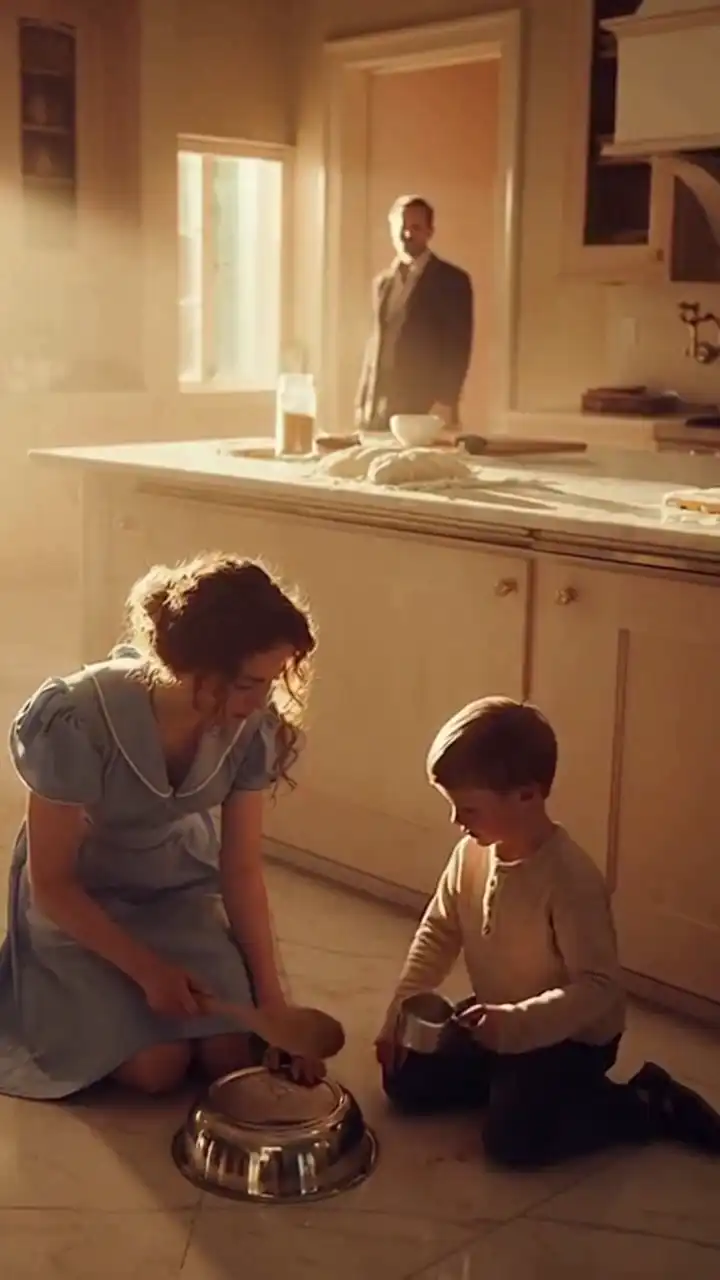
Ethan went home and found her on the kitchen floor helping Noah build a lopsided road out of flour dough because he liked pressing wheel tracks into it.
Flour was everywhere.
Noah looked up and actually smiled when Ethan entered.
That still startled him.
“I spoke to the foundation today,” Ethan said.
Lena looked up, wary. “Okay.”
He sat down on the floor too, not caring about the flour on his slacks.
“If you want it,” he said, “they’ll cover your certification program. Full tuition. Transportation. Whatever schedule you need. And if you decide later you want a degree, that too.”
Lena stared at him.
Noah pressed a doughy handprint onto Ethan’s knee.
Ethan added, “Not as charity. As investment. You should be doing this at the level you deserve.”
Lena’s eyes filled instantly, which made her look younger than she ever allowed herself to.
“You don’t owe me that.”
“No,” Ethan said. “But I owe a lot of things I can’t repay. This one I can do.”
Rosa cried openly at the sink.
Noah, sensing emotion but not overwhelmed by it the way he used to be, rolled his dough road straight into Lena’s lap and laughed.
A year later, on another rainy day, the terrace was noisy again.
There were bowls under the gutters. There were muddy shoe prints near the door. There was a framed photo in the hall of Noah on the beach, knees sandy, grin wild, Lena beside him, Ethan behind both of them with no jacket and no concern for the mess.
Lena was no longer “the help” people dismissed at a glance.
She was in school with the foundation paying her way, training in pediatric adaptive care, already interning with a trauma-informed mobility program two days a week.
Noah walked short distances now with braces and support, but his proudest habit was still this: when storms rolled in, he went looking for boots.
Sometimes he looked for his father too.
And Ethan came.
Because the strangest thing that young woman had brought into his expensive dead house was not just his son’s movement.
It was permission.
To grieve badly. To love messily. To stop choosing appearances over connection. To get down in the mud before it was too late.
The ocean still pounded below the house. The rain still hit the glass. The memories did not disappear.
But when thunder rolled, Noah no longer locked himself away from the world.
He moved toward it.
And so did his father.
Disclaimer: Mention of any brand or trademark is for identification only and does not imply partnership or endorsement
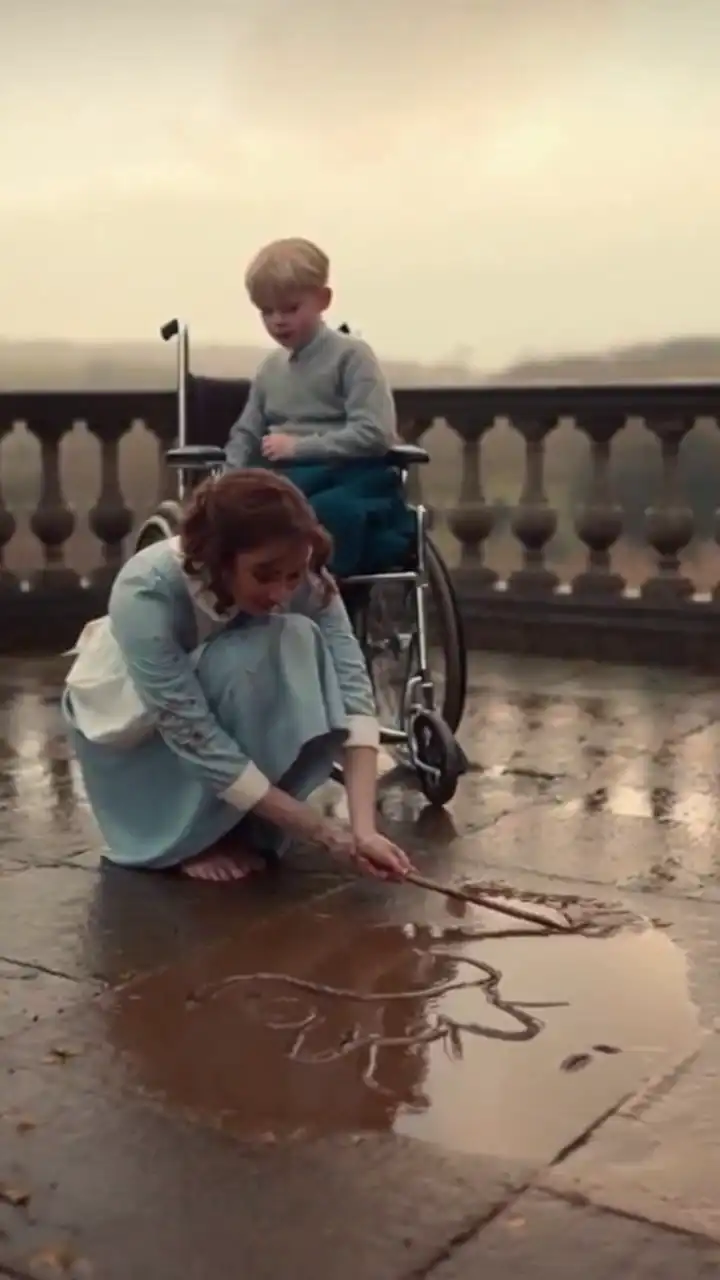
WHEN THE BILLIONAIRE’S SON DRAGGED HIS USELESS LEGS INTO THE MUD FOR THE FIRST TIME, HIS FATHER’S GIRLFRIEND SCREAMED FOR THE NANNY TO STOP
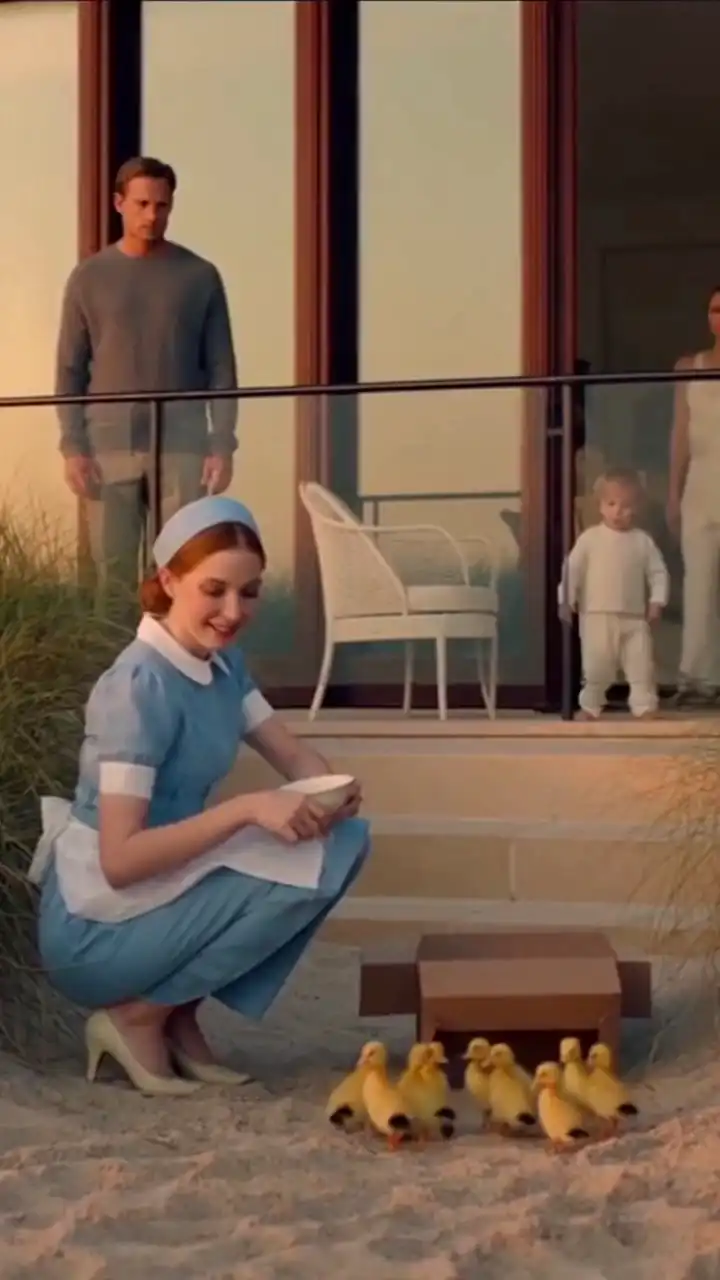
THE NANNY WHO BROUGHT DUCKS TO THE OCEAN HOUSE AND MADE A CHILD WALK TOWARD LIFE

WHEN THE RICHEST MAN ON THE HILL HIRED THE WRONG NANNY, HIS SILENT SON CRAWLED ACROSS THE FLOOR FOR HER