
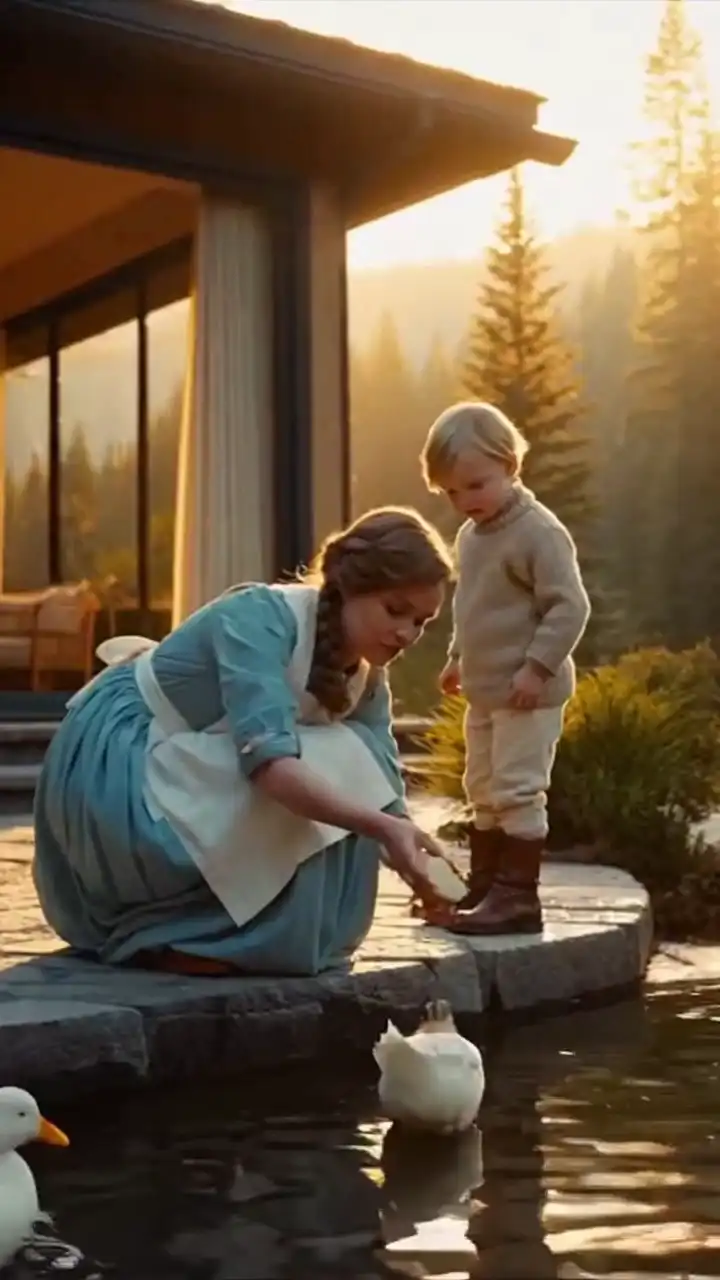
THE RICH MAN WHO CONTROLLED EVERYTHING STOOD FROZEN WHEN HIS SILENT SON LAUGHED AT A GIRL FEEDING DUCKS WITH STALE BREAD
Nathan moved before he thought.
“Enough.”
His voice cut across the pond hard enough to send two ducks skittering sideways. Oliver flinched so sharply his hands flew to his ears. The tiny spark in his face vanished.
Lena turned at once, but she did not step back in apology. She lowered the bread instead and said quietly, “You scared him, not me.”
No one in Nathan Hale’s house spoke to him like that.
Especially not staff.
He came down the stone path in his pressed sweater and leather shoes like he meant to restore order by force of posture alone. “I said no animals. No unplanned outings. No overstimulation.”
Lena looked at Oliver, not Nathan. “He came because something was alive.”
Oliver stood halfway between them, frozen again, eyes fixed on the bread in Lena’s hand.
Nathan reached for his son automatically. “Inside.”
Oliver recoiled.
It was small. Fast. But it was there.
Nathan stopped like he’d been slapped.
Lena didn’t soften the moment for him. “He’s not rejecting you because he’s difficult. He’s bracing before you make him stop feeling something.”
Nathan’s face went cold. “You’ve been here one morning.”
“And in one morning he walked toward a sound, tracked movement, reached on purpose, and laughed.”
That last word landed like an accusation because it was true.
The housekeeper had gone still at the kitchen terrace. Even the groundsman by the upper steps had turned to look. Everyone in that estate knew what had just happened. They also knew better than to say it.
Nathan looked at his son again. Oliver was staring at a duck pecking near Lena’s sneaker.
“Five minutes,” Nathan said at last, each word tight. “Then inside.”
Lena nodded once, as if he had just accepted reality rather than granted permission.
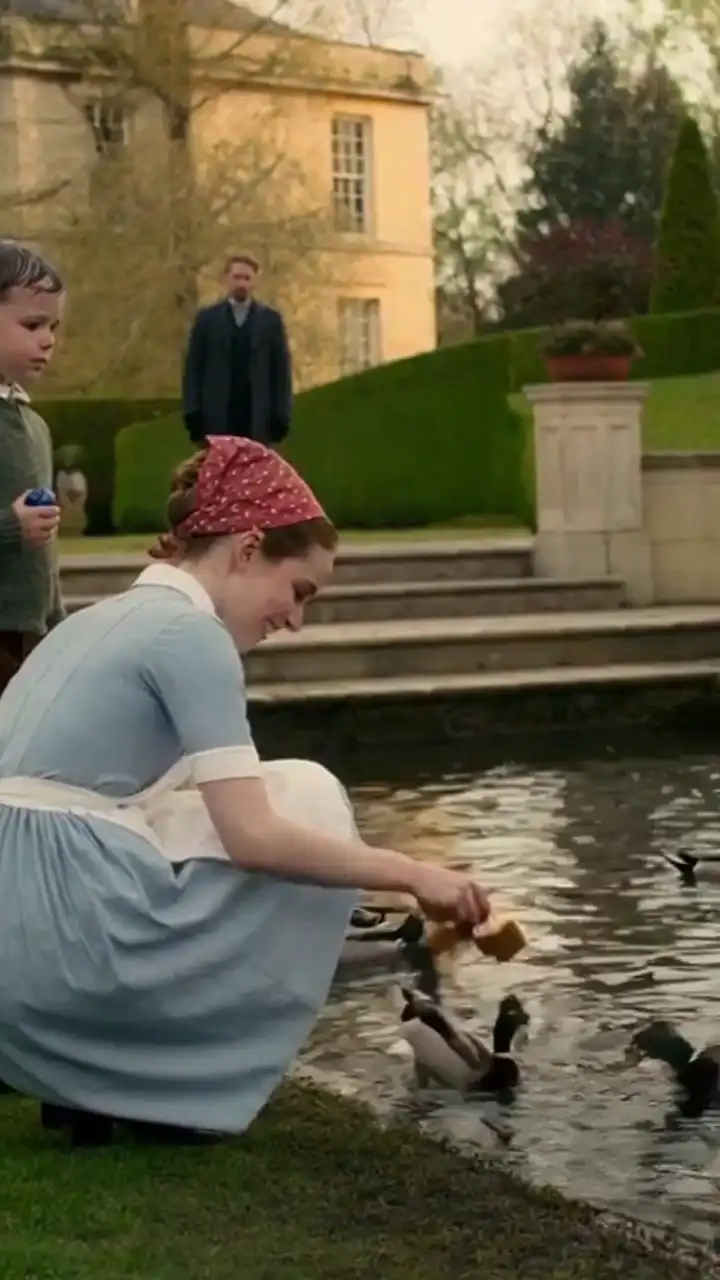
She crouched again and broke the bread into smaller pieces. She did not tell Oliver to feed the ducks. She fed one herself, then another, and let the animals do the work. Ducks were rude. Fish were flashy. Birds were fast. Nothing about them waited politely for a traumatized child to be ready. They moved, snatched, splashed, flapped, and returned.
Oliver watched every second.
When one fat duck bumped Lena’s knee, she bumped it back lightly with hers. “Personal space,” she told it.
The duck quacked in outrage.
A tiny sound came from Oliver again. Not quite a laugh this time. More like the beginning of one.
Nathan stood there and watched his son choose the world over the house.
That should have made him happy.
Instead, it made him angry first.
Because all year, he had built systems. Routines. Boundaries. Guardrails. Every doctor had warned against flooding Oliver with too much input. Every specialist had used words like regulation and control. Nathan had taken those words and turned them into law. Silence in the halls. Neutral tones. measured touch. No surprises. No broken schedules. No risk.
He had removed chaos because chaos had taken his wife.
What he had not admitted, even to himself, was that he had also removed life.
Over the next week, he tried to keep Lena on a leash.
Not literally. But close.
He revised schedules. Required written notes. Limited outdoor time. Banned the lower trail. Banned the kitchen when the chef was working. Banned the stable. Banned the orchard. If Oliver made progress, Nathan wanted it documented, structured, supervised, and replicated.
Lena did the notes because she had to.
She ignored the spirit of the rest.
Her method was impossible to chart in neat boxes anyway.
She never pushed Oliver into contact. She entered whatever narrow rhythm he was already living in and widened it by one inch.
If he tapped three times on the window frame, she tapped three times on a wooden spoon.
If he stared at the koi circling under the pond bridge, she sat near enough for him to notice and dropped crumbs in a slow pattern the fish could chase.
If he lined up clothespins by color on the laundry terrace, she added one wrong color at the end and waited to see whether he’d remove it or fix the sequence.
He never spoke.
But he started noticing.
Then expecting.
Then choosing.
One morning, she found him standing by the mudroom bench with his shoes in his hands.
He wasn’t looking at her.
He held out the shoes anyway.
That was how he asked to go outside.
Nathan saw that and immediately asked, “Where are you taking him?”
“Nowhere dangerous,” Lena said.
“That’s not an answer.”
She tied Oliver’s laces while speaking to the floor. “To see if the geese still hate me.”
Nathan almost said no. It sat right on his tongue. He could feel the control rising in him like muscle memory.
But Oliver was standing there, waiting.
So he let them go.
From his office window above the courtyard, he watched Lena and Oliver move toward the lower lawn. She didn’t hold his hand. She just walked where he could choose to follow. When he slowed, she slowed. When he stopped, she stopped. When a goose rushed her with all the confidence of a rich man in a bad mood, she threw up both hands and backed away dramatically.
Oliver’s mouth opened.
There it was again.
That broken little burst of laughter that sounded almost painful from disuse.
Nathan gripped the window frame so hard his knuckles whitened.
It would have been easier if Lena had been sweet and compliant. Then he could have thanked her, overpaid her, and still remained in charge of the meaning of everything.
But she was not compliant.
She was ordinary in the most disruptive way.
She used chipped bowls in the staff kitchen because Oliver liked the clink they made.
She let him shell peas into a steel pot just to hear the soft hits.
She sat on the back steps and fed the stray orange cat that kept sneaking up from the caretaker’s cabin, even after Nathan said absolutely not.
“Why?” he demanded one evening when he found her and Oliver watching the cat lap water from a flower saucer.
“Because it comes back,” Lena said.
“That’s exactly the problem.”
“No,” she said. “That’s exactly why he likes it.”
Nathan looked at Oliver. The boy was not touching the cat. He wasn’t even close. But he was leaning forward, eyes following every small movement, body awake in a way it had not been in a year.
Lena stood then and finally gave Nathan the explanation he had resisted hearing.
“He doesn’t trust people who manage his reaction before he can have one,” she said. “Animals don’t do that. They don’t ask for eye contact. They don’t praise him for existing. They don’t crowd him with their worry. They just move. He gets to join when he’s ready.”
Nathan’s answer came fast. Defensive. “You’re oversimplifying a medical condition.”
“You’re hiding inside one.”
He should have fired her.
He almost did.
Instead he walked away because some part of him knew she was talking about more than Oliver.
The first real clash came in the kitchen.
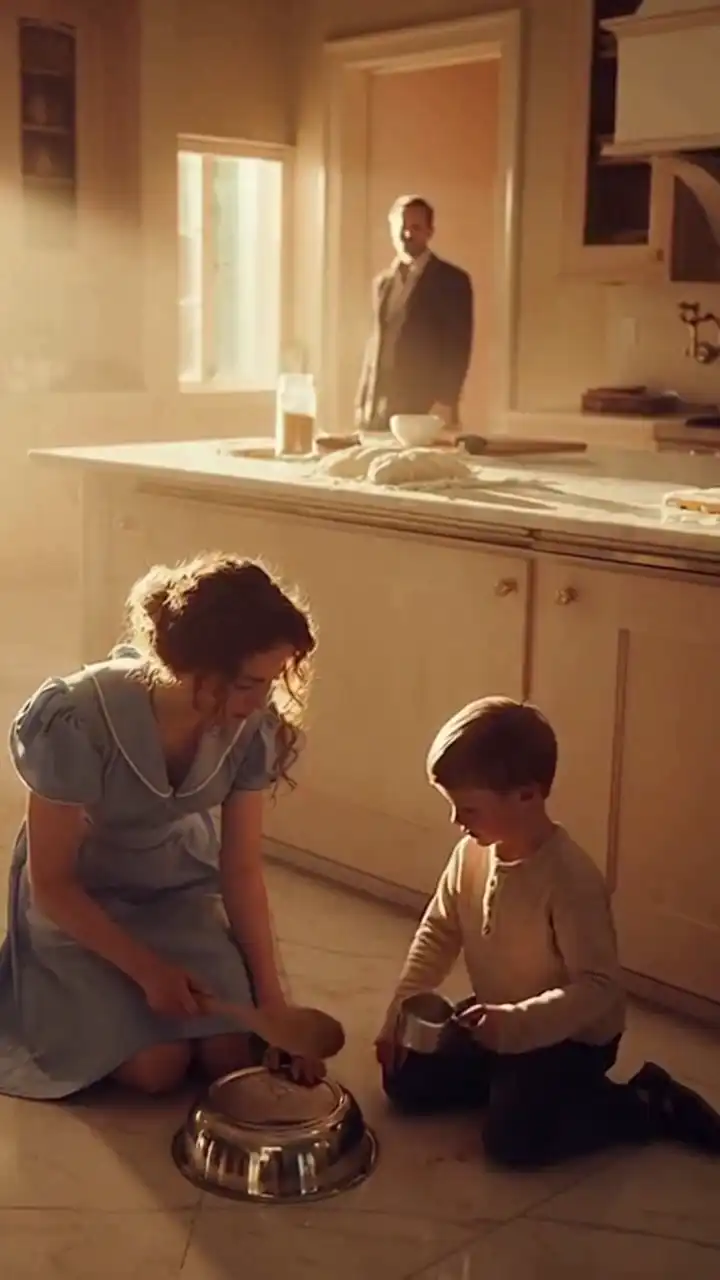
The chef had the day off. The main kitchen in the estate was gleaming, silent, and mostly decorative unless there was company. Lena took Oliver in there anyway with a bag of dry beans, two metal bowls, and a wooden spoon.
Nathan came in on a call and stopped dead.
Oliver was seated on the tile floor.
Beans were everywhere.
Not thrown wildly. Sorted, scooped, poured, spilled, listened to. Lena drummed lightly on an upside-down pot with the spoon. Oliver answered by dropping a small handful of beans into a bowl. Tink-tink-tink.
She changed the rhythm.
He changed his.
Again.
Again.
A conversation, built entirely out of kitchen noise.
Nathan ended his call without remembering a word of it.
“This kitchen is not a playroom.”
Lena looked up. “Today it is.”
“Pick it up.”
Oliver’s hands froze over the beans.
Lena’s face hardened. “Or what?”
Nathan stared at her. “Excuse me?”
“Or what?” she repeated. “He was participating. You walked in and turned it back into a museum.”
The word hit him because it was true in more than one room.
He opened his mouth, shut it, then looked down at Oliver. The boy was staring at a single bean near Nathan’s shoe as if deciding whether the whole world was about to be taken away again.
Nathan slowly bent, picked up the bean, and set it in Oliver’s bowl.
Tink.
Oliver looked at him.
Directly.
It lasted less than a second.
But Nathan felt it all the way down his spine.
Lena did not smile like she’d won. She just slid another bowl toward Nathan.
That was the first time he sat on the kitchen floor with his son since before the crash.
After that, progress came in pieces.
Oliver began following Lena to the pond without needing the bread bag as bait.
He crouched by the koi and dropped pellets one by one, watching the water break.
He let the orange cat sit near his shoes.
He laughed openly when ducks fought over lettuce leaves.
He touched Nathan’s sleeve once when a bird smacked into the glass and startled him.
That touch almost undid Nathan.
The deeper truth came out slowly, in scraps. It always does.
One night, after Oliver had finally fallen asleep with the soft farm-animal sound machine Lena found in town, Nathan stood in the dark hall outside the boy’s room and asked the question he had avoided.
“Why does he panic when I stop things?”
Lena had been carrying folded towels. She set them down on the console table before answering.
“Because he remembers being trapped.”
Nathan’s face drained.
She did not dramatize it. She did not whisper.
“In the car seat,” she said. “The impact. The noise. The waiting. The body remembers before words do.”
Nathan leaned a hand against the wall.
The official reports had said Oliver was physically cleared. Minor injuries. Severe shock. Watch for delayed trauma. Continue observation.
Nathan had buried himself in treatment plans because treatment felt active. He had never known what to do with memory living in the body.
“So when you control every sound, every movement, every transition,” Lena said, gentler now, “you think you’re keeping him safe. But sometimes to him it feels like someone else is taking over again.”
Nathan swallowed hard. “I was trying to prevent another rupture.”
“I know,” she said. “But he doesn’t need life to stop. He needs to discover that it can move and still not destroy him.”
The next day Nathan canceled two specialist appointments.
The week after that, he canceled three more.
Not because he stopped believing in help, but because he had begun to see the difference between treatment and relationship. For months he had outsourced presence to experts while he managed logistics, payments, schedules, and outcomes. He had told himself that was love in its most responsible form.
Lena had shown him how bloodless that could become.
He started doing small things badly on purpose.
He walked Oliver to the pond himself.
He let ducks come too close and did not bark for staff to shoo them away.
He sat through long silences without trying to fill them.
He learned not to grab when Oliver hesitated.
He copied the boy’s slow tapping on the terrace rail and waited.
One late afternoon, under a cold pink sky over the pines, Oliver pressed half a stale roll into Nathan’s hand and pointed toward the ducks.
An instruction.
A shared activity.
Nathan laughed once, rough and surprised, and tossed the bread too far. The ducks ignored it.
Lena, from the path, said, “Terrible form.”
Oliver laughed.
At Nathan.
It was the best sound Nathan had ever heard.
He started looking for Lena after that even when Oliver wasn’t with her.
Not in the dramatic way movies do. Nothing that neat.
He noticed her rinsing bowls in the staff sink and humming under her breath.
He noticed she sent part of every paycheck home to her younger brother in Ohio.
He noticed she read library books, not self-help books, on the back steps at night.
He noticed that she belonged to no one in that estate, and because of that, she moved through it with a kind of freedom money couldn’t buy.
That freedom scared him.
Then came the repair.
The crash anniversary approached, though no one in the house said it out loud. Nathan became tighter. Shorter. Old habits returned. Staff lowered their voices. Oliver grew more rigid by the day, his sleep fraying, his shoulders creeping up toward his ears again.
Nathan responded by tightening structure.
Lena saw it happening and fought him on the back terrace while Oliver sat inside at the breakfast table, spinning a spoon.
“You’re doing it again,” she said.
“I’m preventing a spiral.”
“You’re building one.”
He looked wrecked and furious at once. “You don’t get to judge a year you didn’t live through.”
“And you don’t get to lock him inside your fear because you did.”
That should have ended it.
Instead, Nathan said the ugliest true thing in him.
“If this keeps working, what then? He attaches to you, and one day you leave too?”
The words hung there, naked and mean.
Lena didn’t flinch.
“There it is,” she said softly. “That’s what this was always really about.”
Nathan looked away first.
On the anniversary morning, rain rolled over the mountain in a gray sheet. The pond darkened. Ducks huddled under the reeds. Oliver refused breakfast, refused shoes, refused the sunroom, then melted into full panic when Nathan tried to redirect him upstairs. No screaming words. Just raw trapped sound, hands over ears, body folding to the floor.
Nathan knelt, reached, and Oliver jerked away so hard he hit the table leg.
Everything in Nathan’s face broke.
Lena moved past him and did the opposite of control.
She opened the back door.
Cold rain blew into the breakfast room.
Nathan stared. “What are you doing?”
“He needs an exit.”
“He’ll get soaked!”
“He already is,” she snapped, pointing at the tears and sweat on Oliver’s face. “Just not by rain.”
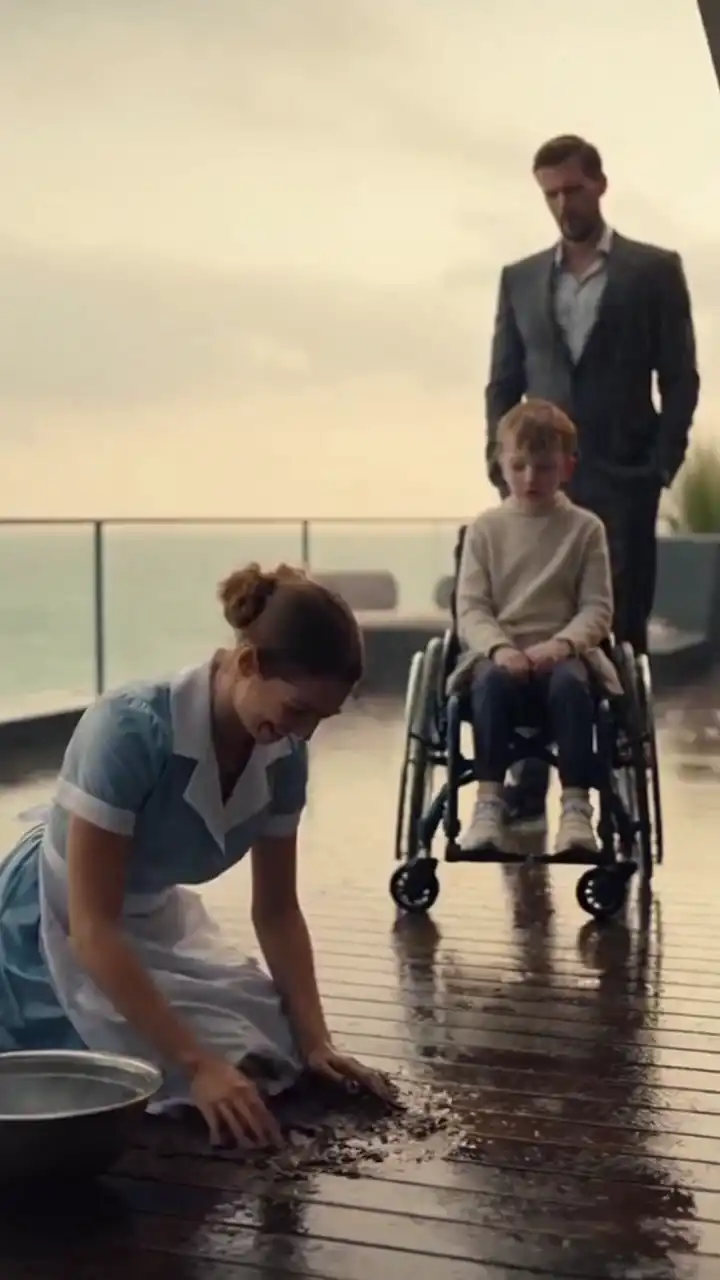
She stepped into the storm first. Not dramatic. Just steady. Then she set a shallow metal pan under the gutter where water hammered down in a loud bright stream.
Ping. Splash. Ping. Splash.
She put a handful of birdseed in the pan.
Sparrows came first, fearless from hunger.
Then two ducks waddled up from the lower path, wet and ridiculous and alive.
Oliver’s crying hitched.
Lena did not call him.
She crouched in the rain and tapped the edge of the pan in the same rhythm he used on windows, on spoons, on every hard thing that answered back.
Ping. Ping. Ping.
Inside the doorway, Oliver lifted his head.
Nathan held himself absolutely still.
Lena slid one yellow rain boot off and pushed it across the threshold toward Oliver like it was just another object in his world to choose or reject.
He touched it.
Then he pushed his foot inside.
One boot. Then the other.
He stood.
He walked through the open door and into the rain.
Nathan made a sound under his breath, almost a plea, but stopped himself from rushing in.
Oliver went straight to the metal pan. Water splashed his sleeves. A sparrow hopped back. One duck shook itself all over him.
And Oliver laughed so hard he nearly lost balance.
Not the rusty fragment from before.
A full laugh. Open-mouthed. Bright. Continuous.
Lena laughed too, soaked through, hair stuck to her cheeks.
Then Oliver did something bigger.
He turned, reached back toward the doorway, and looked at Nathan.
Not through him.
At him.
His fingers opened.
A clear invitation.
Come here.
Nathan stepped into the rain in his cashmere sweater and expensive shoes like a man walking out of a prison he had built himself.
The water hit him. Cold. Immediate. Real.
Oliver slapped the rainwater in the pan. Nathan did it too. Ducks crowded in. The sparrows kept hopping. Lena shifted back and let father and son fill the middle of the frame she had made.
That was the repair.
Not magic. Not cure. But repair.
After that morning, the estate changed in visible ways.
The back door stayed unlocked during the day.
The kitchen stopped being sacred and started being used.
Oliver’s schedules became guides, not chains.
Nathan still kept therapy, but with people willing to work around life instead of replacing it.
There was more sound in the house now. Pot lids. Running feet. Quacking from the terrace. Once, unbelievably, Nathan himself laughing when the orange cat stole poached salmon off a prep plate.
And Oliver began using words.
Not many.
Not in a flood.
But real ones.
“Duck.”
“More.”
“Out.”
Then one evening on the lower lawn, with the cat weaving around Lena’s ankles and the sunset turning the pond copper, Oliver touched her sleeve and said, clear as glass, “Again.”
Lena blinked hard and looked away before anyone saw too much on her face.
Nathan saw anyway.
He also saw something else he had been refusing to face: this story could not end with him pulling her permanently into his world just because she had changed it.
The agency contract was nearly up.
He asked her one night to renew.
Not in the office. On the back steps, where she liked to sit with tea after Oliver slept.
“You can name your salary,” he said. “Benefits, housing, whatever you want. Stay. Please.”
Lena looked out at the dark pond before answering.
“That’s the first time you’ve asked like it was about me and not your fear.”
Nathan gave a tired half-smile. “I’m learning slowly.”
“Yes,” she said. “You are.”
He waited.
She kept her voice kind, but firm. “Oliver needed someone who wasn’t built into the walls of this place. Someone temporary enough to help him move, not attach to another structure. If I stay forever, I become part of the system too.”
Nathan’s throat tightened. “He loves you.”
“He can love me and still keep going.”
The next morning she took Oliver to feed the ducks one more time before breakfast. Nathan watched from a distance and did not interrupt.
Oliver followed her easily now, boots muddy, hair a mess, one hand full of stale bread. He laughed when the fattest duck tried to jump for the bag.
When it was time, Lena knelt in front of him.
She did not promise she’d never leave.
She did not lie.
She put a small tin whistle shaped like a bird into his palm. “For outside days,” she said.
Oliver looked at the whistle. Then at her face.
His mouth trembled.
Nathan almost stepped in to save them both.
But Oliver did something harder and better.
He turned and walked to his father.
Then he grabbed Nathan’s hand and pulled him toward the pond.
Again.
The same word. The same instruction.
Nathan looked at Lena over Oliver’s head.
Thank you did not cover it. Neither did sorry.
Lena stood, shoulders straight, eyes wet but calm. She had not come there to climb into wealth. She had come to wake a child back into the world, and she had done it.
Nathan had one more thing to say before she left.
A month earlier, the local elementary school in town had nearly shut down its outdoor learning program and small animal care area for lack of funding. Lena had mentioned it once, casually, while cutting apples in the kitchen. The kids loved the rabbits and ducks there, she’d said. They did better when their hands had something real to do.
Nathan made the donation in her name.
Not as charity.
As recognition.
The school expanded the program that fall and hired Lena to help build it, train staff, and work with children who struggled the way Oliver had. Not as a nanny. Not as a servant. As the person who knew what life could do when therapy alone could not.
On her last day at the estate, she left through the front door, not the staff entrance.
Oliver stood beside Nathan on the stone steps.
When Lena reached her truck, Oliver lifted the little bird whistle and blew a thin, crooked note into the mountain air.
Lena turned.
He lifted his hand.
So did she.
Then she drove down the long pine road out of the gated estate, toward a life that belonged to her.
Nathan stood there with his son’s hand in his own and did not call her back.
At the pond below, ducks were already gathering, loud and impatient, waiting to be fed.
This time, Nathan and Oliver went down together.
Disclaimer: Mention of any brand or trademark is for identification only and does not imply partnership or endorsement
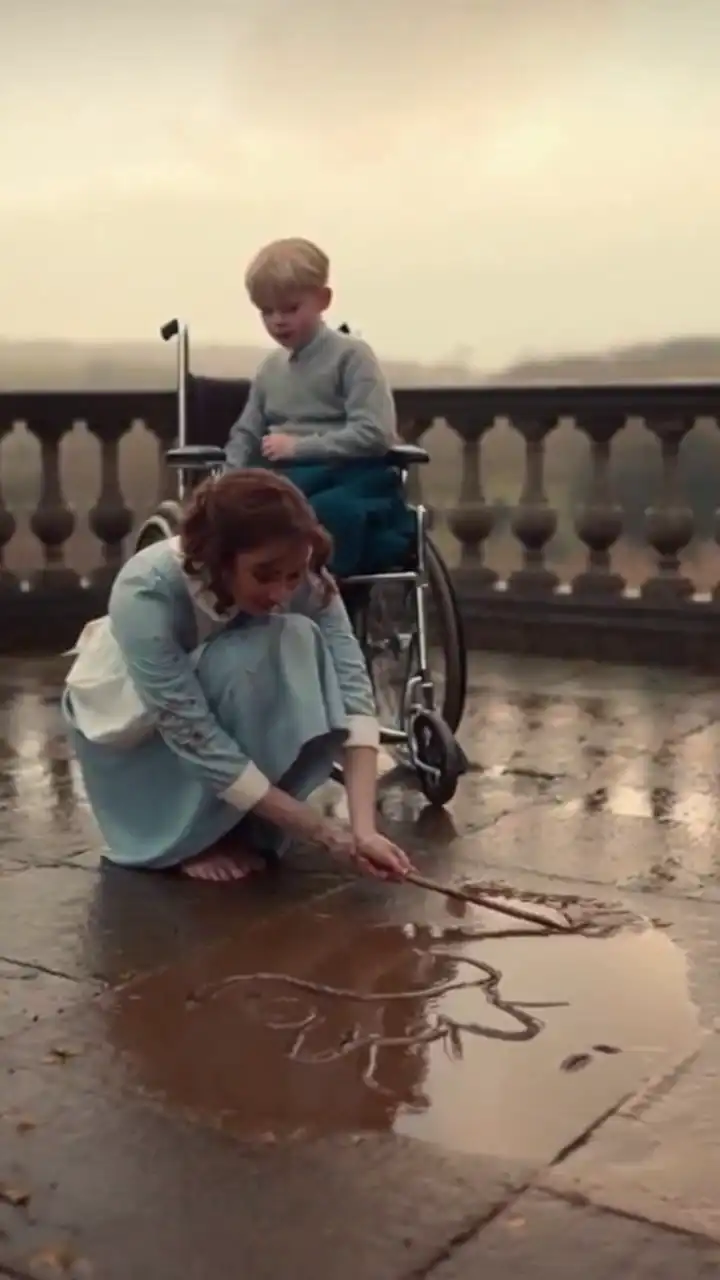
WHEN THE BILLIONAIRE’S SON DRAGGED HIS USELESS LEGS INTO THE MUD FOR THE FIRST TIME, HIS FATHER’S GIRLFRIEND SCREAMED FOR THE NANNY TO STOP
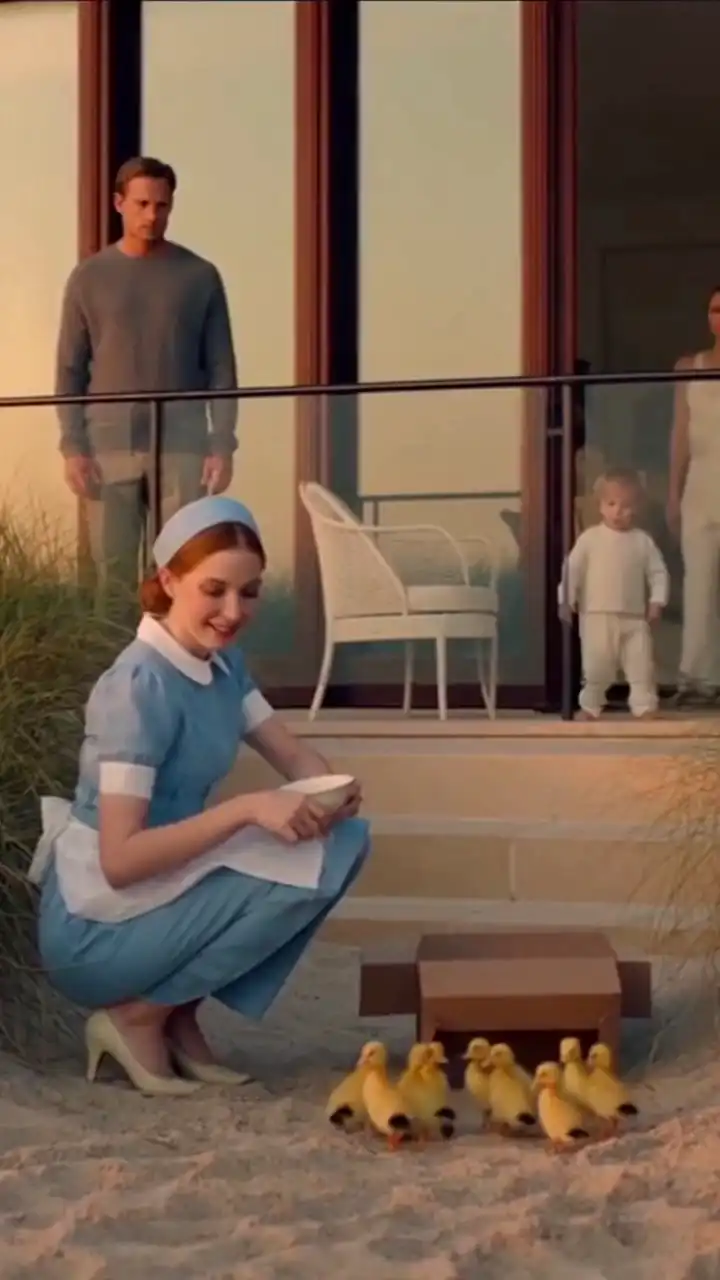
THE NANNY WHO BROUGHT DUCKS TO THE OCEAN HOUSE AND MADE A CHILD WALK TOWARD LIFE
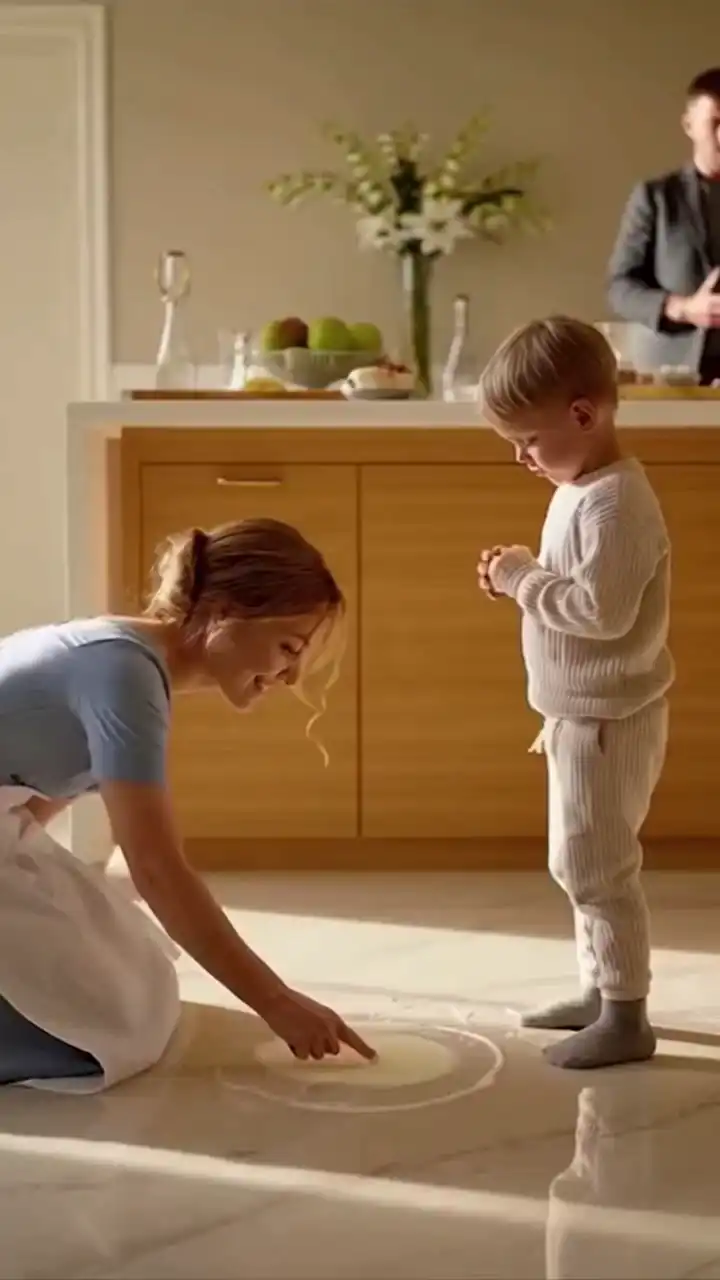
WHEN THE RICHEST MAN ON THE HILL HIRED THE WRONG NANNY, HIS SILENT SON CRAWLED ACROSS THE FLOOR FOR HER