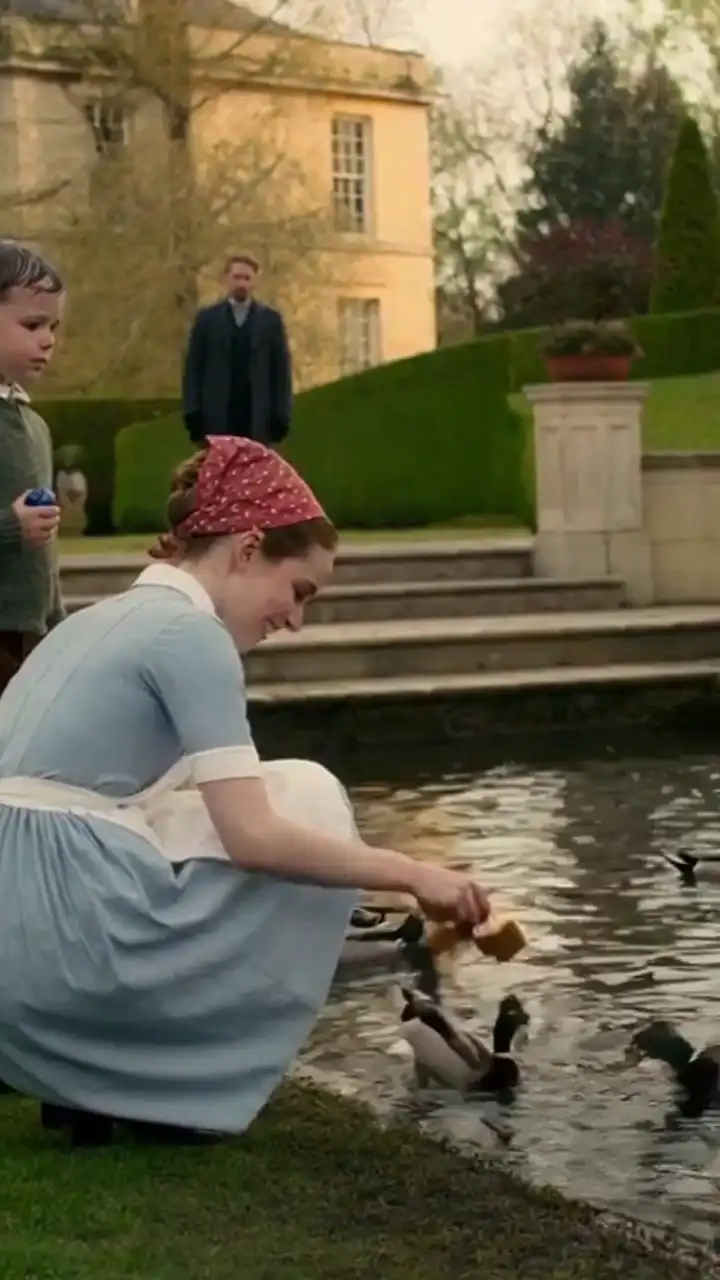

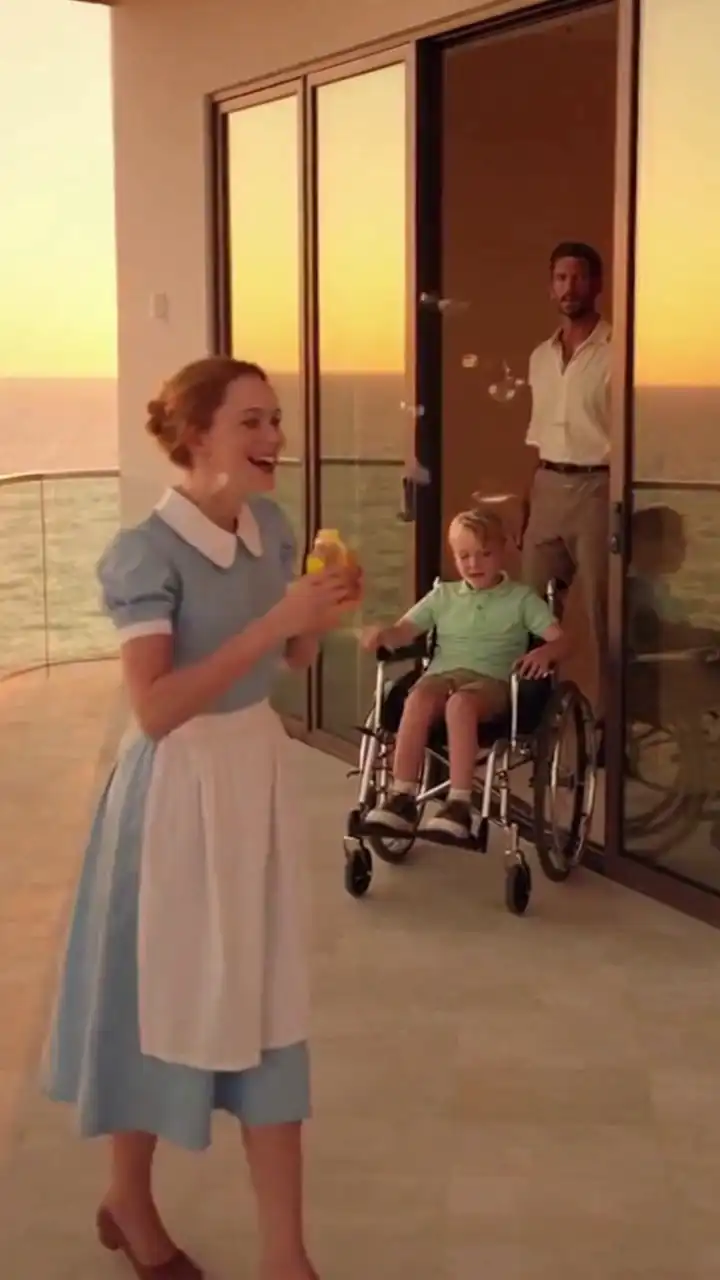
THE DAY THE RICH MAN’S SON LEFT HIS WHEELCHAIR TO CHASE SOAP BUBBLES ACROSS THE OCEAN TERRACE
Nathan did stop then, but only because his own legs seemed to forget what to do.
Noah was shaking so hard it hurt to watch. One foot was flat on the terrace tile. The other hung uncertainly, dragging behind him. His hands were white from gripping the side of the chair. He looked like one loud word from an adult could send him folding back into himself.
So Lena didn’t say one.
She lowered the bubble wand.
Then, very carefully, she dipped it again and blew one single bubble.
Just one.
It floated low, close enough to tempt him, slow enough not to scare him. Noah stared at it like it was a living thing. His body tipped forward.
Nathan started toward him on instinct.
Lena lifted her free hand without looking back. Not rude. Just clear.
Wait.
A stranger stopping Nathan Hale in his own house should have irritated him. On any other day, it would have. But he had spent eleven months watching professionals step in too fast, brace Noah too hard, encourage too brightly, and turn every attempt into a performance. Noah always shut down the second he felt watched.
So Nathan stood there with his hands open and useless at his sides.
The bubble drifted. Noah made a raw little sound in his throat and moved again.
One dragging step.
Then another.
He didn’t get far. Maybe three feet. Maybe four. Then his knees buckled and he dropped hard onto the tile.
Vanessa inhaled sharply. “That’s enough.”
She was already moving in heels across the room, face tight with vindication, ready to call the whole thing reckless. Nathan got there first, but before he could lift Noah, Lena knelt on the ground beside him.
Not over him.
Beside him.
Same level. Same floor.
She set the bubble bottle down between them like a toy instead of treatment.
Noah was breathing in fast, terrified bursts. His eyes had that wild, trapped look Nathan knew too well. Any second now, he thought. Any second he would start hitting his own leg the way he did when panic took over.
Lena didn’t touch him.
She matched his breathing.
Nathan noticed it because it was so strange. She made her own inhale visible and slow, then exhaled through the bubble wand without releasing a bubble, just sending a soft stream of air through the ring.
In.
Out.
Again.
Noah’s chest began to follow before his mind seemed to.
Then Lena tilted the wand toward him.
His hand twitched.
“Want it?” she asked.
Not in a chirpy voice. Not in a therapy voice. Plain. Respectful.
Noah looked at the wand. Looked at her face. For one suspended second, he held eye contact.
Nathan felt that like a punch.
Noah reached with stiff fingers. Missed. Tried again. Lena adjusted only enough to let him succeed. His hand closed around the plastic handle.
Vanessa gave a short, disbelieving laugh. “He can’t do that.”
But he did.
Lena put her hand over his only for balance, not control. “Blow.”
Noah pushed out a ragged breath. Nothing happened.
“Again.”
A tiny soap skin formed, wobbled, then broke.
Lena smiled like failure was part of the game. “Almost.”
Third try, a bubble came out crooked and small and perfect.
Noah stared at it.
Then it popped on Lena’s shoulder.
And Noah laughed.
It was not a neat, movie laugh. It sounded rusty, startled, almost like he had forgotten how. But it was a laugh, and it hit the room so hard Vanessa actually stepped back.
Nathan had not heard that sound since before the accident.
He turned away for half a second because his face had gone weak in the middle.
That evening, Vanessa said what everyone in Nathan’s social circle would have said, only she said it with the sharpness of someone who felt threatened.
“This is exactly why boundaries exist. One lucky reaction and now she thinks she knows better than doctors.”
Nathan stared at the dark window over the dining room table. “Noah moved.”
“He collapsed.”
“He moved toward something.”
Vanessa set down her wine too hard. “You are emotional because it’s the anniversary week.”
It was. Three days from now would be Claire’s birthday, the first one after her death. Nathan had been dreading it in silence. Noah had always baked with Claire on that day, standing on a step stool, flour on his cheeks, proud of cracked eggs and crooked cookies. After the crash, the kitchen had become another sealed room in the house. Staff cooked. Noah never entered.
Vanessa lowered her voice. “This house cannot become chaos every time someone decides mess is healing.”
Nathan might have agreed once. But all he could see now was Noah on the terrace floor, laughing at a soap bubble like he had come up for air after nearly drowning.
The next morning, Lena asked to move Noah’s chair.
“Where?”
“The kitchen.”
Vanessa nearly smiled. “No.”
Nathan looked at Lena. “Why?”
“Because his body locks when everything feels high-stakes,” she said. “He expects to fail in therapy rooms. He expects adults to study him. But ordinary movement is different. Reaching for a spoon. Turning for a sound. Pushing closer because something smells good. Kids regulate through rhythm. Through repetition. Through being with someone, not being worked on.”
She wasn’t performing expertise. She was describing Noah like she had met him where he actually lived.
Vanessa crossed her arms. “He needs clinical structure.”
Lena nodded once. “He has plenty of that. What he doesn’t have is a reason.”
Nathan heard that all day.
What he doesn’t have is a reason.
By noon, Noah’s chair was in the kitchen anyway.
Lena didn’t turn the room into therapy. She turned it into life.
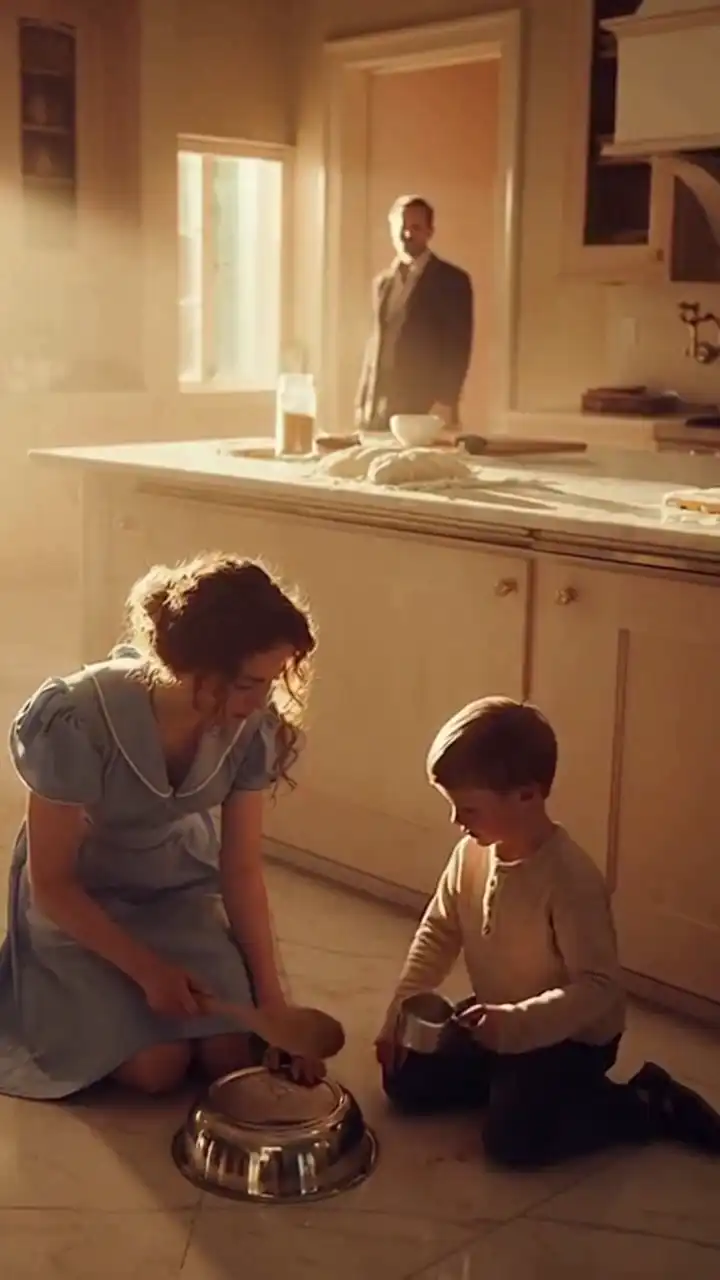
She let him sit where he could hear the beat of a whisk in a metal bowl. The tap running. Drawers opening. A radio low in the background playing old Motown from her phone. She narrated almost nothing. No constant praise. No anxious checking. She just let the world happen around him and left invitations inside it.
A lemon rolled. She let it.
Noah’s foot nudged.
A wooden spoon clattered. He flinched, then looked.
She blew two bubbles over the table, not a whole swarm this time, and one landed near a mound of flour. Noah watched it sink and vanish.
Then his fingers opened.
The first week was not magic. He didn’t suddenly walk. He had setbacks. Days when he would not leave his room. One afternoon the sound of a blender sent him into a full panic spiral and Nathan found Lena sitting on the floor outside the pantry with Noah pressed against her side, both of them breathing into silence until the storm passed.
That was when Nathan understood what she was actually doing.
She was not forcing progress.
She was lending him a nervous system.
Matching him until he could return to himself.
No chart in the rehab room had ever explained it in words Nathan could feel.
Claire used to do that, he realized with sudden shame. Before she died, she had always gotten down on Noah’s level before asking anything of him. She had let things take time. Nathan, meanwhile, had scheduled grief into blocks, outsourced comfort, and congratulated himself for “providing support.”
He had been trying to engineer his son back to life.
Lena was simply meeting him in it.
Vanessa saw the shift too, and she hated it.
At first she complained privately. The kitchen was noisier. The staff liked Lena. Even the groundskeeper had started saving giant shell fragments for Noah because Lena discovered he liked running his fingers along ridged textures. Then Vanessa began making little corrections in front of Noah.
“Not on the floor.”
“Too much sugar.”
“Don’t let him strain.”
“Please stop treating the house like a camp.”
Lena almost never answered back. She would just adjust around Noah and keep going, which somehow made Vanessa angrier.
The real break came on Claire’s birthday.
Nathan had planned to get through the day the clean way: flowers delivered to the cemetery, a private dinner canceled in advance, work calls shortened, Noah protected from any mention of his mother because every prior attempt had ended in shutdown.
Lena did something else.
She took one of Claire’s old aprons from the back of the laundry room where it had been folded for nearly a year. Faded yellow. Tiny blue stitching at the pocket. She laid it on the kitchen counter and said nothing.
Noah saw it and froze.
Vanessa walked in at the worst moment. “What is that doing out?”
Lena’s voice stayed even. “It was his mother’s.”
“I know whose it was.” Vanessa turned to Nathan. “This is inappropriate.”
Nathan looked at Noah.
The boy’s hands were trembling. His eyes were fixed on the apron like it hurt.
Every instinct in Nathan screamed to remove it, remove the trigger, remove the risk.
Then he saw Lena do that breathing thing again. Slow enough to borrow.
Noah’s breathing hitched, copied, settled a little.
Lena untied the apron strings and put it on herself, badly, too loose and crooked on purpose. “She was taller than me,” she said lightly. “This looks ridiculous.”
Noah made the smallest sound through his nose. Not a laugh. Close.
Then Lena placed a bowl on the low table and cracked an egg one-handed in a deliberately sloppy way. Shell fell in. She fished it out and made a face at herself.
Still no pressure. Still no “Do you remember Mommy?” None of the cruel, well-meaning prompting adults use when they want grief to become a performance.
She just mixed flour, milk, sugar, cinnamon.
Then she opened the bubble bottle and dipped the wand.
Vanessa stared. “In the kitchen?”
Lena blew one bubble across the counter. It floated above the mixing bowl, reflecting the windows, the sea, the yellow apron, Nathan standing rigid by the fridge. Noah tracked it. When it popped, Lena slid the whisk a little farther away than his usual reach.
No invitation spoken.
Just room.
Noah leaned.
Nathan’s heart started pounding so hard it hurt.
Noah planted one hand on the table edge. Then the other on the arm of his chair. He pushed up halfway, sat back, tried again. His face tightened in effort, but he didn’t look terrified this time. He looked intent.
Lena blew another bubble toward the bowl.
Noah made a sound, frustrated, wanting.
And then he stood.
Not fully straight. Not cleanly. His left leg trembled. His right dragged. But he was up, holding the table, eyes on the whisk.
Vanessa said, “Nathan, this is dangerous.”
Noah flinched at her voice.
Lena answered without turning around. “Then please stop making it dangerous.”
Silence hit the kitchen.
Vanessa’s face changed. Not shock. Offense. The offense of a woman used to being treated as future family, now spoken to like background noise by hired help.
Nathan should have stepped in.
Instead, he moved to Noah’s other side and did the first useful thing he had done in months.
He got quiet.
No commands. No praise avalanche. No grabbing.
He simply stood near enough to catch him if needed and let his son try.
Noah took one sliding step.
Then another.
He reached the bowl. Put two fingers into the flour. Pulled them back, dusted white. Looked at them.
Lena smiled. “Messy.”
Noah’s mouth twitched.
She offered the whisk. He touched it. Nathan saw his son’s shoulders shaking from effort and grief and concentration all at once.
Then Noah turned his head, looked right at the faded yellow apron on Lena, and said the first word he had spoken since the funeral.
“Mom.”
The room shattered.
Nathan grabbed the back of a chair because the force of that one word nearly dropped him.
Noah didn’t cry immediately. First he just stood there breathing, like he had opened a sealed door and wasn’t sure what might come through. Then his face broke and he folded against Lena’s side with a sob so deep it seemed dragged from the bottom of him.
Lena held him.
Not like a therapist managing an episode.
Like a person who understood that grief had finally found an exit.
Nathan turned away, covered his mouth, and lost the battle he had been fighting in front of everyone since the accident.
Vanessa did not come closer.
Later, when Noah was asleep for the first time in months without medication, curled on a daybed in the den after insisting the yellow apron stay draped over a chair where he could see it, Vanessa confronted Nathan on the terrace.
Sea wind. Cold tile. The same place where Noah had first moved.
“You are replacing Claire with an employee,” she said.
Nathan had never heard the truth hidden inside Vanessa’s worst sentence until then.
Because that was what Vanessa believed mattered most: position. Who belonged where. Which woman held which place. Which emotions were acceptable if they didn’t disturb the architecture of the life she expected to enter.
“No,” Nathan said. “No one replaces Claire.”
“Then why is she suddenly running your home?”
“She’s helping my son live in it.”
Vanessa looked at him hard. “And what exactly is Lena to you?”
It was the wrong question, and for the first time Nathan knew it clearly.
“She is the first person who stopped trying to make my child look manageable.”
Vanessa’s expression went flat. “So that’s it. I’m the villain because I want safety and order.”
Nathan thought of the silent rooms, the canceled sounds, the polished days Noah had endured like punishment. “No. You’re leaving because you want order more than Noah.”
She left the next week.
Not with a dramatic scene. With cold efficiency. A few boxes. A canceled charity appearance. One final remark to a friend on speakerphone about “blurry boundaries in that house now.”
The staff heard it.
So did Nathan.
For once, he didn’t care.
The house changed after that in ways guests would have called small and anyone hurting would have called massive.
There were towels by the back door because Noah began tolerating the garden, then asking for it by knocking his knuckles on the glass. There was chalk on the stone path one afternoon. A row of shells on the kitchen windowsill. Music, sometimes. Bread dough under Noah’s nails. Bubble bottles in three rooms.
Nathan started coming home before dark.
At first he just watched Lena and copied her badly. He learned not to flood Noah with words when he got stuck. He learned that waiting was not neglect. He learned that if Noah’s shoulders climbed toward his ears, calm had to enter the room before instruction did. He learned how to sit on the floor in an expensive suit and not care what it cost to dry-clean.
The biggest change came a month later in the rain.
It started as a fast coastal shower, the kind that sweeps in silver off the water. The staff rushed to shut doors. Nathan was in his office finishing a call when he looked up at the security monitor and saw Lena on the back lawn, hood down, laughing as she blew bubbles into the rain.
The bubbles flashed and burst instantly.
Noah was at the open door in braces, holding the frame.
Nathan’s first impulse was still fear. Wet ground. Slippery stone. Risk.
Then Noah made the impatient noise he used now when he wanted more of something.
Lena stepped backward into the grass, rain soaking her hair flat. “Come on,” she called softly.
Noah stepped out.
One brace. Then the other.
The wet lawn grabbed at his feet. He wobbled and corrected. Nathan was already halfway down the hallway before he realized he was running, not to stop it but to be there.
By the time he reached the yard, Noah had crossed six whole feet on his own.
Rain streaked his face. His shirt clung to his thin shoulders. His mouth was open in fierce concentration as he pursued bubbles that kept disappearing before he reached them, and still he kept going.
Lena didn’t celebrate too soon. She just kept backing up, making the world worth chasing.
Then Noah slipped.
Nathan lunged, but Noah didn’t fall hard. He landed on his knees in soaked grass, shocked for one second.
Lena dropped down too, hands muddy.
Nathan expected panic.
Instead, Noah slapped the wet ground once, twice, then laughed.
Real laughter. Loud enough to beat the rain.
Nathan sank into the grass in his thousand-dollar coat and laughed too, because there was nothing else left to do.
After that, progress was no longer a rumor.
Noah still needed therapy, braces, support, patience, all of it. This was not a miracle cure. But now the therapists had someone to learn from. Lena made them watch what happened when exercises were hidden inside play, choice, and shared rhythm. Some were humble enough to adjust. A few weren’t. Nathan replaced them.
Noah began taking short supported walks from his bedroom to the kitchen. Then from the kitchen to the terrace. He started using sounds again, then words in fragments. “More.” “Blue.” “Rain.” “Again.” He said “Dad” one morning over toast, like he was testing whether Nathan had really returned.
Nathan nearly cried into the coffee.
And Lena?
She was still paid as household staff.
Nathan noticed that one night while reviewing expenses. Tens of thousands for consultants who came and went. A modest line item for the young woman who had brought his son back into motion.
The next morning he asked her to sit down in the study. She looked instantly wary, probably expecting some formal boundary speech.
Instead, he slid a folder across the desk.
Inside was an offer: full funding for Lena to complete a specialized degree in pediatric adaptive development at one of the best programs in the state. Tuition, housing if needed, transportation, everything. Plus a salaried position in the Hale family foundation afterward if she wanted it—building accessible play and regulation programs for children recovering from trauma and mobility shutdown.
Lena stared at the papers without touching them. “Why?”
Nathan answered carefully, because careless gratitude can sound like ownership.
“Because what you know should not stay trapped in one house. Because people kept calling what you did ‘unprofessional’ when what they meant was it didn’t come dressed like money. Because Noah is walking toward life again, and I almost missed the person who made that possible.”
Her eyes filled before she looked away.
“And Noah?” she asked.
Nathan had expected that. “Whatever school schedule you choose, we build around it. If you want to stay part-time, we make it work. If someday you leave this house, you do not leave as hired help no one remembers. You leave with your name on something real.”
Lena laughed once, shaky. “He still needs bubbles.”
Nathan nodded. “Then we buy them by the case.”
That afternoon, Noah was on the terrace with a wand in his hand and a whole tray of solution beside him. It took him three tries to make a good one. The fourth floated out over the wet railing, bright in the sun after rain.
Lena crouched a few feet away, backpack beside her, acceptance papers signed.
Nathan sat on the step behind them, tie off, sleeves rolled, nowhere else he wanted to be.
Noah looked at the bubble, then at Lena, then at his father.
“Again,” he said.
So they did.
Disclaimer: Mention of any brand or trademark is for identification only and does not imply partnership or endorsement
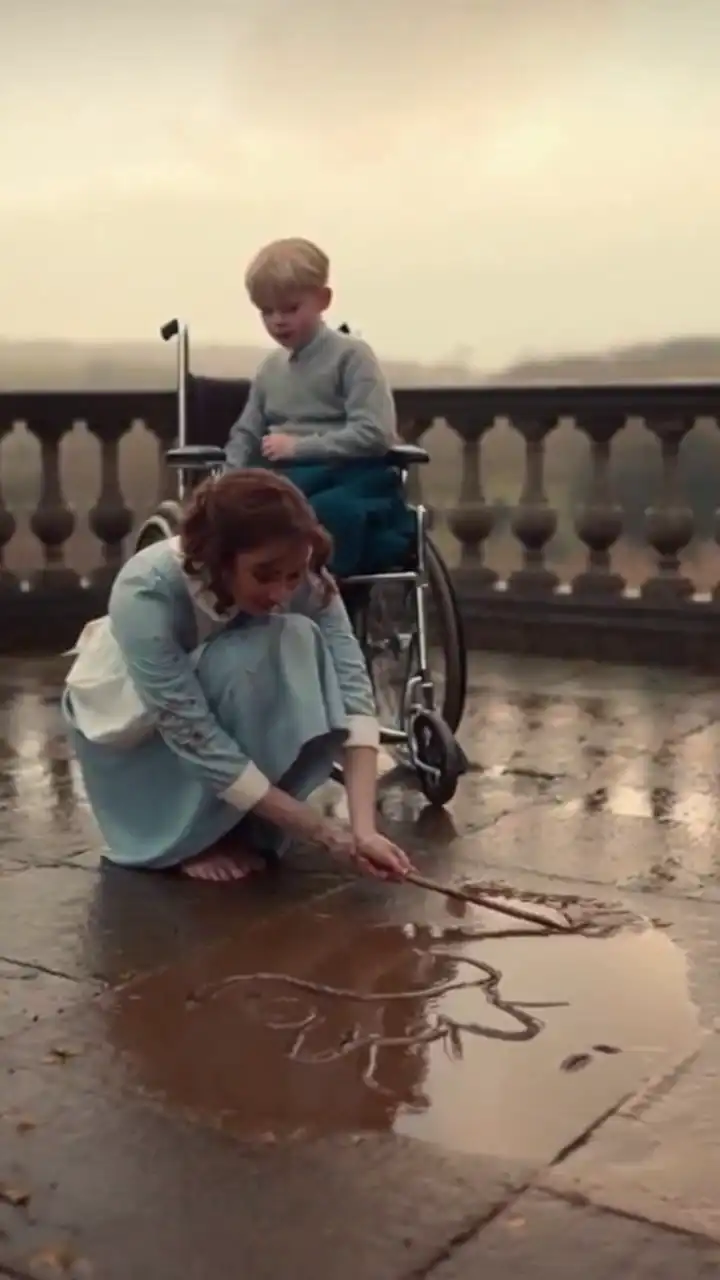
WHEN THE BILLIONAIRE’S SON DRAGGED HIS USELESS LEGS INTO THE MUD FOR THE FIRST TIME, HIS FATHER’S GIRLFRIEND SCREAMED FOR THE NANNY TO STOP
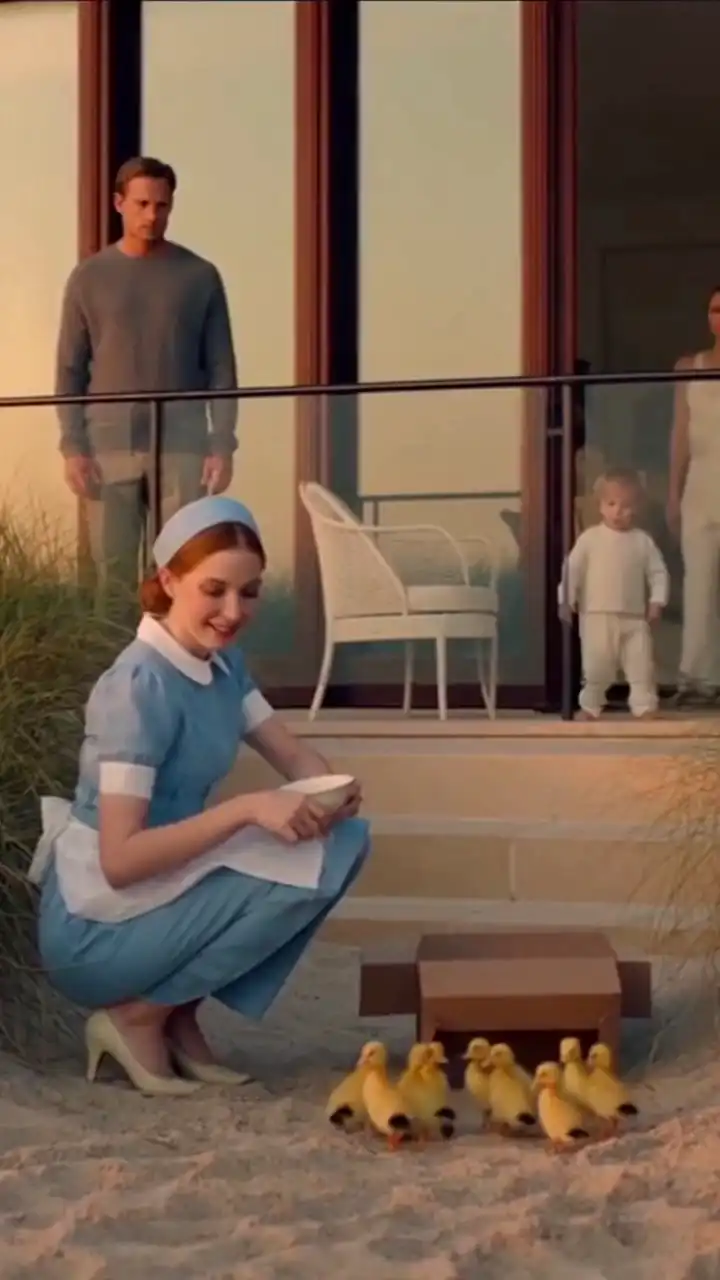
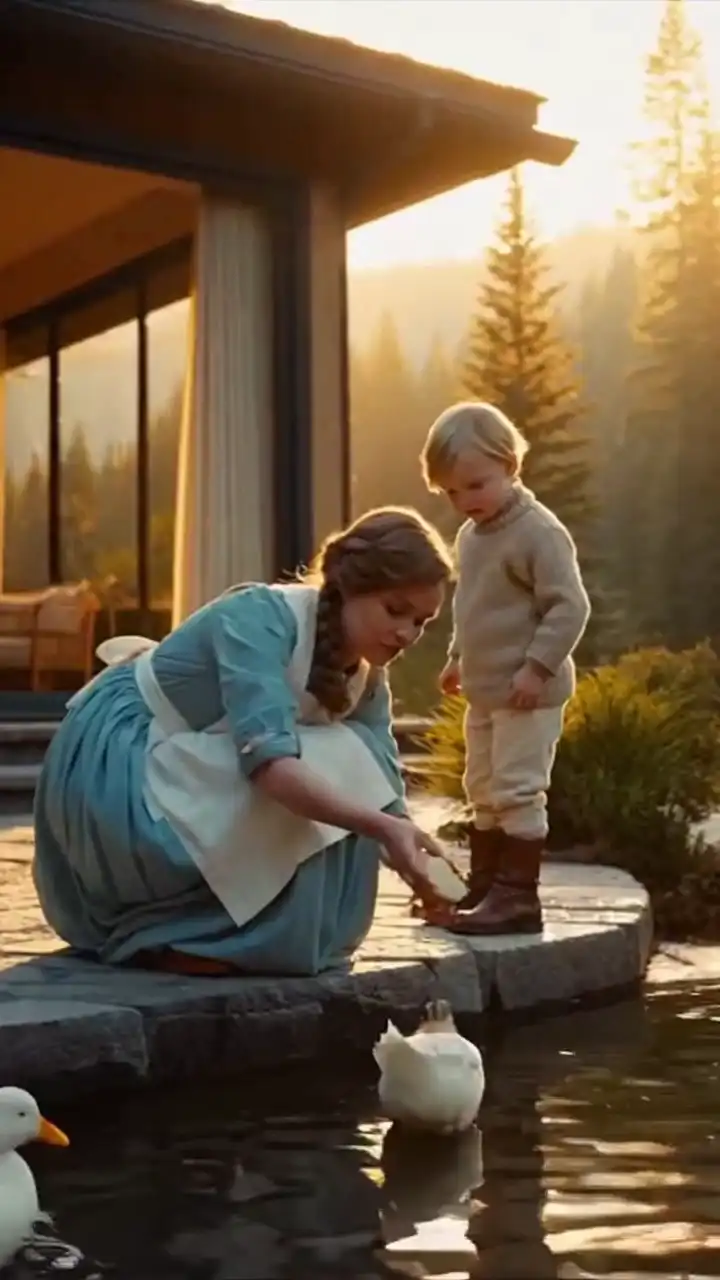
THE NANNY WHO BROUGHT DUCKS TO THE OCEAN HOUSE AND MADE A CHILD WALK TOWARD LIFE
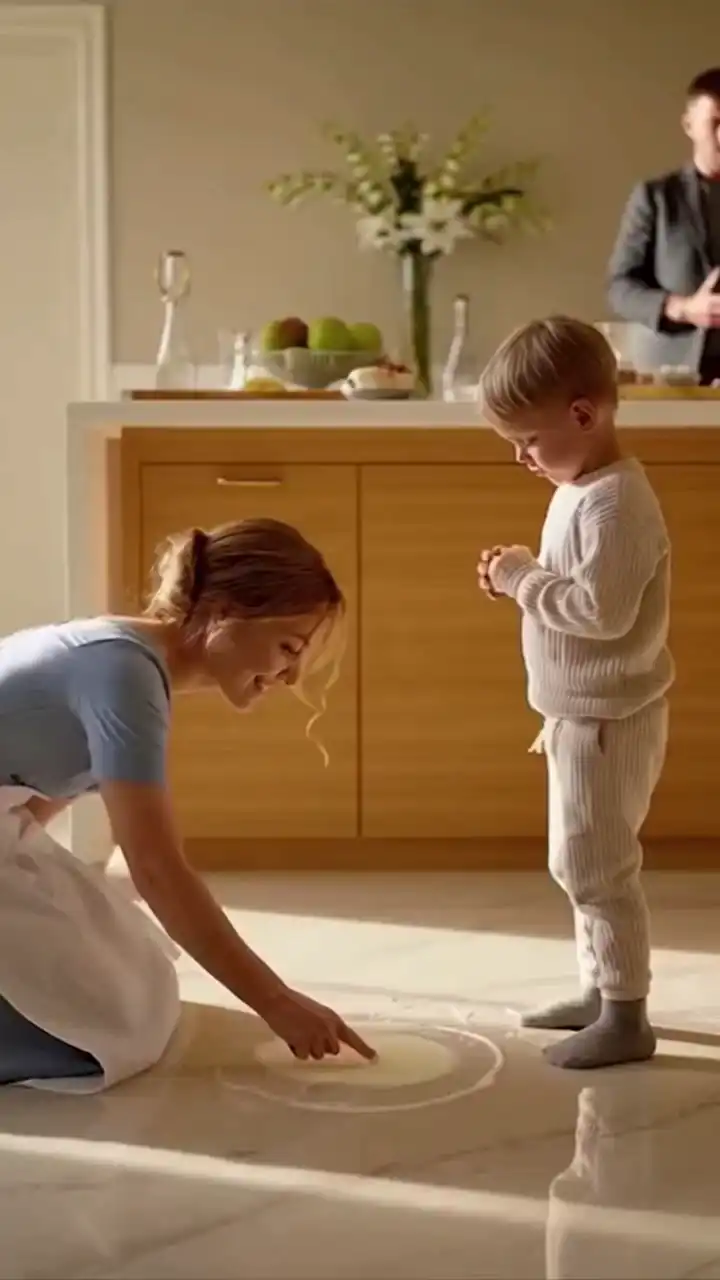
WHEN THE RICHEST MAN ON THE HILL HIRED THE WRONG NANNY, HIS SILENT SON CRAWLED ACROSS THE FLOOR FOR HER