
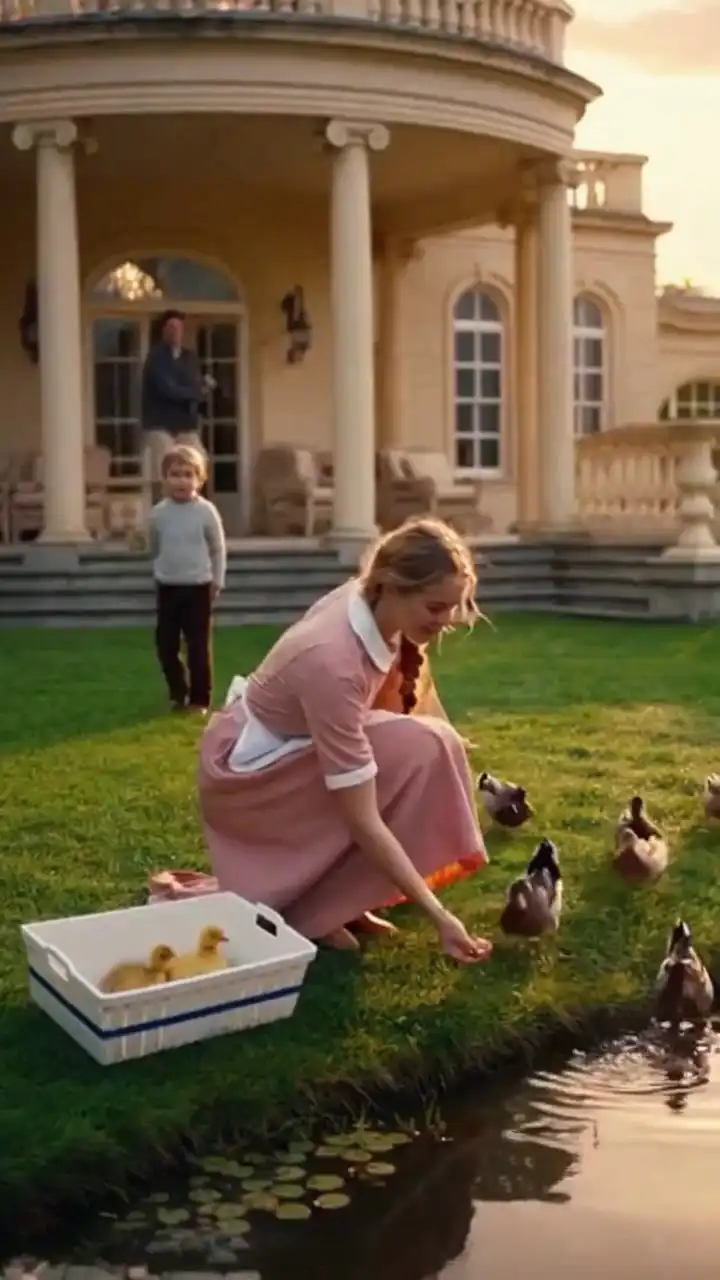
THE DAY THE BOY WHO NEVER FOLLOWED ANYONE WALKED AFTER A NANNY CARRYING A BOX OF DUCK FEED
The paper bag crackled again.
Noah’s fingers tightened around the feed Emily had given him, but he didn’t drop it. That alone would have stunned every specialist Daniel had paid. Noah usually rejected anything placed in his hand unless it was the old wooden truck or the corner of his own blanket.
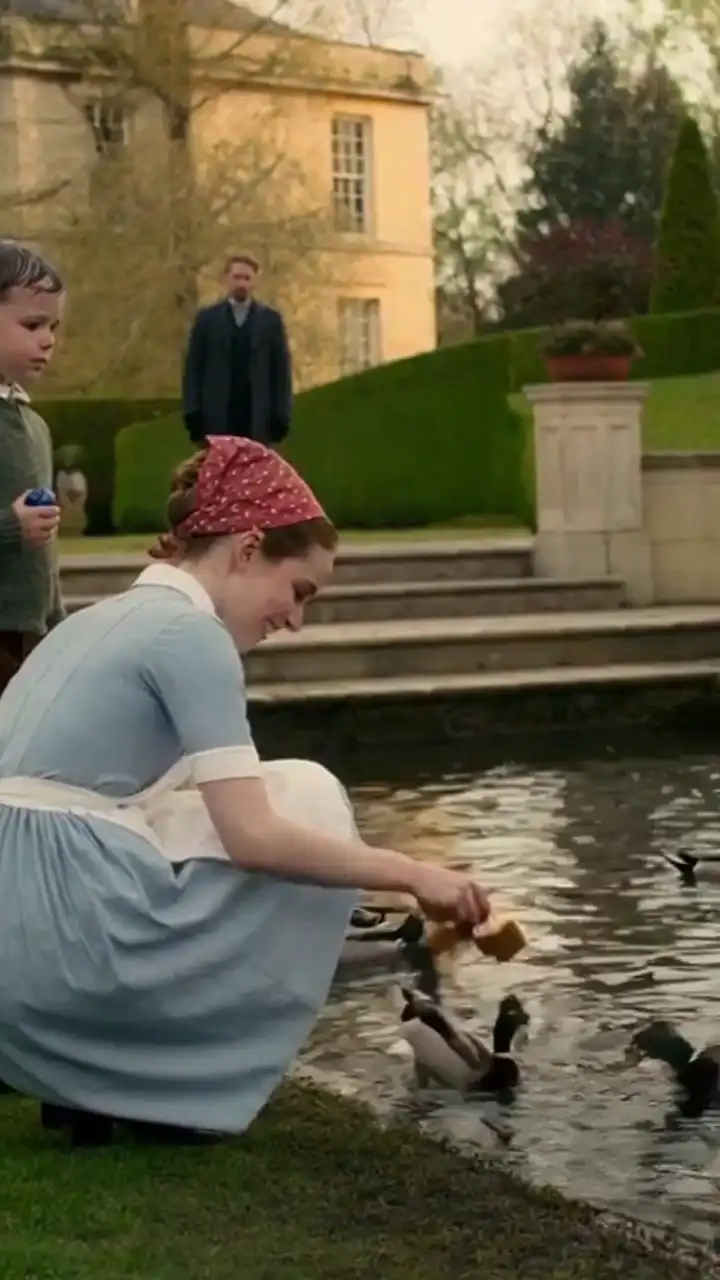
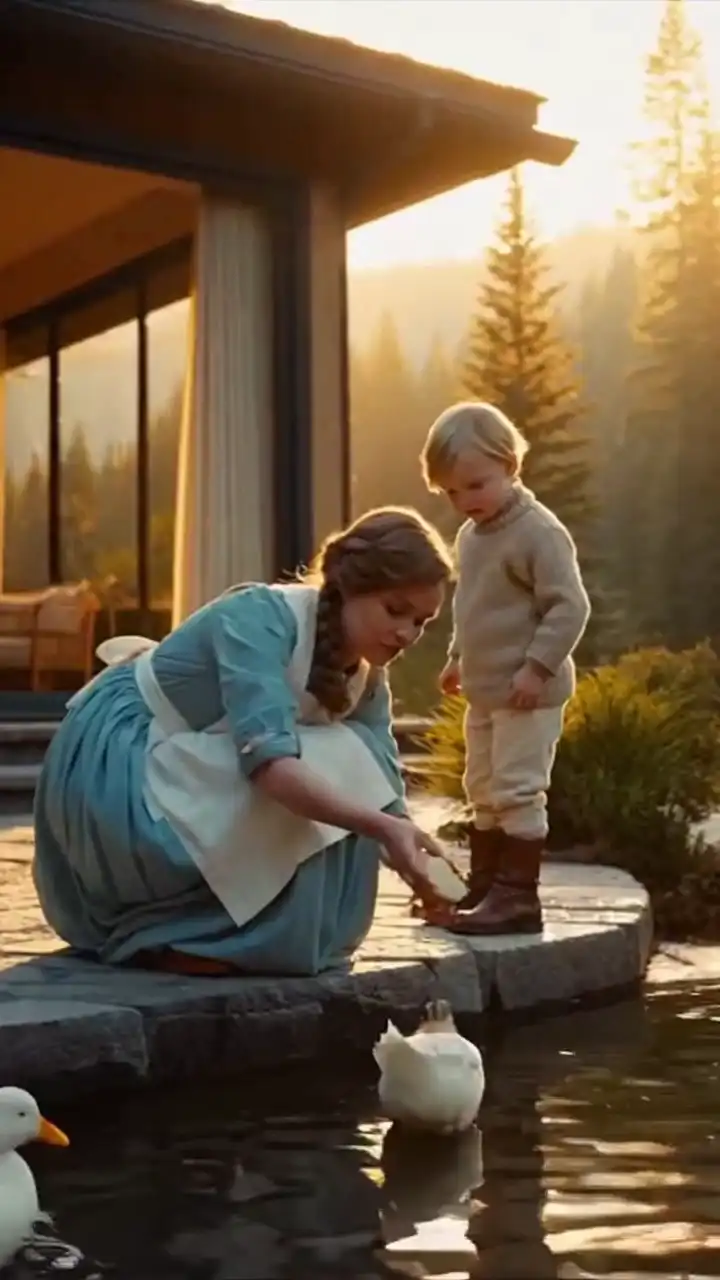
Emily stayed crouched near the pond, not looking directly at him, making herself less like a command and more like part of the scene.
“Your turn,” she said, but she said it to the ducks.
One bold mallard waddled close enough to peck at Daniel’s shoes. Daniel didn’t notice. He was watching his son.
Noah’s arm lifted in a jerky, uncertain motion. Half the feed fell onto the path. The rest landed by the water. Ducks swarmed it. Fish surfaced in messy circles beneath them, snapping at what drifted down.
Noah flinched at the sudden movement.
Then he made a sound.
It wasn’t a word. It was short, breathy, almost swallowed. But it came at the exact moment a duck stuck its whole beak into another bird’s tail feathers and got slapped with a wing. Emily laughed. Not a careful little nanny laugh. A real one. Open. Unpretty. Warm.
Noah looked at her.
Looked right at her.
Daniel felt it in his chest like someone had struck metal there.
Mrs. Weller recovered first. “That’s enough. He’ll get chilled.”
Emily stood, picked up the basket with the ducklings, and answered without apology. “Then he’ll go inside warm.”
That should have ended it. In a house like that, people did not answer the house manager like that. Temporary staff definitely did not. Daniel knew the rhythm of his home; one disapproving look from Mrs. Weller usually sent people back into line.
Emily did not go back into line.
She walked inside through the mudroom with Noah still behind her, slow but steady, his gaze fixed on the ducklings shifting in the basket. He followed her into the kitchen too, where no one ever brought him unless a nutrition specialist was conducting another failed feeding exercise with laminated charts.
The kitchen was already tense by the time Daniel came in. Mrs. Weller had called Dr. Levin, Noah’s developmental consultant, as if an emergency had broken out.
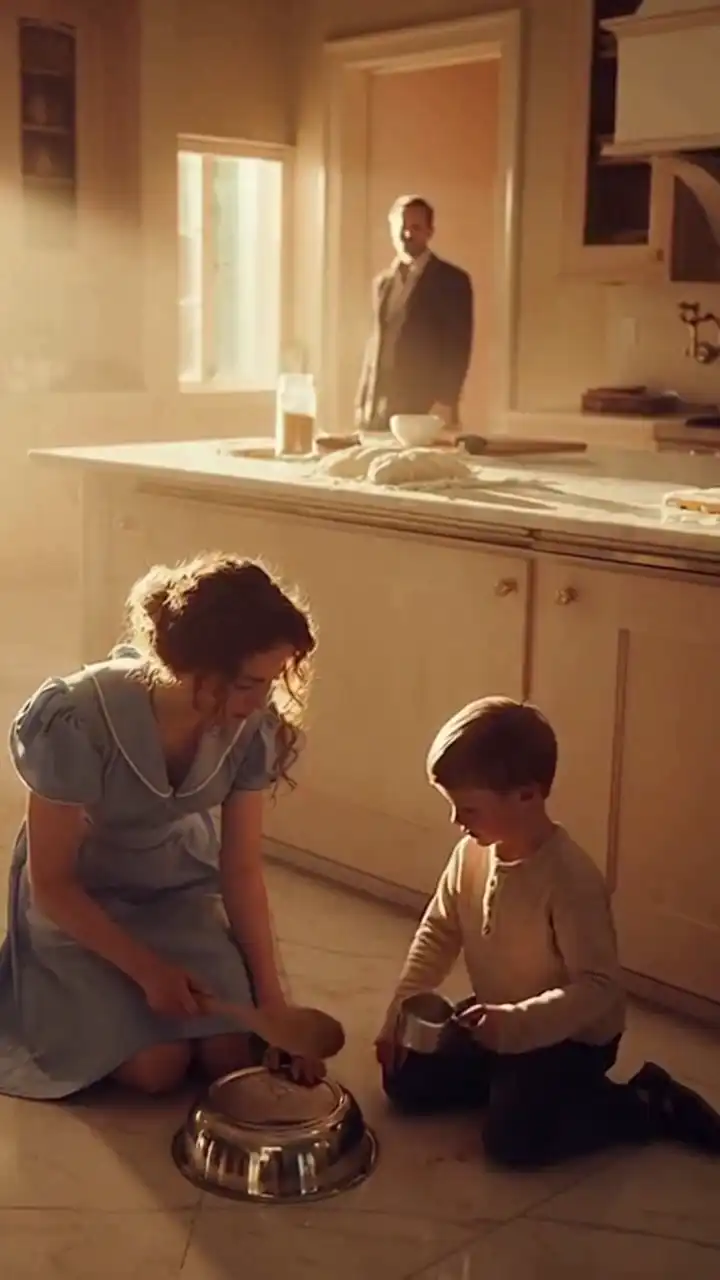
Dr. Levin arrived before dinner in a wool coat and polished shoes that hated the flagstone floors. He watched Noah from the doorway while Emily sat on the kitchen rug with a shallow metal bowl, a little water, and a handful of lettuce leaves. The ducklings paddled clumsily, splashing. Noah sat six feet away, knees pulled in, staring so hard he barely blinked.
“This is overstimulating,” Dr. Levin said.
Noah leaned forward.
“It’s also unsanitary,” Mrs. Weller added.
Noah leaned farther.
Daniel should have stopped it then. That was what he usually did when conflict started around Noah. He would defer to the expert, smooth over the situation, and tell himself structure was love. But he couldn’t unsee the terrace path. He couldn’t unsee his son deciding to follow someone.
So he did something unusual for him.
He said nothing.
Emily tore a lettuce leaf in half and placed one piece near Noah’s shoe. “If they want it, they’ll come get it.”
Noah’s fingers twitched against his knee.
Dr. Levin moved closer. “Mr. Ashford, this kind of unstructured sensory exposure may create an unhelpful association.”
Noah recoiled at the stranger’s voice and turned his face away. The room tightened. Same pattern as always. Adult talks, child vanishes.
Emily reached over, not to touch Noah, but to slide the lettuce a little nearer to the bowl. One duckling scrambled after it, stumbled, then pecked at Noah’s sock.
Noah jerked, then froze.
The duckling pecked again.
A tiny sound came out of Noah’s mouth. Not distress this time. Surprise.
Emily lowered her own voice. “Hungry little thief.”
Noah’s eyes flicked to the lettuce. He picked it up with two fingers and held it out.
The duckling waddled to his hand.
Nobody in the room spoke. Not even Dr. Levin.
The duckling took the leaf from Noah’s fingers. Noah didn’t pull away. He watched the beak, the tug, the quick greedy chew. Then, very slowly, his mouth opened in a shape Daniel had not seen since before the hospital years.
A smile.
It was brief. Uneven. Gone in a second.
But it was there.
That night Noah didn’t fight bedtime. For the first time in months, he let the hallway light stay off. Emily had lined up three tiny toy ducks on his windowsill and left the curtains cracked so he could hear real frogs by the pond. He lay on his side listening. Daniel stood in the doorway while Emily adjusted the blanket.
“He tracks movement,” she said quietly once Noah’s breathing deepened. “Not instructions. Not faces pushed at him. Movement he can trust.”
Daniel kept his eyes on his son. “Why animals?”
“They don’t demand. They invite. They repeat. They make noise without turning it into pressure. And they don’t care if he answers like other people do.”
Daniel nodded once, but it hit harder than that. So many adults had approached Noah like a locked system to be managed. Emily was the first one acting like he was already there, just too far away to cross by command.
The next week should have been simple.
It wasn’t.
The resistance came from outside, and it came fast.
Daniel’s sister Claire arrived for the annual memorial weekend for Noah’s mother, Lydia. Every year the family held a small gathering at the estate chapel and luncheon afterward. Every year Noah was dressed up, brought downstairs for exactly fifteen minutes, and then melted down under the eyes of people who called him “sweet boy” while whispering that he was getting worse.
Claire had strong opinions about everything, especially appearances. She lived in Boston, ran a foundation, and spoke with the confidence of someone who never had to clean up the damage after she left. The second she saw Emily carrying feed buckets toward the side porch, she stopped cold.
“Who is that?”
“The new nanny,” Mrs. Weller said, relieved to have an ally.
Claire watched Emily’s muddy boots, the basket of chopped greens, the two ducklings now housed in a cleaned-out utility pen near the kitchen garden. “Absolutely not. This weekend of all weekends? Lydia’s guests are arriving. There are donors coming.”
Daniel was already tired. “They’re not donors. They’re family friends.”
“They are people who talk,” Claire snapped. “And they will talk more when they see your son being raised like a farm child.”
That line stayed in the air.
Emily heard it. She didn’t answer. She just kept walking.
Claire hated being ignored almost as much as mud.
By Saturday morning, the whole house was under memorial-weekend tension. Florists in the front hall. Caterers on the terrace. White tablecloths. Framed photos of Lydia, all elegant and glowing, set out where everyone could feel her absence in a tasteful way.
Noah stopped at the edge of the downstairs hall and shut down almost immediately. Too many shoes. Too many voices. Perfume. Glassware. A violinist rehearsing near the library. His shoulders rose. His hands folded inward. His gaze dropped and drifted.
Daniel saw the old pattern returning and felt panic under his ribs.
Emily looked once at the crowd, then at Noah, and made a decision that probably would have gotten her fired in any other wealthy house.
She bypassed the formal gathering entirely.
She took Noah out through the side door, across the kitchen garden, and down toward the pond with a sack of stale bread ends, a small jar of fish pellets, and a pack of cheap watercolor cakes she’d bought herself at the general store.
Claire found out five minutes later.
“She took him where?”
“To the pond,” Mrs. Weller said, scandalized. “In the middle of the memorial receiving line.”
Claire turned on Daniel. “You are letting the help remove your son from his own mother’s remembrance?”
Daniel started toward the side hall without answering.
What he found at the pond made him stop.
Emily had spread an old picnic blanket on the grass. Noah was kneeling on it, coat forgotten, sleeves pushed up unevenly. Around him the world was moving in clean, simple rhythms: ducks gliding in and out, fish breaking the surface for pellets, sparrows hopping close for crumbs, wind ticking the reeds. Emily dipped a brush into a plastic paint tray and dragged blue across cheap paper. Then green. Then a hard slash of yellow where one duck’s beak flashed in sunlight.
She set the brush down.
Noah picked it up.
Not because she placed it in his hand. Because he reached for it.
He didn’t paint a picture anyone would frame in the front hall. He smeared color in heavy circles, then stabbed at the paper when a duck quacked too loudly. Blue water bled into brown and green until the page turned into a wild muddy patch. A fish jumped. Emily flicked silver paint with her finger.
Noah made that breathy sound again. Closer to a laugh this time.
Then a gull swooped low, trying to steal the bread.
Noah startled hard and tipped the paint tray.
Blue and yellow water ran straight across the blanket and onto his pants.
Claire had followed Daniel down the path just in time to see it.
“Oh, for God’s sake.”
Her voice cracked the scene like glass.
Noah’s whole body seized. Brush dropped. Hands to chest. Eyes gone.
Emily moved fast, but not toward him. She slapped her own palms into the spilled paint on the blanket.
Then she pressed both hands onto a sheet of paper.
Two bright handprints bloomed there.
She looked at the ducks and said, “Well, now they’ve done it. They’ve made a mess.”
Noah’s eyes shifted.
Emily stamped another pair. “Criminal ducks.”
A mallard quacked on cue. Daniel would remember that stupid perfect timing for the rest of his life.
Slowly, Noah lowered one hand.
Emily pushed a blank page toward him with her wrist. No demand. No “show me.” Just space.
Noah stared at the paint soaking into the fibers.
Then he put his palm down.
When he lifted it, a blue handprint stared back at him.
He blinked.
Pressed the other hand down too.
This time the sound that came out of him was unmistakable. Small. Rough. Real.
A laugh.
Claire went silent.
Daniel did too, but for a different reason. It was the first true laugh he had heard from his son since Lydia was still alive enough to sit on the porch in a blanket and let Noah curl against her.
Emily didn’t celebrate. She just kept making handprints, then fish tails, then little bird tracks with two fingers walking through the paint. Noah followed her pattern, then changed it. Yellow dots. Green streaks. One fierce swipe across the whole page. He was in it now. Not polished. Not obedient. Present.
When Daniel finally stepped closer, Noah looked up at him for one second.
Just one.
But it was direct.
Daniel crouched at the edge of the blanket, expensive trousers sinking into wet grass. “Hey, buddy.”
Noah looked down again, but he didn’t leave. He didn’t fold in. He dragged one blue finger across Daniel’s cuff.
Emily glanced at Daniel’s ruined sleeve and waited for the wealthy-house reaction.
It didn’t come.
Daniel looked at the blue streak and said, very quietly, “Okay.”
That was the first real change in him.
The second came that afternoon, when Claire tried to put an end to all of it.
She cornered Daniel in the study while guests moved through the memorial lunch upstairs.
“This has gone too far. Lydia would never have wanted this chaos. Ducks in the utility yard? Paint on the lawn? Your son skipping the receiving line? And that girl acts like she belongs here.”
Daniel, who usually gave ground to avoid scenes, surprised her.
“Noah laughed today.”
Claire folded her arms. “For a moment.”
“It was a moment we haven’t had in over a year.”
“You’re building your whole judgment around a servant with no credentials.”
Daniel stared at her. “I built the last year around credentials.”
Claire’s face hardened. “So this is guilt.”
Maybe it was. Guilt that he had hidden inside meetings while Lydia got sicker. Guilt that after the funeral he had let professionals set the terms of his son’s life because grief felt easier in spreadsheets and schedules than in a room with a child who no longer reached back.
But guilt was not the whole truth anymore.
“No,” he said. “This is me finally seeing what isn’t working.”
Claire left the study furious. By evening she had called Dr. Levin herself and pressed for Emily to be removed. She used words like liability, attachment distortion, inappropriate boundaries. Daniel listened to the voicemail on the terrace after everyone had gone.
Then he deleted it.
The next morning was Lydia’s birthday.
That was the date no one in the house had wanted to say out loud. Memorial weekends were manageable because they came with flowers and guests and structure. Birthdays were worse. Birthdays proved time kept moving without permission.
In previous months, Noah had always crashed on that date. Pacing. Humming. Refusing food. Smashing anything with a sharp enough edge. Daniel had planned for the worst and almost canceled all household activity.
Emily did the opposite.
At dawn she took Noah to the kitchen before the staff fully started. She pulled a mixing bowl from the cabinet, dumped in flour, eggs, milk, and blueberries, and set the whisk down with a clatter.
Noah hovered by the table, tense.
“It’s her birthday,” Emily said simply. “People make something.”
She let him watch the batter drip. Let him hear the shell crack. Let him smell the berries when she crushed a few by accident and purple juice streaked the counter. Then she dipped one finger in flour and tapped it onto the back of Noah’s hand.
White dust bloomed on his skin.
Noah stared at it.
Emily dusted her own nose.
He made the rough almost-laugh sound again.
Daniel entered halfway through and stopped. He had not eaten in that kitchen with his son in months. Usually meals were trays, plans, supplements, negotiations. Now there was batter on the counter, one duck peering through the mudroom glass, and Noah standing close enough to Emily to watch the pan.
When the first pancake browned, Emily didn’t shape it into anything cute. She just tore off a piece, cooled it, and left it on the plate near Noah.
He took it.
A tiny bite. Then another.
Daniel sat down without being invited and stayed there while the second pancake cooked.
Later that day, Emily brought out a shallow box from the mudroom shelf. Inside were the painted pond papers from the day before, now dry and wrinkled, layered with handprints, streaks, and accidental bird tracks where a sparrow had landed on one.
She spread them on the long harvest table in the family room.
Not the formal front parlor. The family room no one really used anymore.
Daniel stood over the pages, throat tight.
It wasn’t art in the elegant sense. It was evidence. Water. Motion. Contact. Proof Noah had been with someone, in something, making marks back on the world.
Noah came in carrying one of the pages crooked against his chest. He walked past Mrs. Weller, past the sideboard, past all the places where people had tried to reroute him before.
Then he stopped in front of a framed photograph of Lydia on the mantel.
He looked at the photo.
Looked at the page.
And held the painting up.
Daniel sat down hard in the nearest chair.
Emily didn’t move.
Mrs. Weller pressed a hand to her mouth.
Noah turned, walked to the table, and laid the painting beside the vase of birthday flowers.
It was not a ceremonial gesture. It was clumsy and brief. But it was the first time since Lydia’s death that he had placed anything anywhere for someone else to see.
That evening the house changed in ways that were small enough to sound ordinary and big enough to alter everything.
The kitchen door stayed open.
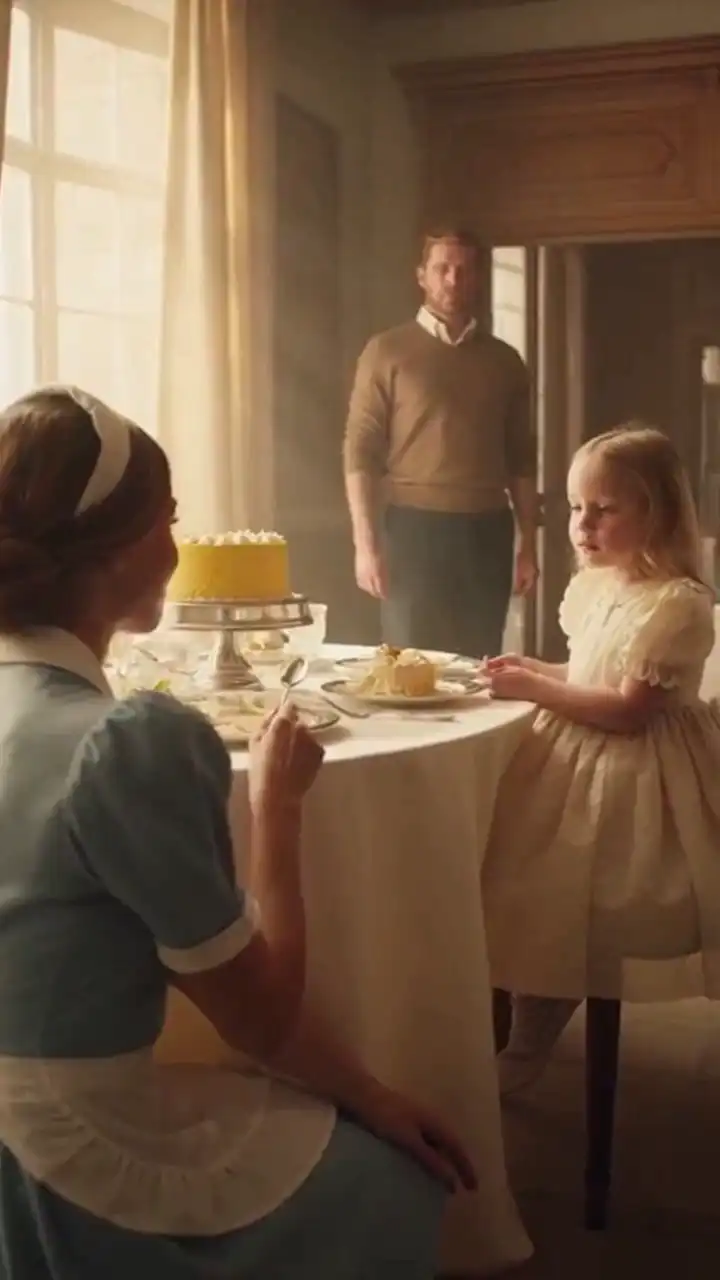
Dinner happened at the long table instead of on separate trays.
Noah sat for seven full minutes, then ten, then thirteen, not because anyone forced him, but because Emily had put a little bowl of peas near the window where birds kept landing outside and Daniel had learned not to interrupt every quiet.
Mrs. Weller stopped saying “the child” and started saying “Noah.”
One of the groundsmen built a proper duck run behind the herb beds.
The family room lights came on after sunset.
A week later Daniel ended Dr. Levin’s contract. Not with a dramatic speech. Just a final invoice and a polite note that the current approach was no longer the right fit.
Claire sent one icy text about standards. Daniel didn’t answer.
He was busy doing something he should have done a long time ago: being there.
He started taking morning calls from home so he could walk Noah to the pond before work. At first he only watched, same as before, hands in coat pockets, learning the rhythm Emily had somehow uncovered. Scatter feed. Wait. Let the ducks come first. Let Noah choose distance. Let sound build naturally. Don’t flood the silence with adult need.
Then one morning Emily handed Daniel the bag.
“Your turn.”
Daniel almost said no. Noah liked sameness. Emily knew what worked. Daniel was afraid of breaking the fragile line that had opened.
But Emily just nodded toward the reeds.
So Daniel shook the bag once. The ducks came. Fish flashed. Noah looked up.
Daniel crouched the way Emily did. Not too close. Hand open.
Noah stared at the feed, then at his father.
And stepped closer.
Not to the ducks.
To Daniel.
They fed the pond together.
By fall, the estate no longer felt embalmed. There were muddy boot prints by the mudroom bench, half-finished watercolor pages clipped to the fridge, an old pair of Daniel’s loafers permanently ruined by pond water, and a low shelf in the kitchen where Noah kept jars of birdseed, smooth stones, and feathers he trusted enough to bring inside.
Emily did not become a miracle worker in the family legend. Daniel refused that story when people tried to tell it. She became something harder for his world to explain and therefore more important: the person who brought ordinary life back where polished grief had been in charge.
He offered to send her to school if she wanted early childhood training. She accepted, but only if she could keep living at the estate while taking classes nearby because Noah still needed consistency.
So the arrangement changed.
Not servant and employer in the old stiff sense.
Not a fairy-tale leap either.
Something steadier.
She had a contract in her own name, tuition paid, real authority over Noah’s daily care, and a place at the family table. Mrs. Weller, after one awkward month of adjustment, began setting three mugs out in the mornings instead of two.
On the first cold day of winter, Daniel came home early and found Noah in the kitchen doorway in socks, waiting.
That alone would have been enough.
Then Noah looked toward the back drive where Daniel had just parked and said, rough and careful, “Dad.”
One word.
Daniel stopped breathing for a second.
Emily, standing at the stove with soup simmering and one of the ducks visible through the fogged mudroom glass, did not turn around right away. She gave the moment to them.
Daniel crossed the room slowly, like a man approaching something holy and fragile.
Noah didn’t retreat.
He reached for Daniel’s sleeve, the same place he had once smeared blue paint, and held on.
The estate still had money. It still had gates and staff and long stone paths and rooms too big for the voices inside them.
But now there were voices inside them.
That winter, Lydia’s birthday painting stayed on the mantel in a simple frame. Not because it matched the room. Because it didn’t. Because the wild blue handprint, the yellow streak, and the bird-foot marks said more about love returning than any polished portrait ever could.
And some evenings, just before dark, three figures could be seen heading down toward the pond: a father carrying feed, a young woman with muddy boots and wind-reddened hands, and a boy who once lived in his own sealed world, now hurrying ahead because the ducks were already waiting.
Disclaimer: Mention of any brand or trademark is for identification only and does not imply partnership or endorsement
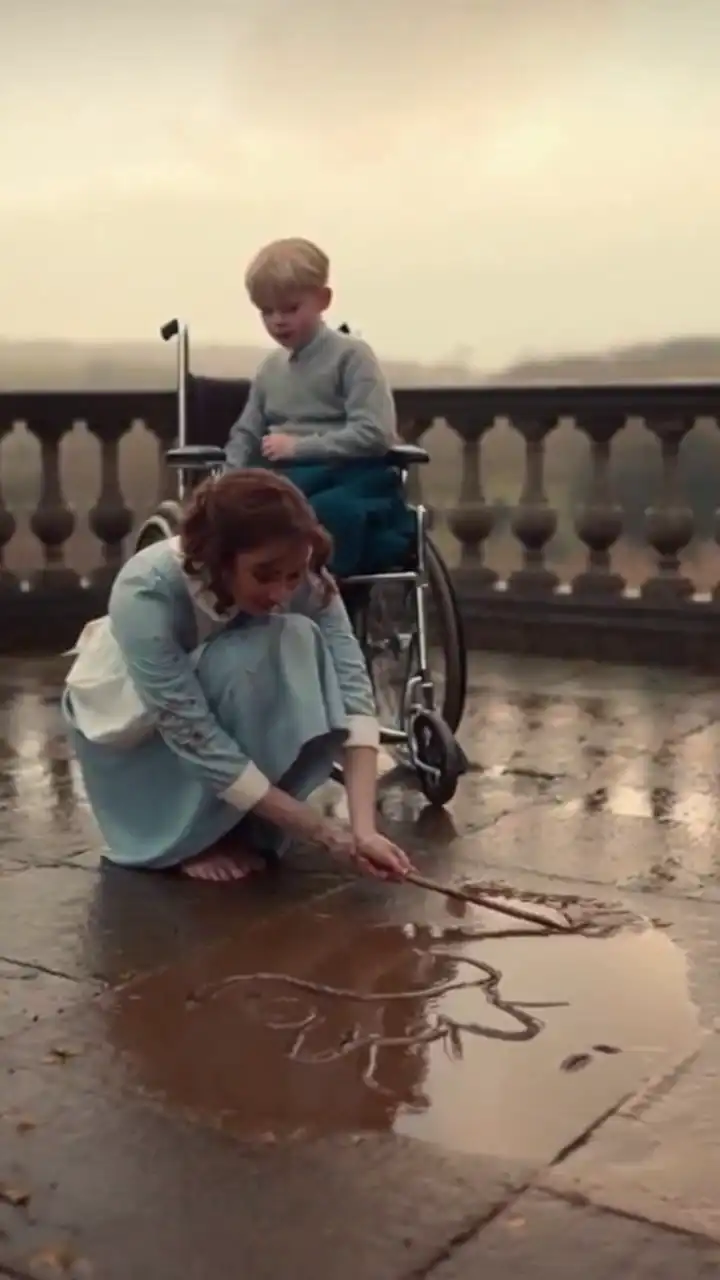
WHEN THE BILLIONAIRE’S SON DRAGGED HIS USELESS LEGS INTO THE MUD FOR THE FIRST TIME, HIS FATHER’S GIRLFRIEND SCREAMED FOR THE NANNY TO STOP
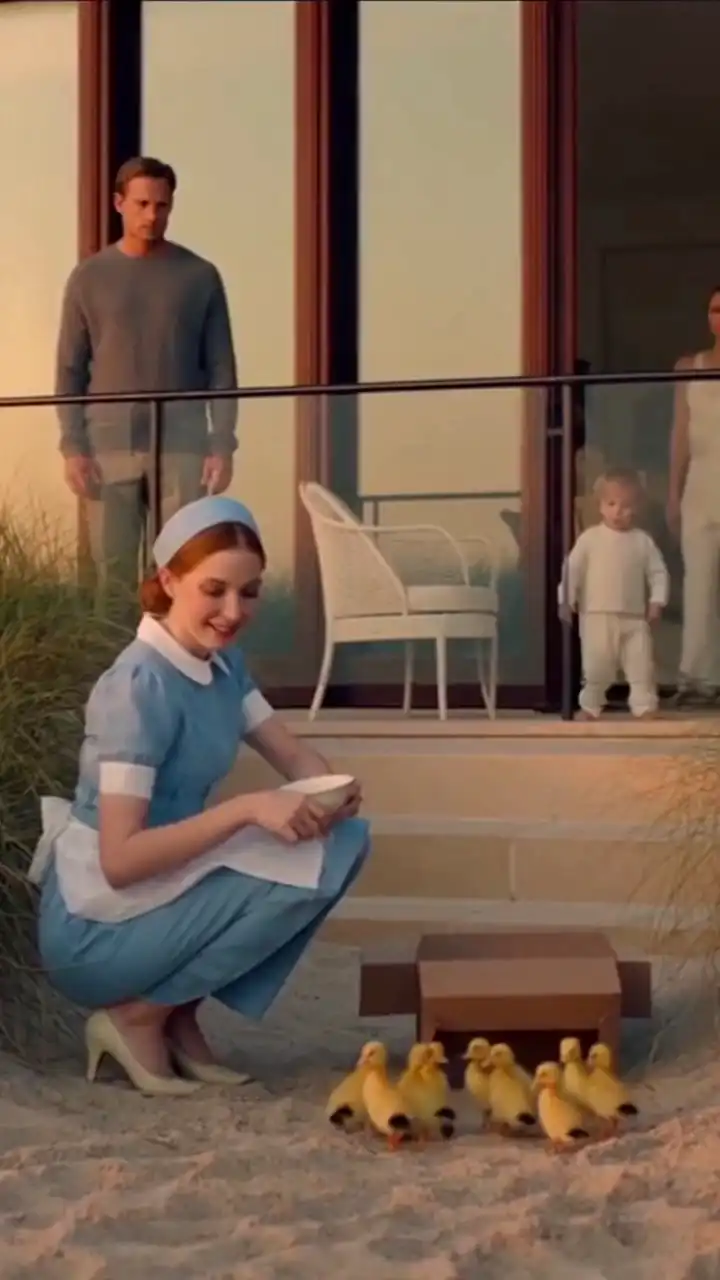
THE NANNY WHO BROUGHT DUCKS TO THE OCEAN HOUSE AND MADE A CHILD WALK TOWARD LIFE
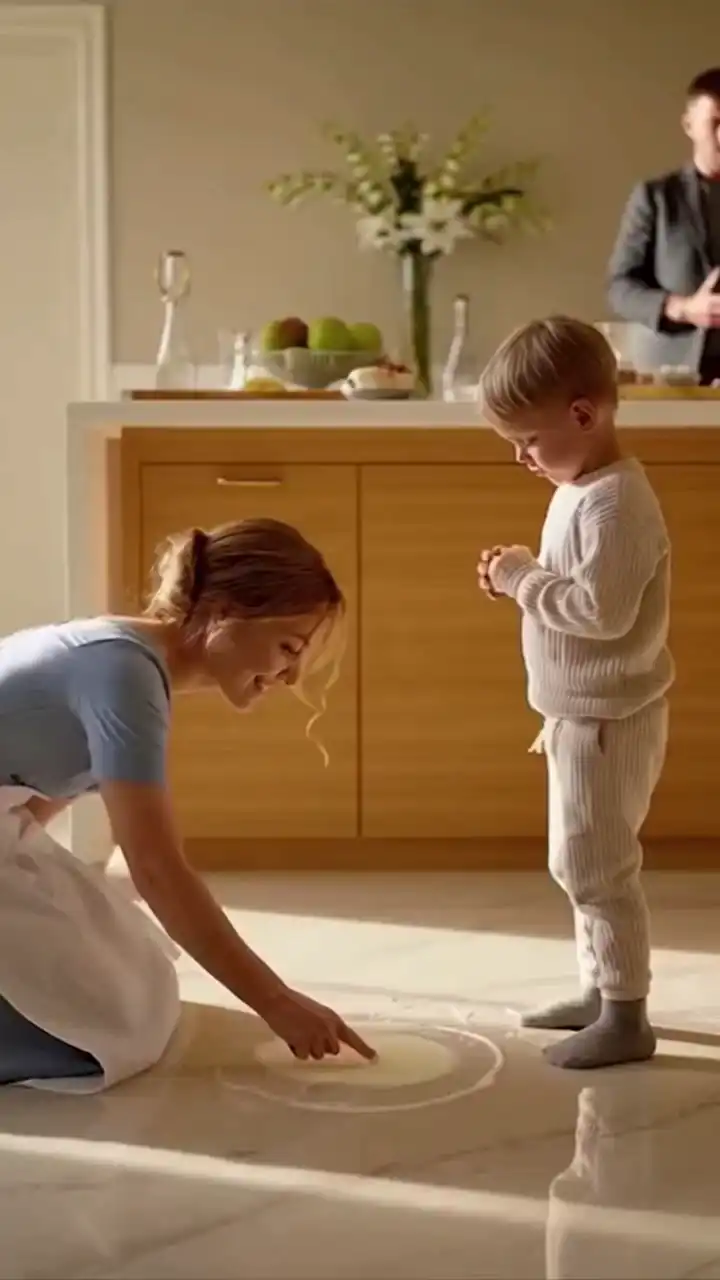
WHEN THE RICHEST MAN ON THE HILL HIRED THE WRONG NANNY, HIS SILENT SON CRAWLED ACROSS THE FLOOR FOR HER