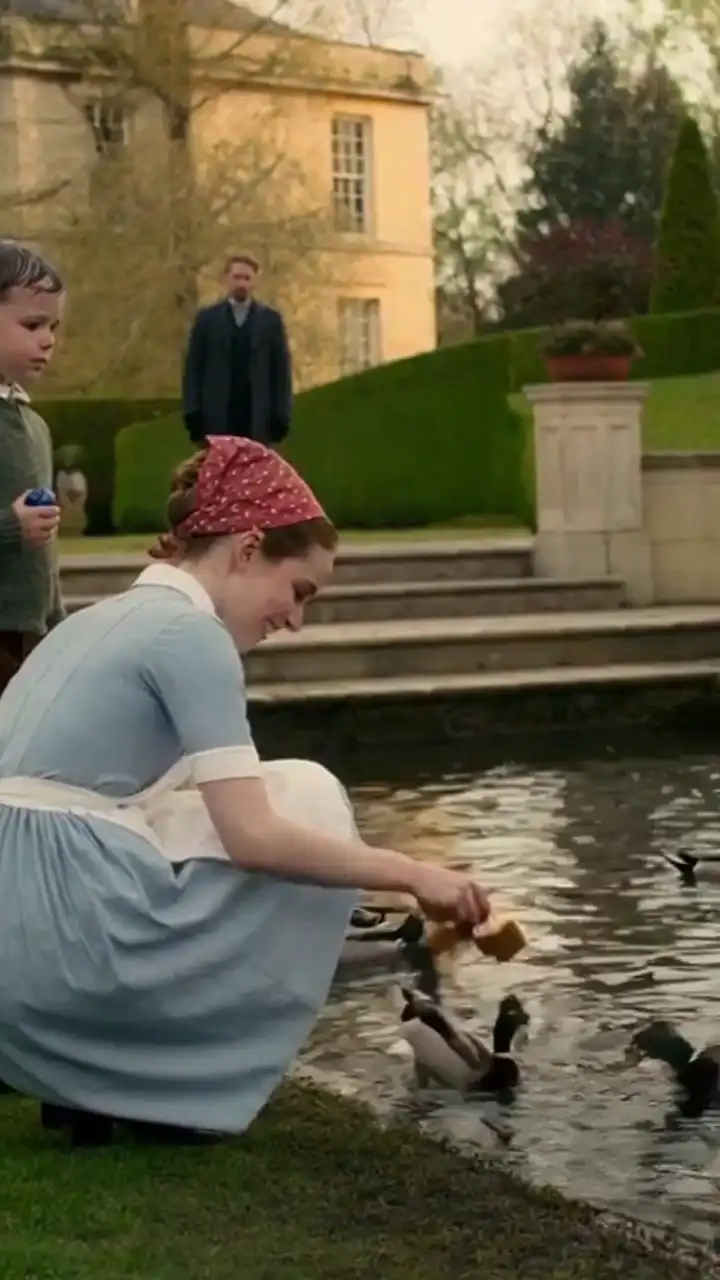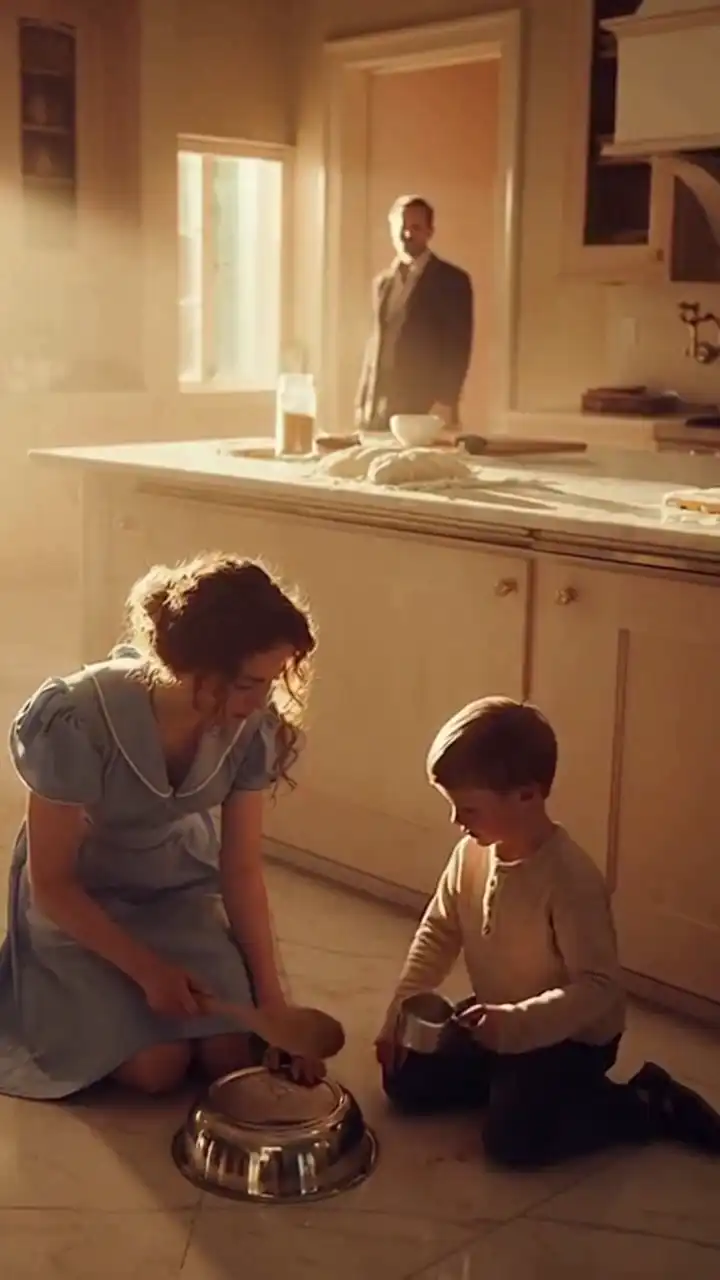
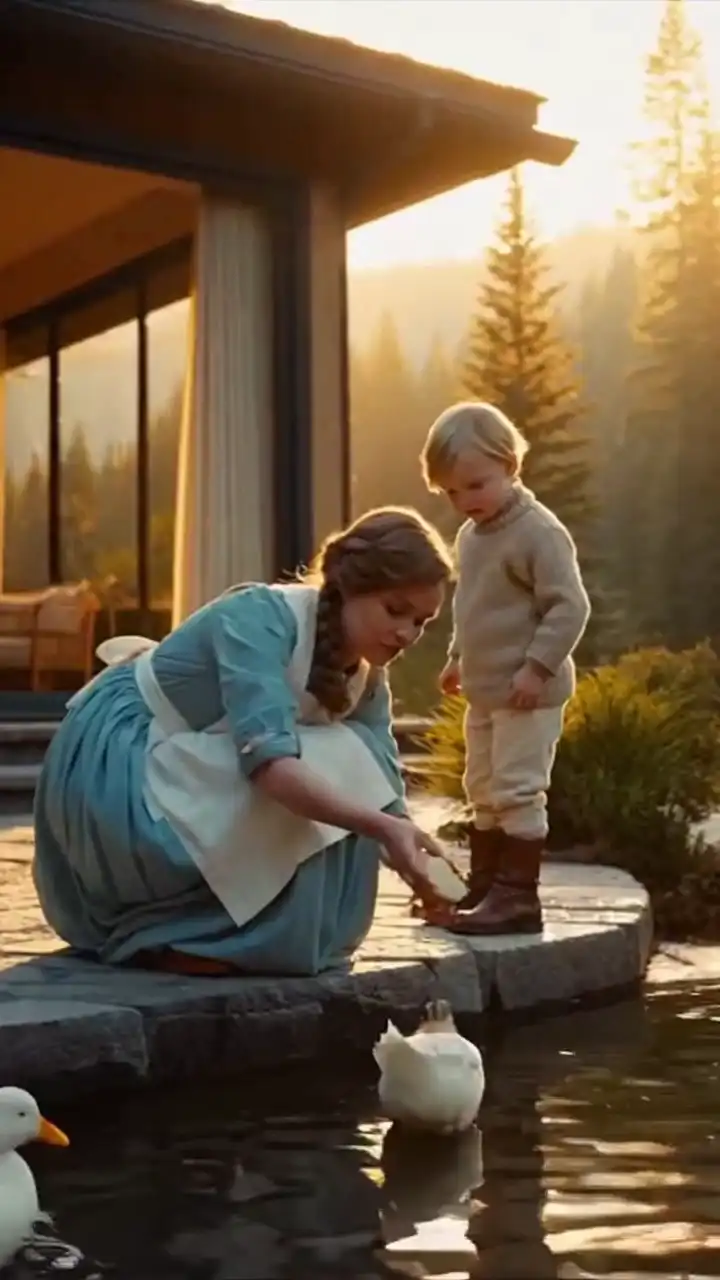
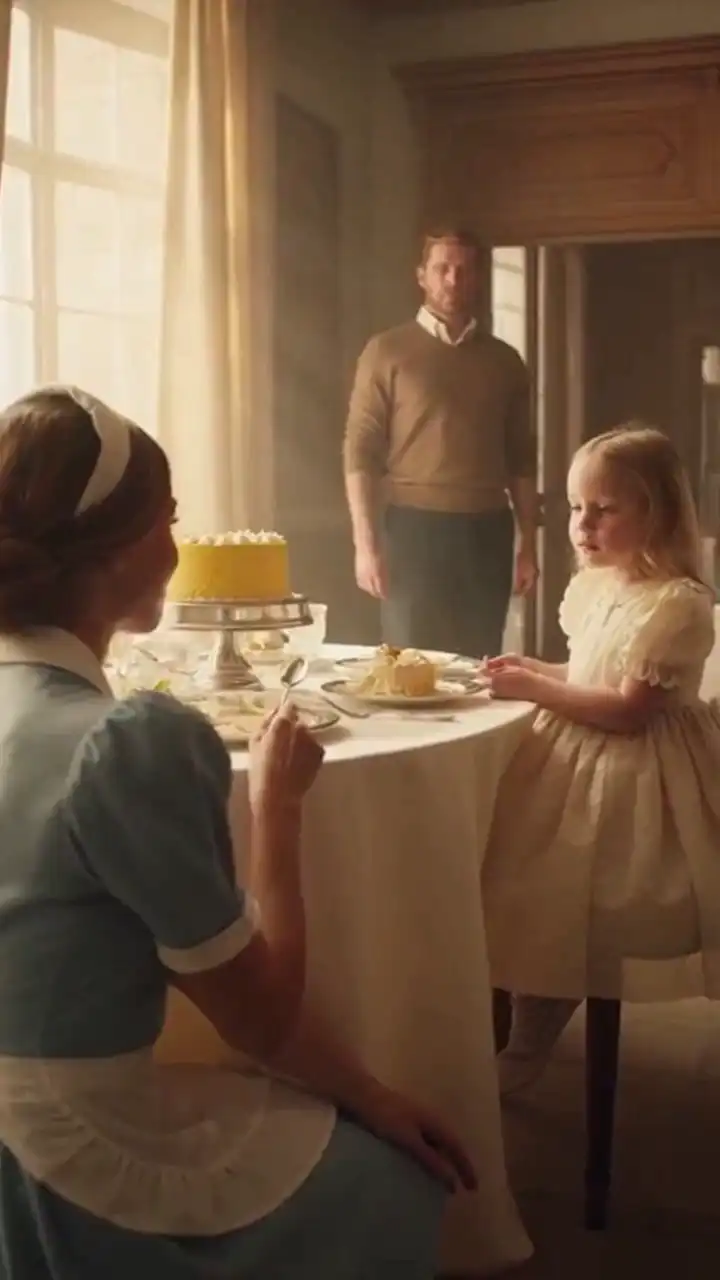

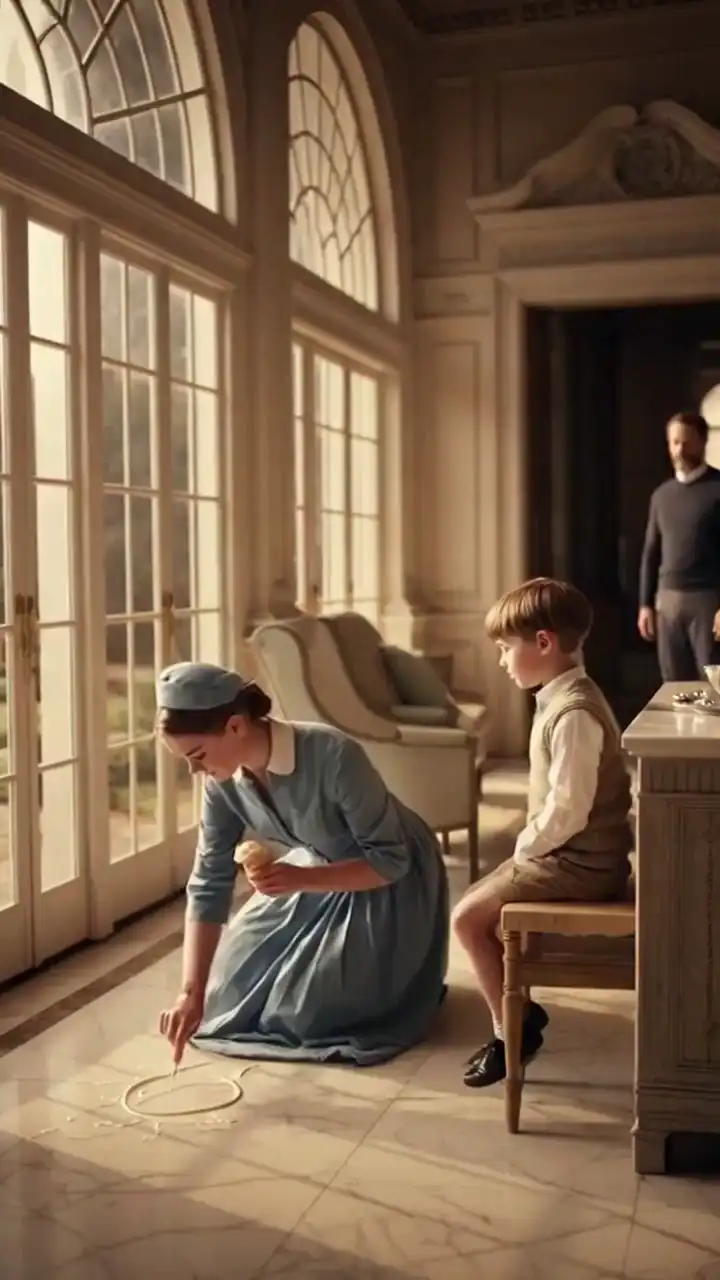
ON HIS DEAD WIFE’S BIRTHDAY, THE NEW NANNY LET HIS SILENT SON SMEAR ICE CREAM ACROSS A WHITE MARBLE FLOOR—AND THE BOY LAUGHED FOR THE FIRST TIME SINCE THE ACCIDENT
The room did not recover after that laugh.
It stayed split open.
Theo’s hand was still over his mouth, his eyes wide, his fingers sticky with vanilla. Abby didn’t celebrate. She didn’t say, Good job. She didn’t call anyone over like he was a trick finally performed on command.
She just copied him.
She put her own hand over her mouth and made her eyes wide too, as if they were both shocked by the sound.
That did it.
A second laugh burst out of him, strangled and rusty, but real. It came with a tiny huff through his nose and a quick fold in his shoulders, like his body remembered joy before his mind gave permission.
Mrs. Baines sat down hard in one of the cane chairs.
Graham didn’t move. He was afraid the sound would vanish if he breathed wrong.
Abby stayed low. “There it is,” she said quietly, not to Theo but into the room, like she was speaking to a frightened animal that had finally stepped out of the trees.
Theo looked at her again.
Then the front gate buzzer rang somewhere in the distance, sharp and sudden through the house speakers.
The boy flinched so violently he nearly toppled sideways.
The laugh died. His face emptied. His hand clawed at the floor. He scrambled backward under the console table and folded in on himself, forehead to knees, gone again in seconds.
Mrs. Baines stood. “I knew this would happen.”
Graham came back to life at once. “Turn that sound off,” he snapped to no one visible, already reaching for Theo.
“Don’t,” Abby said.
He stopped.
No one told Graham Vale not to touch his own son.
But Abby wasn’t challenging him for power. She was watching Theo, not Graham.
“He came out fast,” she said. “He got scared fast too. If everybody rushes in now, he’ll learn the laugh was dangerous.”
Graham stared at her. “He is under a table.”
“He’s trying to get small,” Abby said. “Let him get small without getting alone.”
Then she slid down to the floor a few feet from the console, not close enough to crowd him. She tucked one leg under her, rested her cheek against the cabinet door, and began breathing slowly, loudly enough to hear.
In for four. Out for six.
No instructions. No soothing speech. No demand that Theo copy her.
Just rhythm.
At first the only sound from Theo was the thin, fast scrape of panic. Then his breathing, still hidden in the shadow under the table, started catching against hers. Not matching, not yet, but noticing.
Graham had sat in rooms full of professionals explaining regulation, attachment, trauma response. None of them had ever made it look this plain.
Abby kept her eyes on the floor. “The accident was loud, wasn’t it?”
Theo didn’t answer.
She nodded anyway, as if he had. “That kind of loud gets stuck in the body.”
Graham felt the words like a blow.
Eleanor had died in a winter highway pileup coming back from Theo’s school concert. Theo had been in the back seat. Bruised. Cut. Alive. Eleanor had not been. By the time Graham reached the hospital from a delayed flight out of Chicago, every decision had already been made without him. Surgery. Notification. Sedation. Funeral arrangements. Press management because the Vale name had weight even in grief.
And then he had done what he always did.
He built structure around damage.
The best doctors. The safest house. The quietest rooms. Gentle voices. Predictable schedules. No mess. No suddenness. No chaos. No reminders.
He had made life so controlled that Theo barely had to exist inside it.
After almost a full minute, a small sticky hand appeared from beneath the console table and pressed flat to the floor.
Abby placed her own hand on the marble where Theo could see it, but not touching.
Theo left his there.
Graham looked away because something in his chest had started hurting in an old, humiliating way.
That afternoon Abby did not try for another laugh.
She asked for a towel, wiped the floor with Theo watching, then handed him a dry cloth. He held it for a second before dropping it. She shrugged and finished the job herself. No disappointment. No lecture.
When lunch was served in the formal breakfast room, Theo refused the chair as usual and stood by the window.
Abby took a grilled cheese triangle from her own plate, squatted on the rug, and ate there.
Mrs. Baines looked horrified. “Meals are taken at the table.”
Abby nodded. “Then they can keep being taken there.”
She patted the rug once. Theo did not sit.
But he looked.
That night, Graham found a note on the kitchen counter in round handwriting.
No sudden house audio. No one approaches from behind. Let him watch before joining. Less asking. More doing near him. He tracks warmth faster than words.
There was no signature. It did not need one.
The next morning Theo was back in the sunroom, sealed up. Graham watched through the cracked door as Abby entered carrying nothing but a stack of junk mail, a marker, and a roll of masking tape.
No therapeutic toy. No specialized kit.
She sat on the floor and started making ridiculous little paper roads, taping them across the rug, up a chair leg, over the hearth. Then she pushed a bottle cap along the route and made low engine noises under her breath.
Theo did not react.
Abby kept going.
For twenty minutes she played by herself, not performative, not needy. She simply made the room livable. A place where movement could happen without a demand attached to it.
At the bend near the fireplace, the bottle cap tipped into a floor vent and vanished.
Abby gasped at her own bad luck, then dropped flat on her stomach to peer in after it.
Two seconds later, Theo was on the floor too.
He didn’t touch her. He didn’t smile. But he came down.
Abby whispered toward the vent, “Sir, your train has entered another state.”
A tiny sound came out of Theo’s nose. Not a laugh this time. Almost one.
Graham, standing outside with his coffee going cold, leaned his forehead against the doorframe.
The resistance did not come from another woman in the house. It came from the old pattern itself, and the old pattern was strong.
After every small gain, Theo snapped back.
If he followed Abby into the kitchen in the morning, he hid in a closet by afternoon. If he let her sit near him on the library rug, he would not leave his bed the next day. If he touched the dough she mixed for biscuits, he washed his hands until the skin went pink.
It would have been easier if progress climbed neatly. It didn’t. It jerked and vanished and returned in strange places.
On the fourth day, Abby convinced the cook to let her use the back kitchen instead of the polished show kitchen no one truly cooked in. It was warm there. Noisy. Human. Pans hanging. Dishwasher humming. A radio low on the shelf.
She set a bowl on the table with flour, salt, and water.
Theo stood in the doorway, fingers in his sleeves.
Abby plunged her hands into the bowl and made a terrible mess.
Flour dusted her shirt. Dough stuck to her knuckles. She exaggerated every sticky pull and stretch like the whole thing was deeply inconvenient and a little funny.
“Terrible choice,” she muttered. “This is glue.”
Theo watched.
She slapped the dough onto the table by accident on purpose. It made a wet smack.
His shoulders jumped.
Then she stopped, looked at him, and slowly slapped it again.
Not hard. Just enough.
The second sound made him blink.
The third made him step closer.
By the tenth, he was standing beside the table.
Abby tore off a little piece and left it there. No invitation.
Theo stared at it for a long time, then pressed one fingertip into the dough. He jerked his finger back, looked at the sticky spot, and almost fled.
Abby pressed all five of her own fingertips down and held them there like a demonstration that mess could be survived.
He tried again.
This time he kept his finger in.
The cook, an older man named Luis who had worked for the family since Graham was in college, turned away and wiped his eyes with a dish towel.
The first true setback came with a tray.
One of the maids dropped a stack of silver dessert plates in the pantry hallway. The crash cracked through the house like a gunshot.
Theo screamed.
It was the first full voice anyone had heard from him since the accident, and it was pure terror.
He bolted.
Graham heard it from his study and found his son wedged behind the velvet drapes in the upstairs landing, shaking so hard the curtain rings rattled.
Abby got there seconds later and went pale.
Graham was already furious. At the maid. At the noise. At himself for letting this fragile progress exist on a floor of china and staff and echoes.
“This is exactly why structure matters,” he said.
Abby looked at him, breathing hard. “Structure isn’t the same as silence.”
“He was screaming.”
“Because his body still thinks loud means death.”
That shut him up.
She crouched near the curtain, not touching Theo. “That sound was now,” she said steadily. “Not then. But it felt like then. I know.”
Theo’s scream had collapsed into ragged crying with no tears, just air tearing out of him.
Abby did something Graham never would have allowed if he had seen it in theory instead of in front of him.
She put both her palms against the wood floor and knocked three times.
Soft. Soft. Soft.
Then again.
A simple pattern.
Not loud enough to startle him. Not random enough to scare him.
Theo’s breathing snagged on the sound.
Abby repeated it. “This house is talking nicely,” she said.
Three knocks. Pause. Three knocks.
After a while, from behind the curtain, there was one weak knock back.
Graham shut his eyes.
Abby answered with three more.
That was how they got him out.
Not with force. Not with pleading.
With a floor pattern like a child on the other side of a wall.
That night, Graham did not work through dinner. He sat in the back kitchen while Luis reheated soup and Abby cleaned flour out of a mixing bowl.
He said, “Why does this work?”
Abby rinsed her hands. “Because no one can think their way out of fear if their body still feels trapped in it.”
Graham waited.
She dried the bowl and set it down. “Everybody in this house has been asking Theo to come back using the part of him that went offline. Words. Decisions. Eye contact. Performance. But he notices temperature, rhythm, pressure, smell, movement. He notices when the room is safe before he notices what anyone says.”
Graham looked at the kitchen table with its knife marks and worn corners. “And the mess?”
“The mess says nothing terrible happened when something went wrong,” Abby said. “Ice cream dripped. Dough stuck. A bottle cap vanished. The world didn’t end. In a body like his, that matters.”
Graham let that sit.
Then he asked the harder question. “And me?”
Abby was quiet for a second.
“You love him,” she said. “That’s not the problem.”
He almost laughed at the brutality of that sentence.
“You come at him like a man trying not to lose anything else,” she went on. “He can feel that. It’s too tight. He needs someone near him who isn’t braced for disaster every second.”
Graham looked away toward the dark window over the sink. His own reflection looked expensive and tired and older than he liked.
“I kept everyone calm,” he said.
“You kept everyone careful,” Abby replied. “That’s different.”
The next morning he did something no one in the house had seen him do in years.
He took off his suit jacket before breakfast and never put it on again that day.
He found Theo in the library doorway while Abby was on the floor with painter’s tape making roads between table legs. Graham did not call Theo’s name. Did not offer a question. He simply sat on the rug several feet away and began tearing the tape badly, making a mess of straight lines.
Abby glanced up, surprised, then hid it.
Graham placed one crooked strip from the rug to the leg of a leather chair. “Bridge collapsed,” he said to no one.
Theo looked at the tape.
Graham put down another piece, even worse. “Terrible engineering.”
A tiny snort came from the doorway.
Abby pressed her lips together.
Graham stared at the chair leg like it was the most interesting thing in the world, because if he looked at Theo too soon he would ruin it.
Over the next week, the house changed in ways small enough to miss if you only believed in dramatic endings.
The breakfast room curtains were opened earlier.
The radio in the back kitchen stayed on low.
Mrs. Baines stopped correcting Abby every time she sat on the floor.
Luis began setting out an extra bowl just in case Theo wanted to stir.
The staff stopped speaking about the boy in front of him as if he were absent.
And Theo, still silent, started leaving traces.
A handprint in flour. A spoon moved from one counter to another. A cushion dragged to the sunroom window. A half-eaten strawberry on a napkin. A paper road continued after Abby had gone to bed.
The first word came because of fear again.
It happened on a rainy afternoon when the old house groaned under weather. Abby and Theo were in the conservatory, drawing on the fogged glass with their fingertips. Graham was there too, not working, just present, something that still felt unnatural on him.
Abby drew a terrible cat.
Theo erased it with his sleeve.
She drew another, worse.
This time he almost smiled.
Then thunder cracked overhead, close and sudden.
Theo dropped to the floor, hands over his ears.
Graham started forward, then stopped himself so hard his whole body shook.
Abby got down too, but before she could begin the slow breathing pattern, the lights flickered. Once. Twice.
The house went dim.
And the old fear rushed through the room like cold water.
Theo looked up wildly, not at Abby.
At Graham.
At his father, who had spent two years standing near him like a polished ghost.
Graham did the only useful thing he had learned.
He got on the floor.
Not kneeling. Not crouching above him.
Flat on the rug in his cashmere sweater, cheek against the carpet, close enough to be seen, not close enough to trap.
He knocked softly on the wood baseboard.
Three times.
Pause.
Three times.
Theo stared.
Graham’s voice came out rough. “This house is talking nicely.”
It was Abby’s line. He used it anyway.
Theo’s mouth opened. Closed. Opened again.
Then the smallest, most damaged voice Graham had ever heard said one word.
“Again.”
No one in the room moved.
Rain beat the glass. Thunder rolled farther away.
Graham knocked the pattern again because his hands were shaking too much to do anything else.
Theo pushed himself across the rug by inches and pressed his forehead against his father’s shoulder.
Graham made a sound Abby would remember for the rest of her life, because it was not a rich man’s controlled grief. It was the sound of something breaking loose after being held under for too long.
He did not grab Theo. He let Theo lean.
Abby looked away and gave them the dignity of not watching too directly.
After that, speech did not magically return in full sentences. Healing stayed uneven. Some days Theo used one word. Some days none. Some days he laughed at a kitchen disaster and hid by dinner. Some nights he slept in his own room. Some nights he woke crying and only settled if someone sat on the floor beside his bed until dawn.
But now there was a path back when he disappeared.
The house knew how to wait for him without losing him.
By winter, the sunroom had a low basket of cheap markers and old magazines for cutting. The conservatory windows were always smudged by finger drawings. The back kitchen had become the heart of the estate. Graham’s conference calls got moved when biscuit dough mattered more. Mrs. Baines began pretending not to notice when Theo carried toast into the library. Luis taught him how to crack eggs one-handed and accepted shell pieces as part of the bargain.
On Christmas morning, Theo came downstairs before anyone fetched him.
He did not race. He still moved carefully, like someone testing ice.
But he came.
The fire was lit. The tree glowed in the old front parlor. Staff moved in and out with coffee and cinnamon rolls. It was no longer a dead museum with people whispering inside it.
Abby was kneeling by the hearth, untangling ribbon from the dog Theo had finally agreed they could foster from a rescue. A ridiculous elderly beagle named Pickles sneezed on her sleeve.
Theo stopped in the doorway, watching the scene.
Abby looked up and smiled. “Disaster already.”
Theo considered this. Then he said, clear enough for everyone to hear, “Pickles did it.”
The whole room froze.
Luis began crying openly.
Mrs. Baines sat down and laughed at herself for sitting down.
Graham turned so fast he nearly knocked over his coffee.
Theo’s cheeks went pink. He glanced at Abby first, then at his father, as if checking whether speech was still allowed in this house.
Graham crossed the room slowly.
“Looks like he did,” he said, his voice thick.
Theo nodded once, then reached for the ribbon.
That was the real ending, though life kept going after.
Not a proposal. Not some dramatic announcement in front of the staff. Not a miracle cure that erased the accident.
A room that no longer went cold around pain. A father who learned to get on the floor. A child who could laugh, hide, return, and be met each time. A young nanny who entered as a desperate hire and ended up changing the rules of an old family without ever begging to belong.
In the spring, Graham funded a trauma-informed play program at Theo’s school in Eleanor’s name, because he had finally learned that polished help was not always healing help. Abby helped design the space. Not because she had a degree. Because she knew what a frightened child looked for first.
She stayed with the family, but not as someone ordered from room to room. She had her own contract, her own training paid for, her own voice in the house. Mrs. Baines started introducing her to guests without lowering her title into something smaller. Luis saved her the first strawberries every season because Theo liked them best when Abby sliced them crooked.
And sometimes, late in the day, when rain softened the conservatory glass and the old estate stopped trying to sound grand, three people could be found on the floor with a dog between them, drawing bad pictures in fog and knocking gentle patterns into the wood.
The rich house never became less large.
It just stopped being afraid of being alive inside it.
Disclaimer: Mention of any brand or trademark is for identification only and does not imply partnership or endorsement
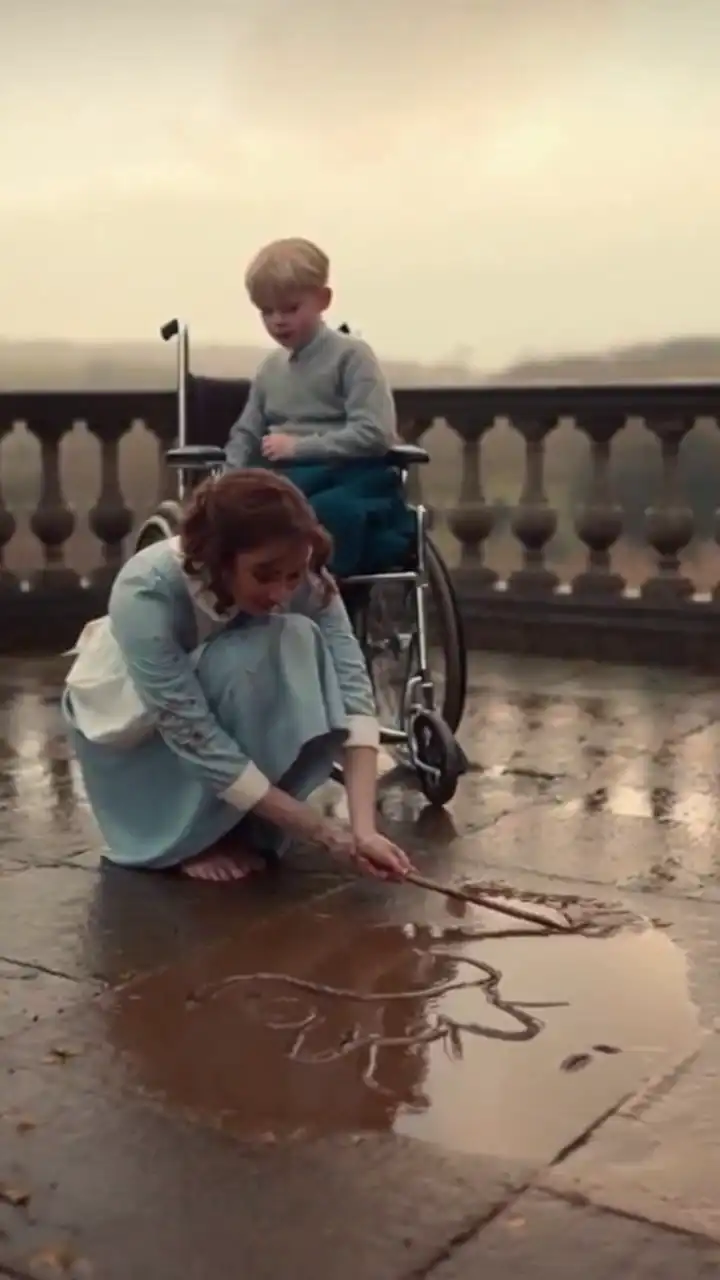
WHEN THE BILLIONAIRE’S SON DRAGGED HIS USELESS LEGS INTO THE MUD FOR THE FIRST TIME, HIS FATHER’S GIRLFRIEND SCREAMED FOR THE NANNY TO STOP
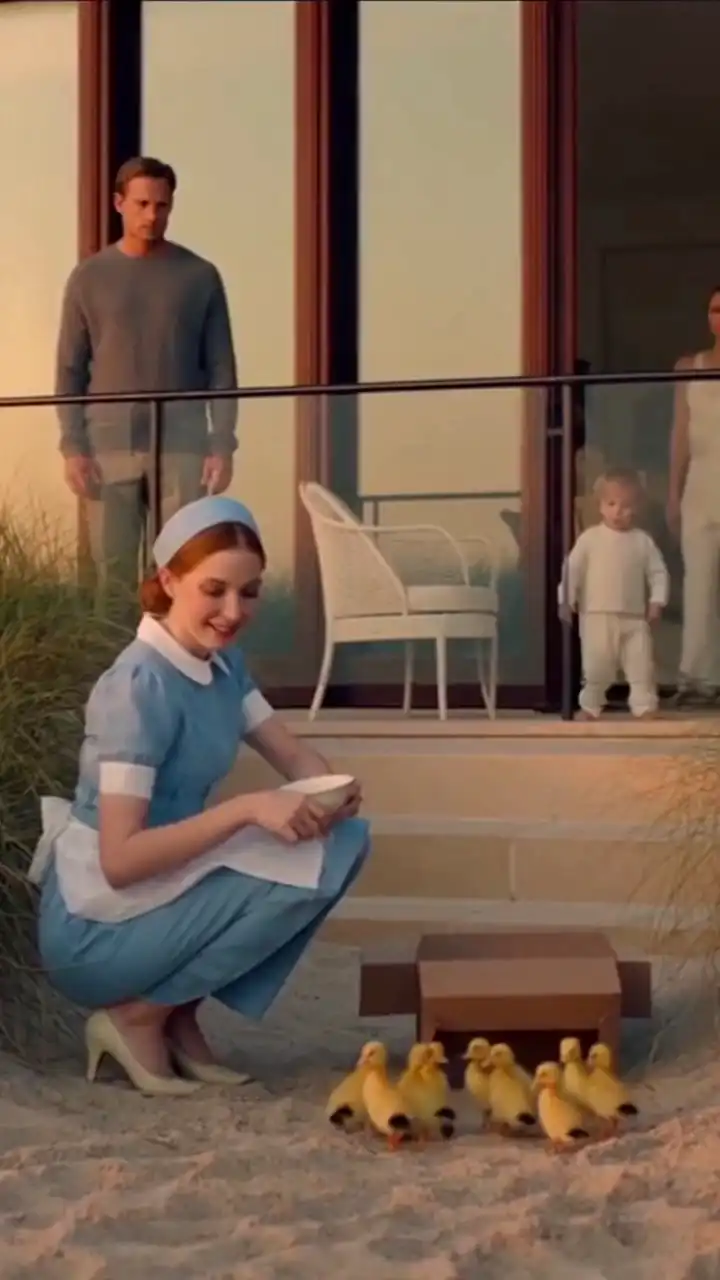
THE NANNY WHO BROUGHT DUCKS TO THE OCEAN HOUSE AND MADE A CHILD WALK TOWARD LIFE
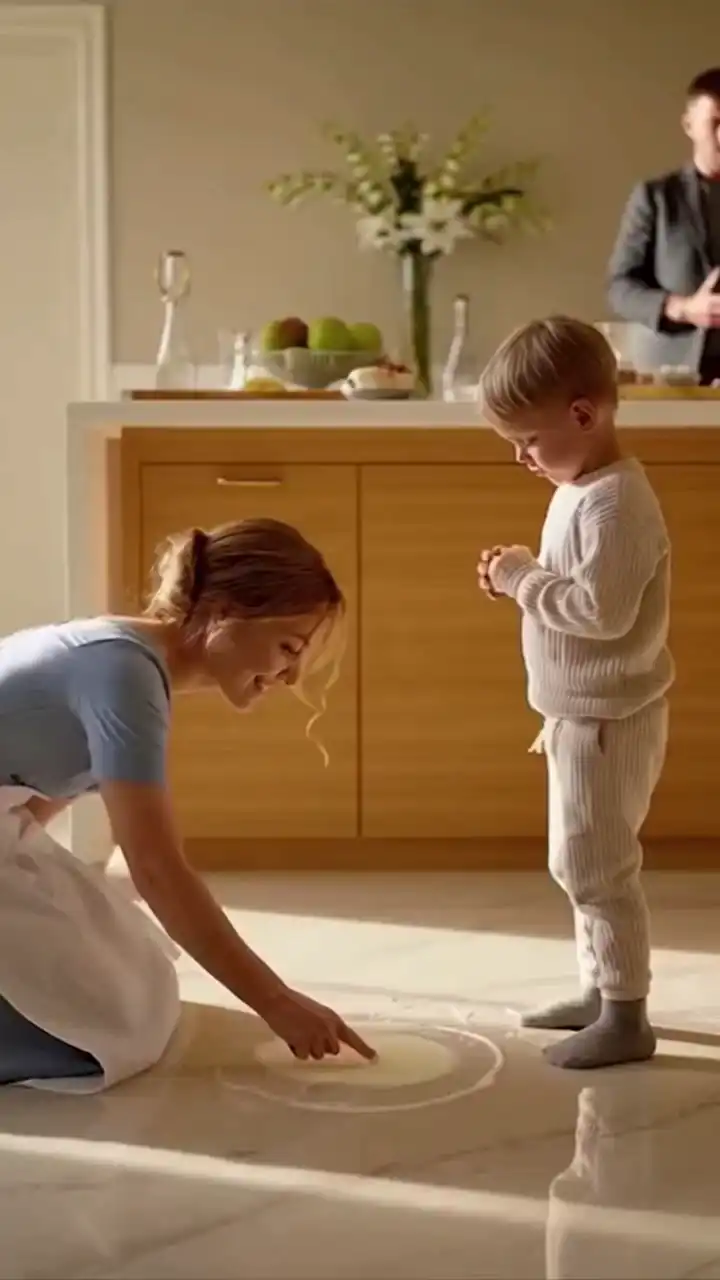
WHEN THE RICHEST MAN ON THE HILL HIRED THE WRONG NANNY, HIS SILENT SON CRAWLED ACROSS THE FLOOR FOR HER