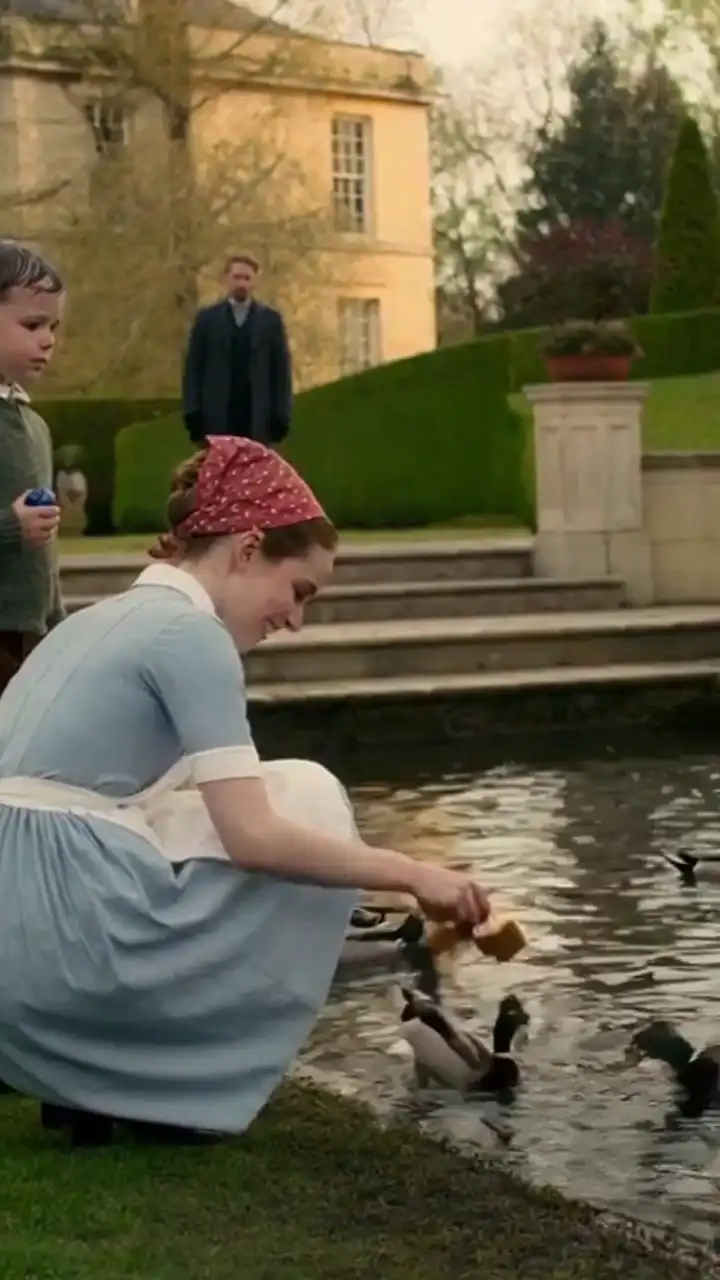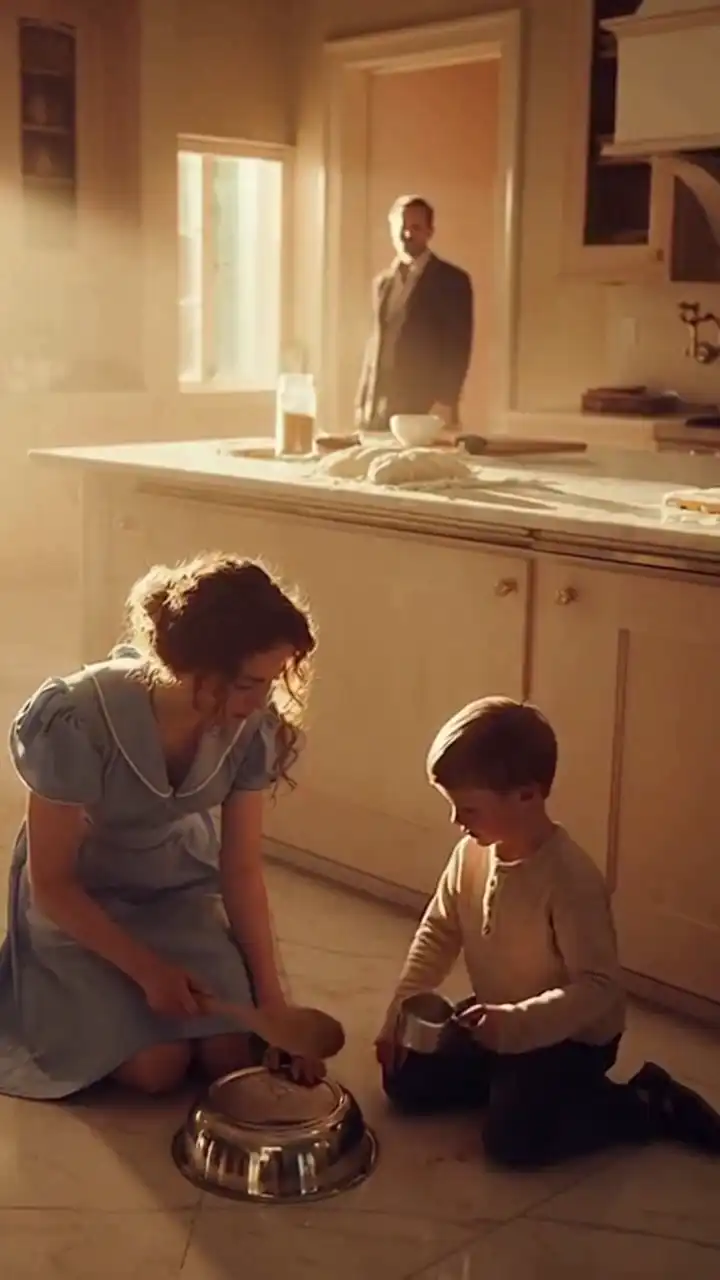
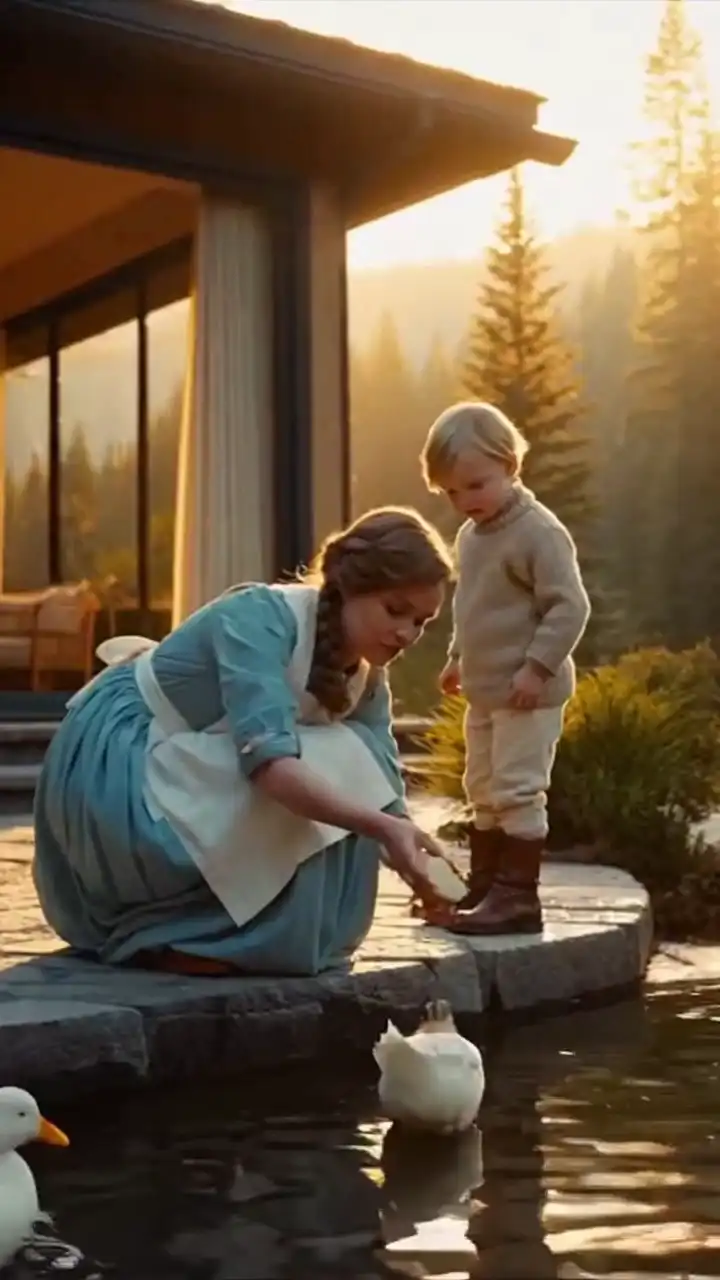
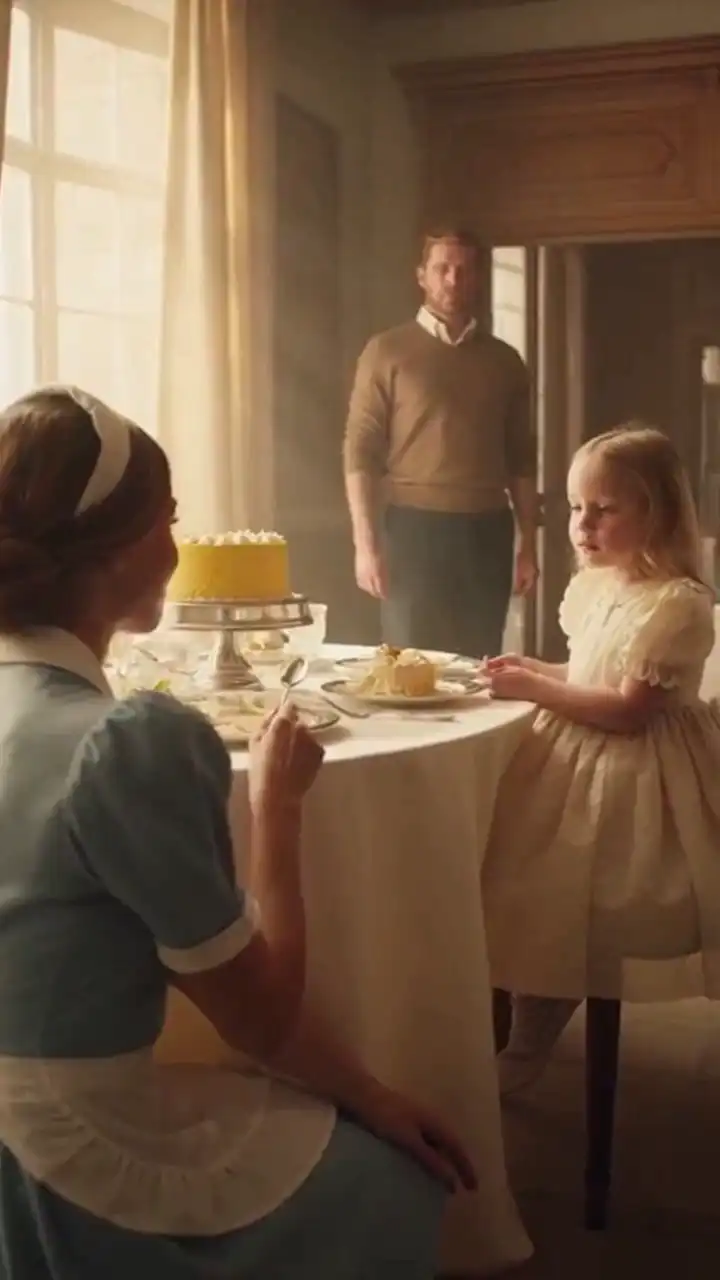

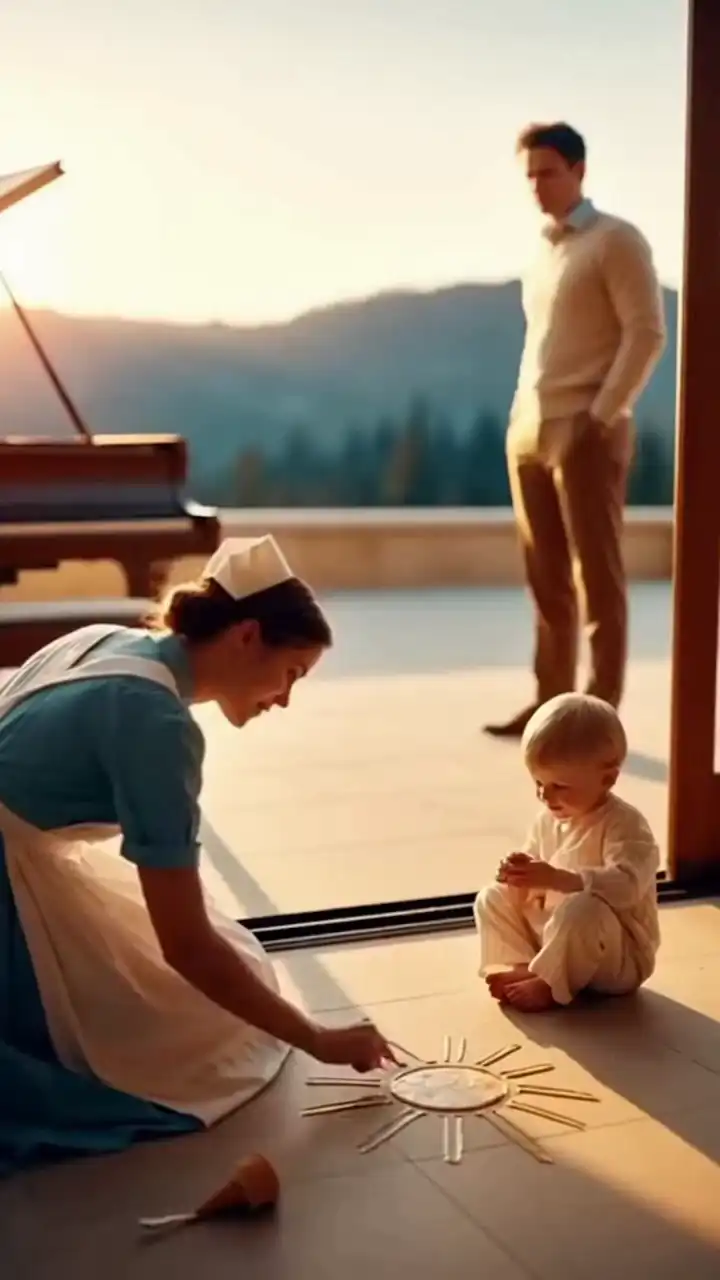
THE DAY THE RICH MAN'S SILENT SON SAID HIS FIRST WORD TO THE "IMPROPER" NANNY
His lips parted again, and this time there was a shape to it.
“Mo—”
The sound was so small it almost disappeared under Vanessa’s sharp inhale.
Then Noah jerked back like the word had burned him. He slammed both hands over his ears and curled under the tablecloth, forehead to the floor.
Ethan dropped to his knees so fast he hit the leg of the dining table.
“Noah. Noah, it’s okay.”
But Noah was gone again, locked inside himself, shoulders rigid.
Vanessa stood over the scene in disbelief. “This is why boundaries matter. He was overstimulated.”
Lila stayed where she was, flat on the floor, not reaching under the cloth. “No,” she said quietly. “He got close to something and got scared.”
Vanessa turned on her. “And who exactly are you to say that?”
“The only person he moved toward today.”
That should have ended it.
In Ethan’s world, people who spoke like that to his wife did not return the next day.
But he was still on the floor, staring at the edge of the tablecloth, replaying that broken half-word. Eleven months of doctors had given him vocabulary. None had given him that.
He rose, voice unsteady. “What do you need?”
Vanessa looked at him. “Excuse me?”
He wasn’t speaking to her. He was looking at Lila.
Lila wiped her sticky fingers on her jeans and stood. Up close she looked very young, maybe twenty-four. No polished resume. No stiff posture. No expensive calm. Just steady eyes and a face that wasn’t afraid of life.
“He needs a house that doesn’t act like every sound is a threat,” she said. “He needs people to stop hovering over every reaction like it’s a medical event. He needs rhythm. Jobs. Smells. Mess he’s allowed to make and survive.”
Vanessa laughed once, cold and disbelieving. “So your treatment plan is... spilled dessert?”
Lila met her gaze. “My plan is to stop treating him like a museum object.”
No one in that house spoke after that.
Not until Ethan said, “Marta’s sister moved back to town last month. Didn’t she say her daughter was looking for work?”
The housekeeper, standing frozen near the kitchen doors, blinked. “Yes, sir.”
Vanessa’s face tightened. “You are not seriously considering hiring this girl because she made your son crawl on the floor.”
Ethan looked toward the table, where Noah still hadn’t come out, but one small hand was no longer over his ears. It was gripping the edge of the cloth, waiting.
“I’m considering it because he did.”
That was how Lila entered the Hale estate.
Not through an agency. Not through references on embossed paper. Through a spilled bowl of ice cream and one impossible sound.
Vanessa made sure everybody knew it was temporary.
She called Lila “the helper” in front of guests.
She reminded staff that routines were not to be changed without approval.
She had fresh white slipcovers put on every sitting room chair after finding one of Noah’s sticky fingerprints on the arm.
And on Lila’s first official morning, Vanessa handed her a typed list titled HOUSEHOLD CHILD STRUCTURE PROTOCOL.
No kitchen access without notice.
No outdoor exposure after 5 p.m.
No sweets outside scheduled nutrition windows.
No floor play in formal rooms.
No emotionally suggestive language about the deceased mother.
Lila read the page once and folded it in half.
Then she put it in her apron pocket and went looking for Noah.
He was in the sunroom, exactly where Ethan had said he would be. Sitting on the floor. Spine straight. Hands in his lap. Eyes on nothing.
A row of expensive educational toys sat untouched on low shelves around him like offerings left at a shrine.
Lila didn’t start with a question.
She opened the windows.
Mountain air pushed inside, cool and alive. Curtains moved.
Noah flinched.
She noticed, but she didn’t shut them.
Instead, she sat cross-legged on the rug and pulled a paper bag from her apron. Out spilled the least impressive objects ever brought into that room: a wooden spoon, a roll of masking tape, two oranges, a dish towel, a plastic measuring cup, and a cheap bottle of bubbles.
Noah’s eyes flicked once.
That was enough.
Lila put the wooden spoon in the cup and beat a soft rhythm against the floor. Tap-tap. Tap. Tap-tap.
Then she rolled one orange across the rug.
It bumped Noah’s sock and stopped.
Nothing.
She rolled the second one harder. It curved, hit a chair leg, and wobbled back toward her. “Terrible game,” she muttered. “Needs a better player.”
Noah’s eyes moved to her hands.
So she kept going. Not pushing. Not praising. Just making life happen around him.
The first week looked ridiculous to anyone who valued order.
She let him watch bread dough rise on the warm side of the kitchen while she and Marta kneaded another batch hard enough to make the counter shake.
She blew bubbles on the back terrace and didn’t gasp when one landed on his sleeve.
She fogged up windows in the morning and drew faces in the glass.
She lined measuring cups along the floor and sent blueberries down them like tiny rolling planets.
She sat on the pantry floor and peeled clementines with her thumbnail, letting the sharp clean smell fill the air.
Noah never spoke.
But he stopped pressing himself against walls.
He began appearing in doorways.
Then in rooms.
Then beside her.
He started following rhythm first.
If she shook out a dish towel, he looked.
If she tapped a spoon on a pot, he came closer.
If she crawled after a runaway orange under a table, he would crouch and watch from the edge, his fingers gripping the wood.
At dinner, Ethan began noticing new things.
Noah was still silent, but he was no longer disappearing from the room entirely.
He sat longer. He blinked less frantically when silverware clinked. Once, when Marta brought out cornbread, Noah’s head turned before anyone prompted him.
Vanessa hated all of it.
Not because it was harming the child. Because it was changing the climate of the house without her permission.
The kitchen started sounding like a place people used.
The staff smiled more around Noah.
Marta stopped whispering.
Even Ethan, who had spent months eating in silence while checking work emails, found himself standing in the doorway after hours listening to Lila and the cook argue over whether blueberry pancakes counted as dinner.
Vanessa saw it too.
And she reacted the way people like her often did when softness failed: she tightened rules.
She had the grand piano closed and covered so “there would be no crawling beneath furniture.”
She instructed staff not to give Noah any food by hand.
She removed the bubble bottles from the lower cabinet.
When she found Noah and Lila lying on their stomachs in the upstairs hallway, breathing on the polished floor and drawing smiley faces in the fogged patches from their own breath, she nearly came apart.
“This is not a daycare center,” she snapped.
Lila stayed on the floor. “No. It’s his house.”
Vanessa’s mouth went thin. “His house needs standards.”
Noah was watching from inches away, eyes flicking between them.
Lila lowered her voice. “Then maybe the standards are the problem.”
Vanessa took one furious step forward. “Get up.”
Noah flinched so violently that his shoulder hit the wall.
Silence dropped.
Vanessa saw it too late. The fear on his face wasn’t abstract. It was instant, physical. Her control entered a room like impact.
Lila sat up slowly, making sure her body stayed between Noah and Vanessa without making it dramatic. “He needs less command in his life, not more.”
That night Vanessa told Ethan this had gone far enough.
“She is turning him feral,” she said in their bedroom, pacing in silk pajamas while the valley below glowed black-blue through the glass walls. “No discipline, no therapeutic structure, no respect. Staff are ignoring me because of her.”
Ethan loosened his tie and said nothing.
“She is a temporary employee from a florist’s family, Ethan.”
“And Noah follows her.”
“He follows noise.”
“He follows safety.”
Vanessa stared at him. “So now I’m unsafe?”
He closed his eyes for one second. That was answer enough.
The truth had been building for weeks, and they both knew it. Vanessa liked the image of family more than the work of tenderness. She loved polished dinners, charity boards, holiday cards, and being Mrs. Hale in mountain cashmere. But Noah’s brokenness had never fit her design.
She did not know how to kneel in mess.
Two days later, she made her move.
Ethan was in Denver for a board meeting when Vanessa had Noah dressed, packed, and ready for a “special evaluation” at a residential treatment center recommended by one of her friends. She told staff it was only an overnight observation. She told Noah nothing at all.
Lila came in from the garden carrying a basket of snapped green beans and saw the suitcase by the stairs.
Marta was near tears. “She says the car leaves in ten minutes.”
Lila’s face changed instantly. “Where’s Noah?”
“In his room.”
Lila dropped the basket. Beans scattered over the slate floor like little green bones.
Upstairs, Noah stood in the middle of his room in a sweater buttoned wrong, shoes on the wrong feet, hands flat against his sides. That was how he looked when adults had decided something for him and his body knew before his mind did.
Vanessa was fastening the overnight case. “This doesn’t concern you.”
Lila went straight to Noah and crouched. “Hey.”
His eyes were huge.
Vanessa’s tone sharpened. “Do not interfere.”
Lila ignored her. “Noah, look at me.”
He didn’t.
She reached into her apron pocket and pulled out the little bottle of bubbles she had hidden after Vanessa confiscated the others.
One bubble drifted up between them.
Noah’s eyes snapped to it.
“Good,” Lila whispered. “Good. Stay here with me.”
Vanessa stepped forward. “Security can escort you out.”
Lila looked at Noah’s rigid shoulders, then at the small case on the bed, then back at Vanessa. “You’re not taking him like this.”
“He needs proper care.”
“He needs not to be sent away because he’s inconvenient.”
Vanessa flushed. “You are wildly out of line.”
Maybe she was. Maybe anyone in her position should have been fired on the spot.
But some moments sort people faster than titles do.
Lila stood, moved to the bedroom door, and sat down on the floor in front of it.
Just sat.
Apron crooked. Hair falling loose. Cheap sneakers planted against polished wood in a room that probably cost more than her mother’s house.
Vanessa stared. “Move.”
“No.”
“This is absurd.”
“So is packing a terrified child into a car while calling it treatment.”
Noah made a noise then. Not a word. A trapped, rising sound from deep in his chest.
Lila turned immediately. “Breathe with me.”
She exaggerated one long inhale, then blew a chain of bubbles toward him.
He watched them tremble in the light.
Downstairs, the front doors opened hard.
Ethan had come back early.
Marta had called him.
He reached the bedroom just as Vanessa said, “Either she leaves this house now, or I do.”
Noah was shaking.
Lila was still on the floor.
And Ethan, who had once believed every crisis could be managed by the most expensive expert in the room, finally saw the shape of his own failure. Every time Noah had started to thaw, the adults with the most power had answered with more control.
Vanessa pointed at the suitcase. “He needs a clinical environment, not this circus.”
At that exact moment, two bubbles floated past Noah’s face and burst against his sleeve.
He looked at the suitcase.
Then at the door blocked by Lila.
Then at Ethan.
And for the first time since the accident, Noah spoke a whole word.
“No.”
The room stopped.
It was cracked and hoarse and barely louder than breath, but it was a word.
A refusal. A plea. A choice.
Ethan’s face broke.
Not softened. Broke.
The sound that came out of him was ugly and human and far too loud for that careful house. He turned away, pressing a hand over his mouth, but it was too late. Eleven months of control tore open in front of everyone.
He had not cried at the funeral. Not in front of Noah. Not when the doctors listed symptoms. Not when staff quit. Not when he found tiny teeth marks on his son’s wrist.
He cried then.
Vanessa stood frozen, almost offended by it.
Lila didn’t move toward Ethan. She stayed where the child needed her.
That was another thing she understood better than everyone else in the house.
Ethan wiped his face with both hands and looked at Vanessa. Really looked at her.
“You packed him without asking me.”
“You were refusing to act.”
“He said no.”
“He repeated a sound in a stressful moment.”
“No.” Ethan’s voice was low now, but solid. “He spoke. To stay.”
Vanessa’s eyes hardened. “So this is it? A servant humiliates me in my own home, and now I’m the villain because I’m the only adult still interested in structure?”
Ethan looked around the room. At the crooked shoes. At the suitcase. At his son’s body still locked in fear. At Lila on the floor because she had chosen a child over rank without hesitation.
Then he said the sentence that ended his marriage.
“This has never really been your home.”
Vanessa stared at him like she’d been slapped.
Maybe in her mind, she had married into stone certainty. Money. position. control. A beautiful life arranged in clean lines. What she had not accepted was that a grieving child could become the center that judged everyone around him.
She left three days later.
Not in some dramatic midnight scene. In daylight. With garment bags, legal calls, and tight lips. She told one friend that Ethan had become irrational. She told another that the household had descended into chaos. She told herself Lila was temporary.
She was wrong on all counts.
The first week after Vanessa left was messy in ways no designer could fix.
Noah regressed for two days. He barely ate. He woke crying without sound. He clung to door frames and would not enter the formal dining room at all.
Lila did what she always did.
She did not ask him to perform healing.
She made soup loudly.
She let bread dough stick to both their fingers.
She sat outside his door at night and hummed old radio songs under her breath while Marta folded laundry nearby so the hallway never felt empty.
She turned the kitchen table into mission control for ordinary life. Grocery lists. Half-sliced peaches. A leaking marker. Warm dishwater. Bubbles by the sink. Corn muffin batter in a dented bowl.
She gave him jobs.
Carry two napkins.
Push the orange across the floor.
Hold the spoon.
Shake the cinnamon.
Bring one sock from the dryer.
Tiny things. Real things.
The first time Noah touched her sleeve on purpose, Ethan saw it from the doorway and had to leave before anyone noticed his face.
The first time Noah fell asleep on the window seat while Lila shelled peas beside him, Ethan sat in the dark library afterward and admitted something he had not let himself say aloud:
He had made grief into a sterile room and called it care.
He had hidden behind systems because systems did not ask him to feel.
After that, he changed in ways the staff noticed before he did.
He started coming home before sunset.
He put his phone away at dinner.
When Noah refused the dining room, Ethan sat with him on the kitchen floor and ate grilled cheese from a plate balanced on his knee.
The first time Lila handed him a dish towel and said, “Then dry these,” he almost laughed from the shock of being given an ordinary task in his own mansion.
But he did it.
He learned Noah liked the sound of whisking but not the sound of blenders.
That warm plates mattered.
That too many direct questions made Noah fold inward.
That sitting beside him in silence worked better than kneeling over him in concern.
One rainy afternoon, Lila found Noah standing at the mudroom window, fingers pressed to the glass, watching water stripe the garden paths.
“Bad weather for fancy people,” she said.
Noah’s mouth twitched.
She opened the mudroom door.
Ethan, coming down the hall, stopped dead. “Lila—”
She looked back. “He wants out.”
“He’ll get soaked.”
“He’s a child.”
That would once have been enough for Ethan to stop it.
Now he only stood there, breathing hard through old instincts.
Lila stepped into the rain first. She lifted her face to it and spread her arms like an idiot. Her braid darkened. Her sweatshirt clung. She stomped one sneaker into a puddle.
Then she looked back at Noah.
He was frozen on the threshold.
“Don’t think,” she said. “Just come ruin your socks.”
For one long second, Ethan saw both futures.
The sealed one. The safe one. The one where Noah stayed dry and unreachable.
And the other one.
Noah stepped out.
Rain hit his hair, his lashes, his sweater. He gasped at the cold. Lila laughed. Not at him. With the weather. With the moment.
She stomped again.
This time Noah copied her.
A small splash.
Then a bigger one.
Then, all at once, he ran.
Across the side lawn, down the wet stone path, through the garden where rosemary and mud released their smell under the storm. Lila ran after him, not catching him, just staying near enough. He turned once to make sure she was there.
Ethan had not seen his son run since before the accident.
He went out into the rain in dress shoes and no coat, because he could not stay under shelter and watch that from behind glass.
Noah reached the old apple tree at the edge of the property and stopped, chest heaving.
Lila came beside him.
Ethan came slower.
Noah looked from one to the other, rain streaming down his face. His lips worked. Once. Twice.
Then he said, “Dad.”
Ethan folded.
No elegance. No restraint. He dropped into wet grass in front of his son and held his own shaking hands still so Noah could choose.
Noah took one step forward.
Then another.
Then he leaned into his father’s chest.
Ethan wrapped both arms around him and cried into his son’s soaked hair while rain washed everything equally—tailored wool, cheap cotton, old grief, class lines, all of it.
When they went back inside, muddy and dripping, Marta burst into tears and the cook laughed so hard he had to sit down.
No one cared about the floors.
After that, Noah’s language came in pieces.
Not miracles. Pieces.
“More.”
“Cold.”
“Blue cup.”
“No peas.”
“Lila.”
That one hit Ethan almost as hard as “Dad.”
Because of course it did.
She had reached him first.
Not because she was magic. Because she was present in the low, ordinary places where trust grows. Floor level. Sink level. Garden level. The places expensive people often pay others to handle and therefore never really see.
Winter gave way slowly in the mountains.
By spring, Noah was speaking in short sentences.
By summer, he laughed without covering his mouth after.
Ethan finalized the divorce quietly. Vanessa took what mattered to her and left with her pride wounded deeper than her finances. Her real loss was simpler: she no longer had the power to decide who belonged.
Lila tried to leave twice.
The first time was after Noah started school again with a private support aide. She stood in the kitchen with a folded note and said he needed less dependence on her now.
Noah heard the word leave from the hallway and stopped breathing right.
Ethan saw it happen.
So did Lila.
She crossed the room at once and crouched. “Not disappearing,” she said. “Just talking.”
Noah clutched her wrist so hard his knuckles blanched.
That night, Ethan asked her to sit on the back porch after Noah slept. The mountains were dark silhouettes, the air cold enough for blankets.
“I know what this looks like,” he said. “Rich man asking the young nanny to stay. I don’t want to insult you.”
“You haven’t.”
“I might.”
She smiled faintly. “Then try not to.”
So he did.
He told her he wanted to fund her community college degree if she still wanted early childhood education. Marta had mentioned it once, months ago. He told her he wanted her salary doubled immediately. He told her she would never again be introduced as help in that house. He told her if she stayed, it had to be because she was choosing them, not because they were convenient or generous.
Lila was quiet a long time.
Then she said, “He still needs me some.”
“He does.”
“And you.”
Ethan let out one rough laugh. “Probably more than he does.”
She looked toward the warm kitchen windows. “Then you both need to learn right.”
So she stayed.
Not as a servant hidden in the engine room of wealth. Not anymore.
She enrolled in school part-time that fall.
She had a say in Noah’s routines, his teachers, his therapists, his days.
Ethan learned to ask instead of order.
He learned that family did not return through control. It returned through repetition. Breakfast. Socks. Raincoats. Burnt pancakes. Nightmares. Spilled milk. Showing up again.
People in their circle talked, of course.
About the divorce.
About the nanny who had become impossible to dismiss.
About the way Noah clung to her hand at a charity picnic and spoke more to her in one afternoon than he ever had to anyone at those polished events.
Ethan stopped caring.
The final shift came the following winter at Noah’s school concert.
It wasn’t a real concert, just a small assembly where each child was supposed to say one line about snow.
For a week Noah practiced at home in whispers.
The day came. Parents filled the room. Ethan sat rigid in the second row. Lila sat beside him, fingers laced so tightly in her lap they had gone white.
When Noah walked onto the stage, he spotted them immediately.
He froze.
Every adult around him tensed.
The teacher leaned down, ready to help.
Then Noah looked at Lila.
She didn’t mouth the line.
Didn’t signal.
She only touched two fingers to the side of her nose, where she had once put that first dot of melted ice cream.
Their old secret.
Noah’s mouth opened.
“This winter,” he said carefully into the microphone, “my family makes a lot of soup.”
The room laughed softly, kindly.
Noah kept going.
“And bread. And mess.”
His eyes moved to Ethan.
“And my dad burns the toast.”
This time the laughter was louder, warmer.
Then Noah looked at Lila.
“And Lila stays.”
Silence hit after that. The good kind. The kind people remember.
Ethan turned his head and did not hide what was on his face.
Lila covered her mouth.
On stage, Noah added one last line, voice thin but clear.
“That’s my family.”
Children forgot lines all over that school.
Adults cried openly.
Months later, under the same mountain sky where the house had once felt sealed shut, Ethan and Lila were married in the garden by the old apple tree. Small ceremony. Staff invited. Marta crying before it even began. Noah in a crooked bow tie, standing between them and speaking all six practiced words without freezing.
No one pretended the road there had been simple.
It had gone through death, fear, class, control, shame, and the humiliating truth that love sometimes entered a rich house wearing cheap sneakers and refusing to protect the furniture.
But by then, they knew better.
The child who had gone silent chose his people out loud.
The father who tried to manage pain learned to kneel in it.
And the young woman who walked in by accident because of a spilled dessert did not just save a boy from disappearing.
She built a family strong enough to live with noise, weather, grief, joy, and all the beautiful disorder that comes with being alive.
Disclaimer: Mention of any brand or trademark is for identification only and does not imply partnership or endorsement
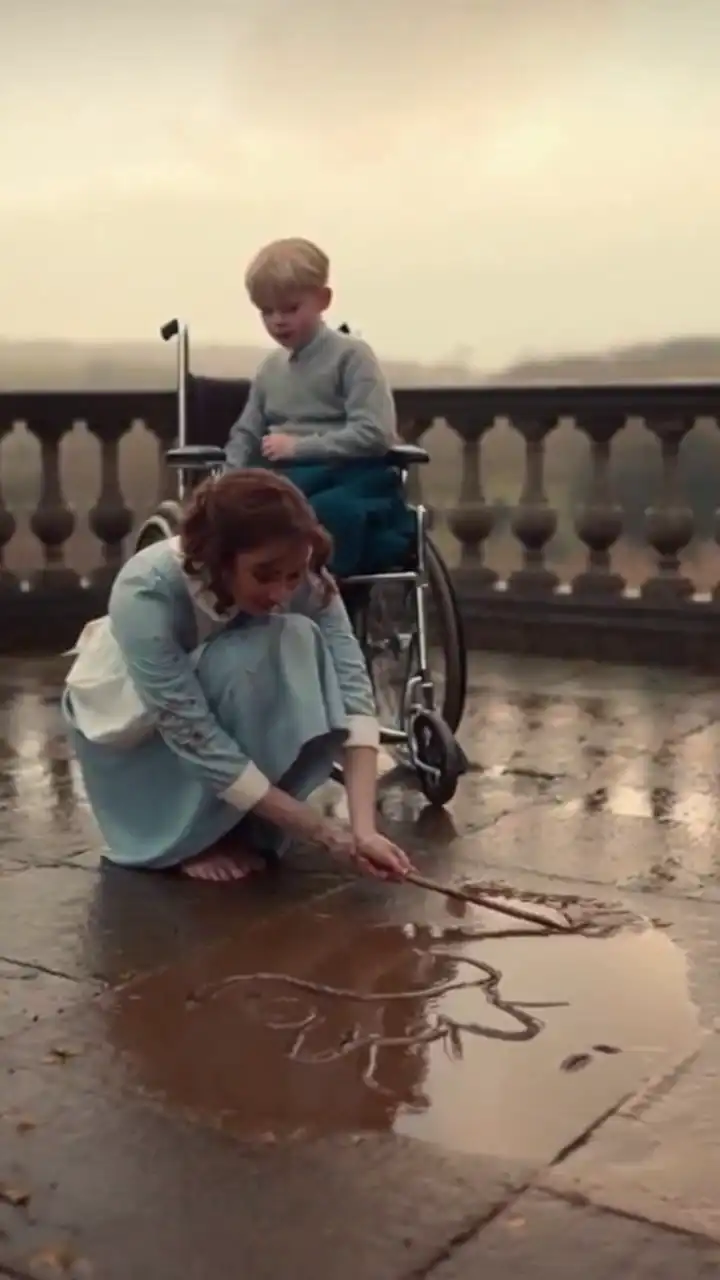
WHEN THE BILLIONAIRE’S SON DRAGGED HIS USELESS LEGS INTO THE MUD FOR THE FIRST TIME, HIS FATHER’S GIRLFRIEND SCREAMED FOR THE NANNY TO STOP
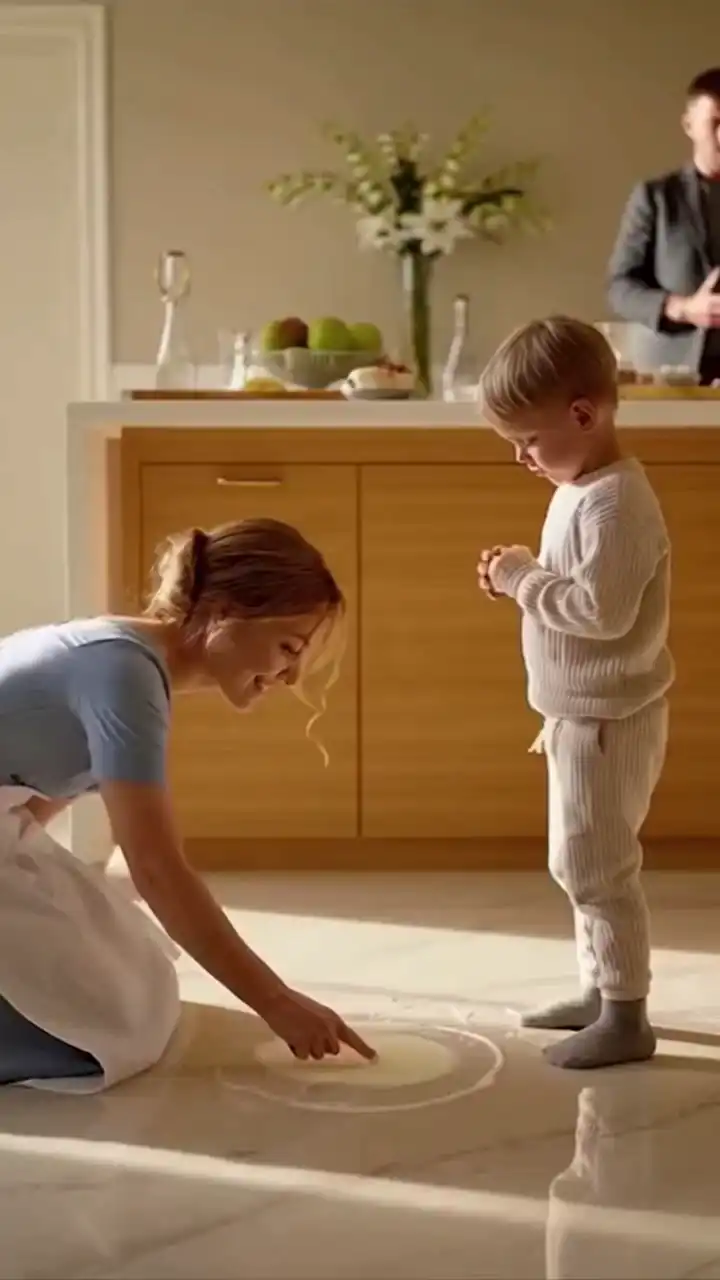
WHEN THE RICHEST MAN ON THE HILL HIRED THE WRONG NANNY, HIS SILENT SON CRAWLED ACROSS THE FLOOR FOR HER
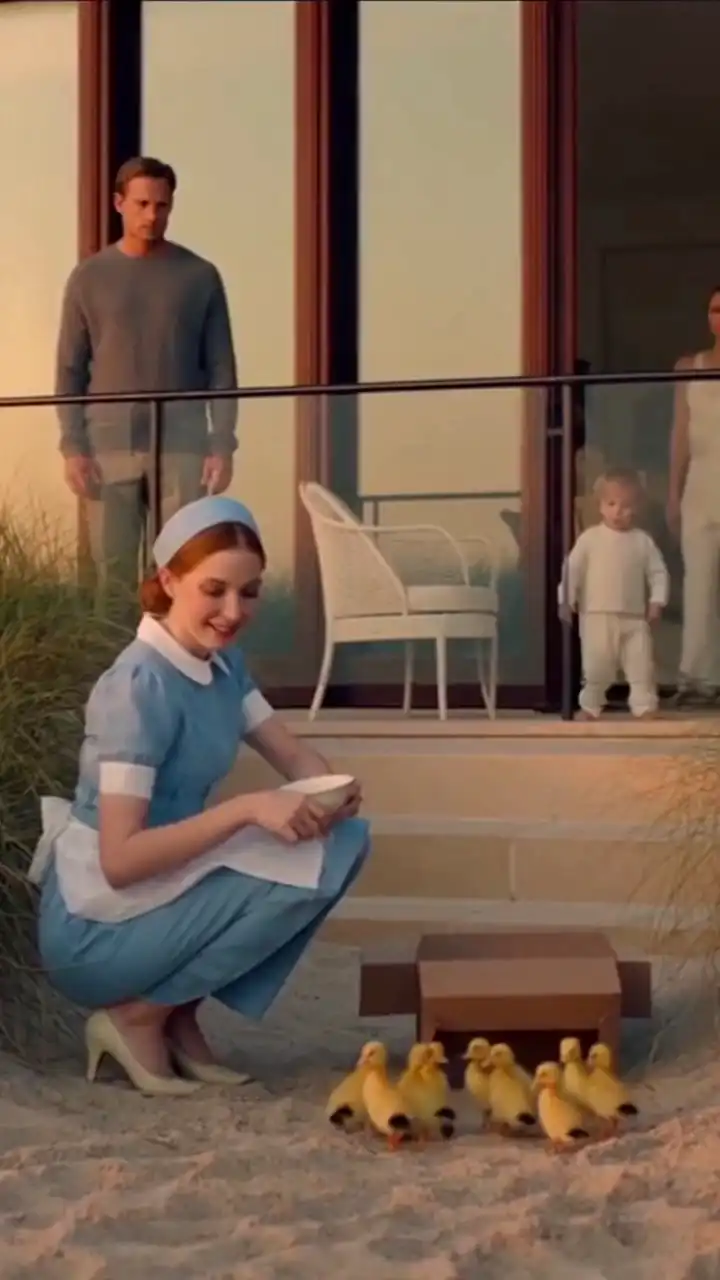
THE NANNY WHO BROUGHT DUCKS TO THE OCEAN HOUSE AND MADE A CHILD WALK TOWARD LIFE