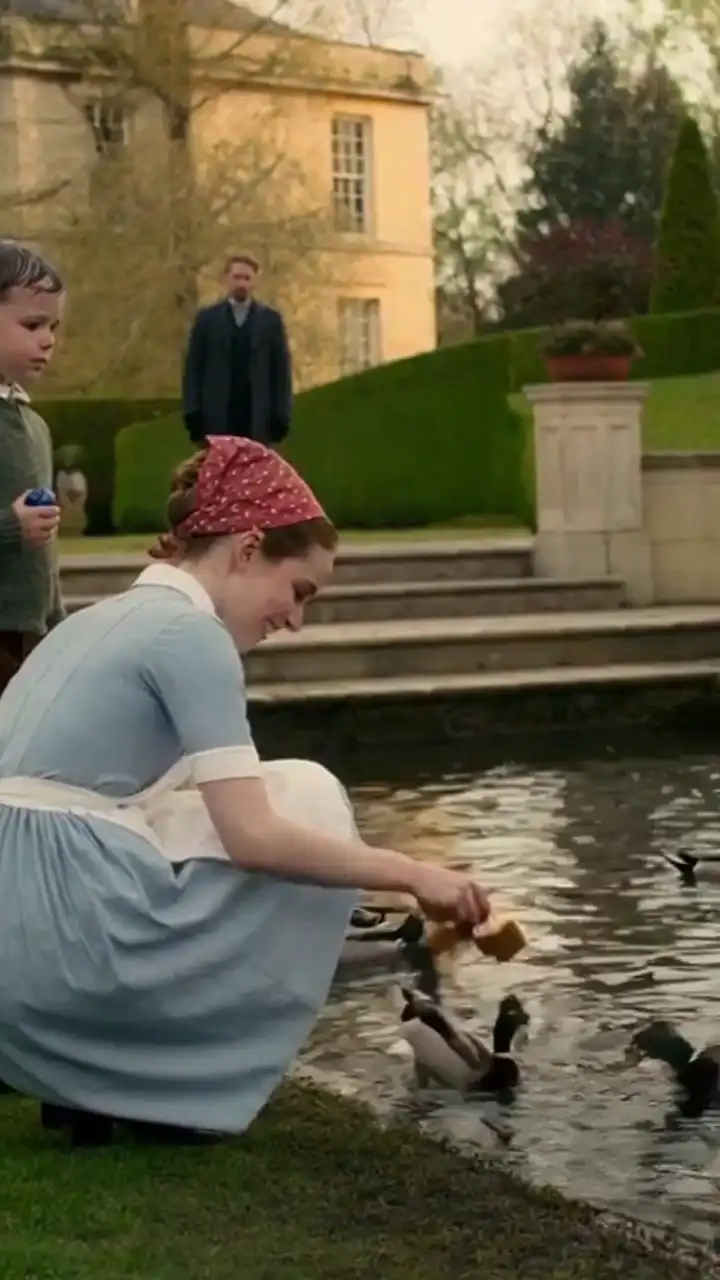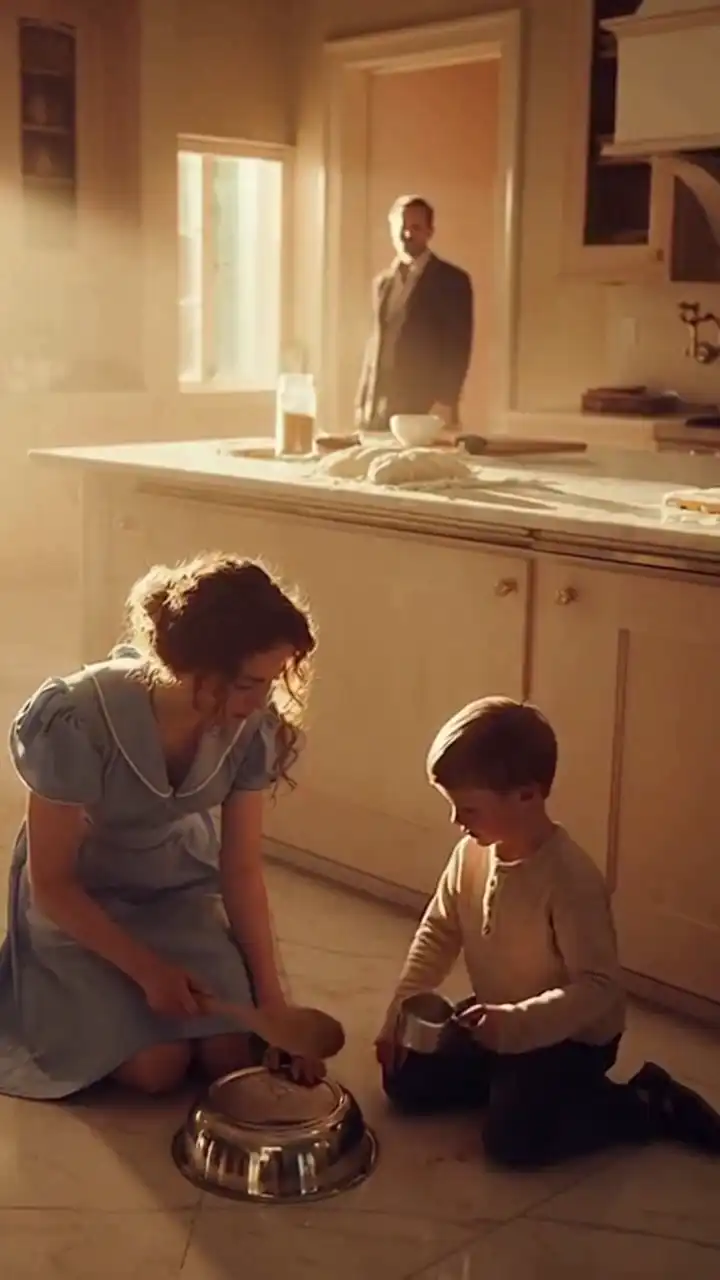
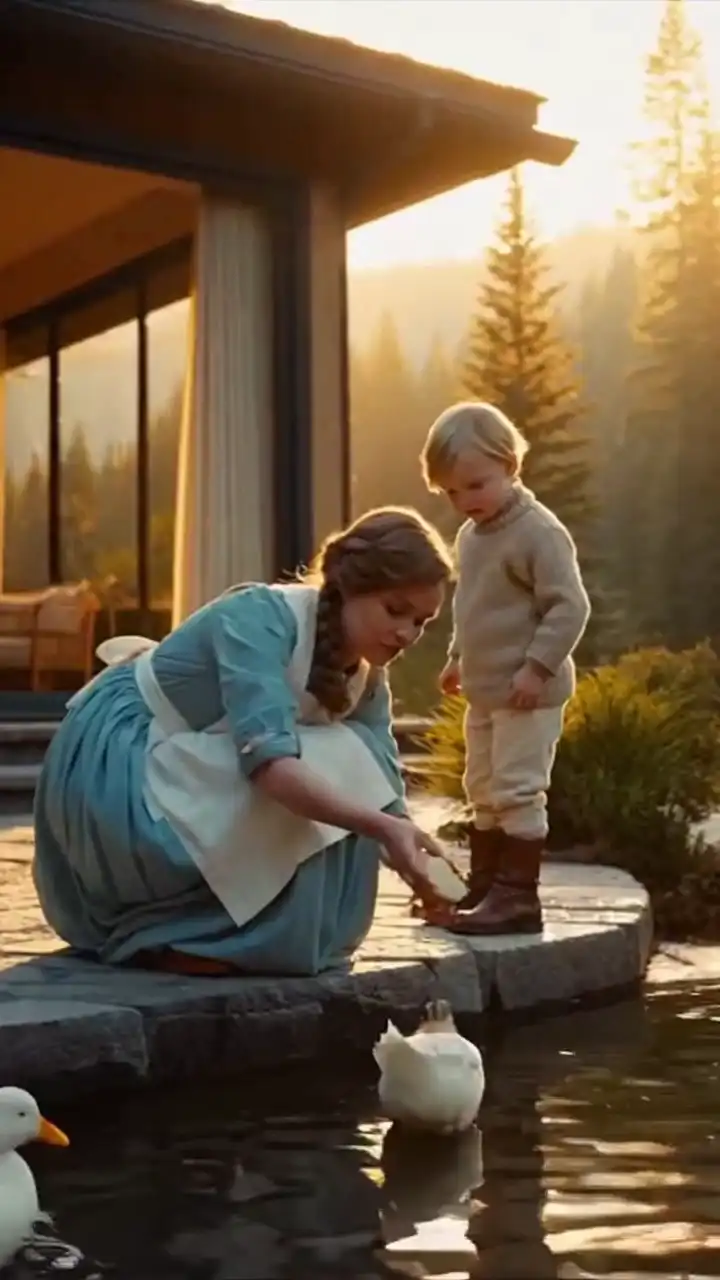
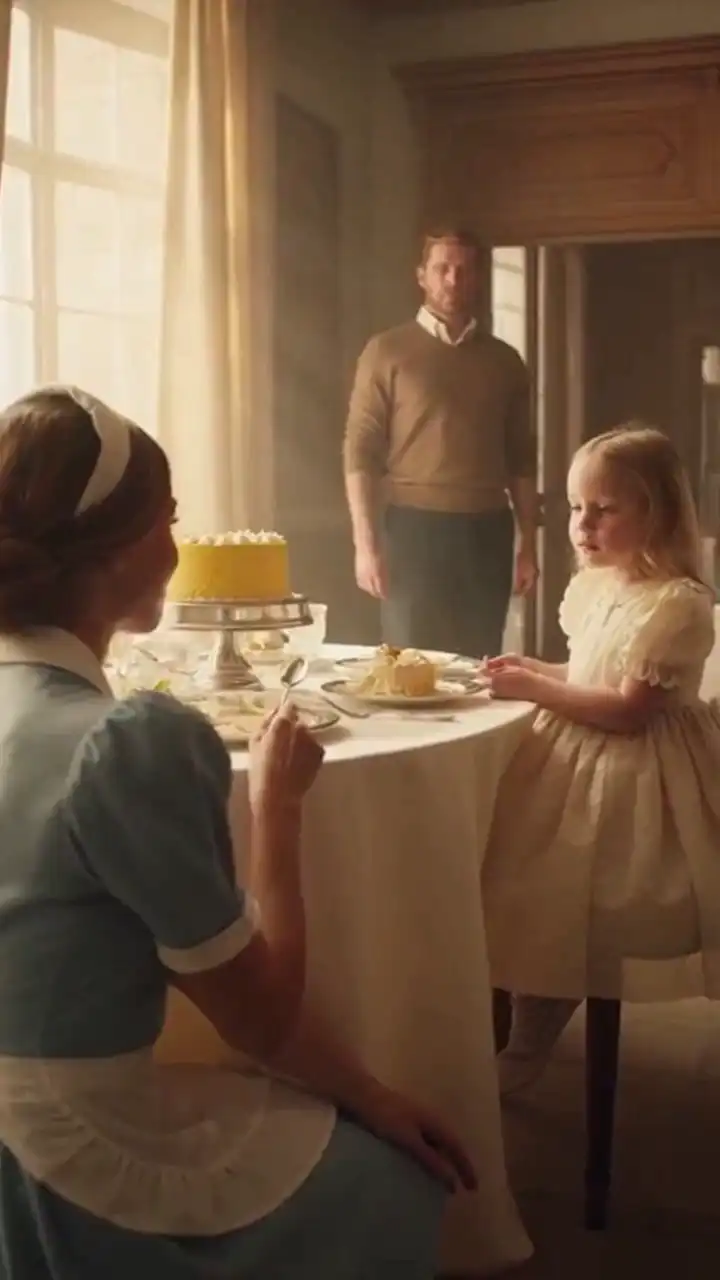

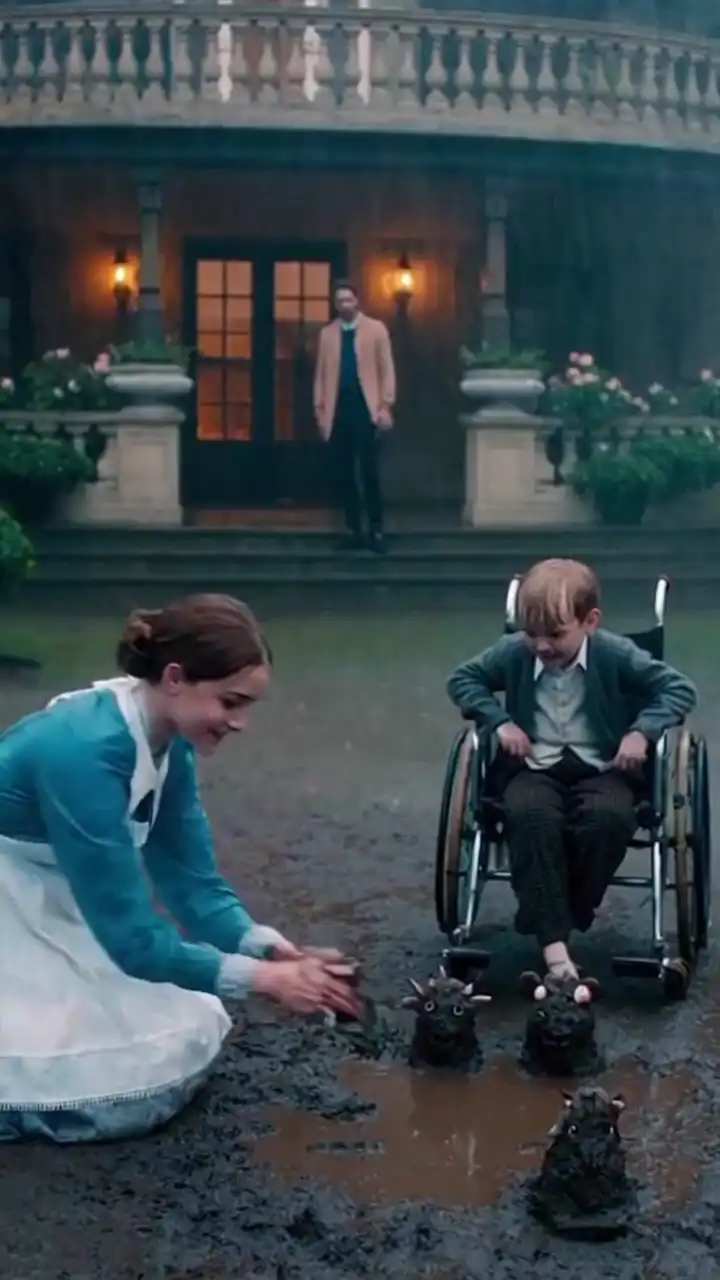
WHEN THE YOUNG NANNY DRAGGED THE RICH MAN’S FROZEN SON INTO THE MUD, HIS PERFECT GIRLFRIEND CALLED HER INSANE—THEN THE BOY MOVED FOR THE FIRST TIME
The shoe sank halfway into the mud.
Noah stared at it like it had become the most important thing in the world.
Ava did not rush in to fix it.
That was the first thing Ethan noticed.
Every therapist Noah had seen moved too fast the second he showed strain. Hands under his elbows. Encouraging voices. Gentle rescue. A hundred versions of help. A hundred ways of teaching him he would be carried before he ever had to choose movement for himself.
Ava stayed low in the mud, rain dripping off her chin, and said nothing for a few seconds.
Noah made a sound.
Not a word. More like a frustrated little exhale.
His hands gripped the sides of the chair. He pushed forward again, harder this time, awkward and angry, body pitching in a way that made Ethan step instinctively toward him.
Ava held up one muddy hand toward Ethan without even looking back.
Not a command. Just a barrier.
Wait.
Vanessa lost it.
“This is enough,” she snapped. “He could fall. He could get hurt. Ethan, say something.”
Ethan didn’t.
Because Noah had never looked this awake.
His face was wet with rain, his hair plastered to his forehead, and his whole body was finally in the moment instead of sealed behind glass. He was straining toward a stupid lost shoe because for once something in front of him mattered more than the fear of failing.
Noah slid one leg down.
Then the other.
He nearly collapsed, caught himself against the side of the chair, and made a broken, furious sound when his hand slipped.
Ava crawled closer but still didn’t pick him up.
“You can be mad,” she told him. “Come be mad over here.”
Vanessa stared at her like she was insane.
Noah lurched one step.
Then another half-step.
Ugly steps. Trembling, dragged, unstable.
But his.
The second he reached the shoe, he dropped to his knees in the mud and slapped both hands into the puddle so hard that dirty water splashed Ava’s face.
And Ava laughed.
Not the careful little laugh adults use around damaged children.
A real one. Loud and surprised.
Noah froze.
Then it happened.
A short burst first. Sharp and rusty, like his throat had forgotten how.
Then another.
Then the boy who had sat through hospitals, grief counseling, private rehab, and a year of whispered pity threw his head back in the rain and laughed so hard he nearly tipped sideways.
Ethan put a hand over his mouth.
Vanessa said, “Oh my God,” but not in wonder.
In fear.
Because the scene was wild, ugly, and impossible to control. Mud all over the hem of Noah’s expensive pants. The custom chair stuck in wet grass. The nanny filthy. The staff gathered under the terrace, stunned. And at the center of it, the child Vanessa had only ever known as silent and still was caked in dirt and alive.
That night Noah ate half a grilled cheese in the kitchen.
Not in the formal breakfast room where meals had become a ritual of untouched plates and strained encouragement. In the kitchen, sitting at the butcher-block island in one of Ethan’s old T-shirts because his clothes were still in the wash after the storm.
Ava stood at the stove and made tomato soup from a dented pot she found in the back cabinet. She didn’t ask the chef for permission. She just moved things around and hummed under her breath while Noah watched.
Every few minutes she tapped the wooden spoon against the pot in the same rhythm.
Tap-tap. Pause. Tap.
Noah started tapping the counter back with two fingers.
Ava answered with the spoon.
He answered again.
Ethan stood in the doorway and understood, dimly, that this was what none of the professionals had explained to him. Ava was not trying to get Noah to obey life again. She was trying to join him where he had frozen and bring rhythm back before demands.
Emotional co-regulation, one doctor had called it months ago. Ethan had nodded through the explanation, then hired another specialist and another program. He had wanted measurable progress, not kitchen noise and rain.
Vanessa came in, looked at the muddy shoes by the door, and went cold.
“This cannot become a habit.”
Ava didn’t turn around. “Good thing grief doesn’t care about habits.”
Vanessa looked at Ethan, expecting him to shut that down.
He said nothing.
That silence changed the temperature of the house.
Over the next two weeks, Ava became the one thing Noah anticipated.
She didn’t push therapy out completely. She bent it into ordinary life. When he resisted standing drills, she had him help pin sheets on the clothesline because the breeze kept stealing them. When he refused structured hand work, she brought out cheap sidewalk chalk and made crooked roads on the back terrace so toy trucks could “get lost” unless he leaned, reached, and dragged them back. When he went flat and still, she didn’t flood him with questions. She sat nearby and sketched badly until he noticed.
Noah began doing one shocking thing after another in pieces too small for anyone else to brag about but too big to ignore.
He followed her from room to room with his eyes.
Then with his chair.
Then one day, with the wall under one hand, three slow steps from the library rug to the piano bench because he heard her singing in the next room.
He started sleeping through the night if Ava was the one who tucked the blanket around his feet.
He stopped jerking away when Ethan touched his shoulder.
He even laughed once when the golden retriever from the neighboring property squeezed through the garden hedge and stole half a hot dog from Ava’s plate.
Vanessa hated every bit of it.
Not openly at first.
At first she tried to reassert order with little comments. Noah needed higher standards. Ava was overfamiliar. The kitchen looked chaotic. The boy should not be encouraged to associate progress with disorder. The staff was getting confused about boundaries.
Then she started changing things.
She had the muddy play clothes removed from Noah’s closet and replaced with monogrammed sets more “appropriate” for outdoor time.
Ava pulled the boxes right back out of storage and put them on a lower shelf where Noah could reach them himself.
Vanessa canceled one of Ava’s afternoons and scheduled a photography session for a lifestyle magazine feature about Ethan’s philanthropy. She wanted a polished family image by the reflecting pool.
Noah shut down the second the photographers began arranging him.
He went rigid in the chair. Chin down. Hands dead in his lap.
The lead photographer kept saying, “Can we get just a little smile, buddy?”
Vanessa crouched beside him in a cream dress that probably cost more than Ava made in two months.
“Come on, Noah,” she said through her teeth. “Just for one picture.”
Ava, standing off to the side, knew before Ethan did.
The room inside the boy was closing.
“Stop,” she said.
Vanessa turned. “Excuse me?”
“He’s gone,” Ava said. “If you keep pushing, you won’t get him back today.”
Vanessa stood up slowly. “This is not your decision.”
Ethan looked at Noah and saw it was true. The same empty withdrawal. The same locked jaw. The same dead stare that had ruled the house for months.
He ended the shoot.
Vanessa was furious.
That night she confronted Ethan in his study.
“This girl is making him dependent on her.”
Ethan was exhausted enough to answer honestly. “He was dependent on nobody. That was the problem.”
Vanessa crossed her arms. “She is blurring lines on purpose. She acts like she belongs here.”
Ethan looked past Vanessa through the study doors into the hall, where he could hear Ava and Noah doing that ridiculous call-and-response tapping on the wall as they made their way toward the kitchen.
Belongs.
The word landed harder than he expected.
Vanessa saw his face and understood before he said anything.
Her voice sharpened. “You can’t seriously think this is sustainable. She’s staff.”
Ethan’s answer came too late to save them and too early to take back.
“She’s the only person in this house who hasn’t treated my son like a liability.”
Vanessa went very still.
After that, the war was no longer subtle.
She began correcting Ava in front of the staff.
She objected to the community-center songs Ava taught Noah because they were “chaotic.”
She told the housekeeper not to leave art supplies in common spaces.
She reminded Ethan of donor dinners, school expectations, social perception.
She even suggested, carefully, that Noah might be improving because time was healing him anyway, and that Ethan was getting emotionally attached to the nearest person who happened to be present.
Ava heard enough of it to know where she stood.
One afternoon she quietly told Ethan she could leave if her presence was making things harder.
He found her in the mudroom washing Noah’s rain jacket in the sink, sleeves rolled up, cheeks tired.
Noah was on the bench behind her, holding a red toy truck and watching her with the hard focus he gave almost no one else.
“Did Vanessa ask you to leave?” Ethan said.
Ava kept scrubbing. “She didn’t have to.”
He should have answered immediately.
Instead, he looked at Noah.
The boy had gone rigid at one word.
Leave.
There it was again—that separation trigger nobody could manage. Any hint that a person might disappear and Noah would freeze or unravel. After Lily’s long illness, after weeks of adults promising she’d be home soon, after the funeral that turned the house into a museum of careful voices, leaving had become the deepest wound of all.
Ava turned then and saw Noah’s face.
She dried her hands and crouched in front of him.
“I’m here right now,” she said.
His breathing sped up.
His fingers crushed the toy truck.
Ethan felt sick. He had seen this cascade before. Once it started, Noah could lose the rest of the day.
Ava did not soothe him with false brightness. She did not say “Don’t be upset.” She took the truck gently and set it on the floor between them.
“If a person leaves,” she said softly, “feet can still remember the way back.”
Then she rolled the truck a little distance away.
Noah stared at it through tears gathering in his lashes.
Ava rolled it farther.
“Bring it back angry,” she said.
It was the same thing she had done in the rain. Not denying the rupture. Giving his body somewhere to put it.
Noah made a broken sound in his throat and pushed off the bench.
One step.
Wobble.
Another.
He was crying now, furious and scared, but moving.
Ava rolled the truck back toward him, then away again, making him chase it across the mudroom tile, from bench to wall to doorway. Ethan realized his son was not just walking. He was pursuing. Choosing. Insisting.
By the time Noah reached the truck and grabbed it, he had crossed the room on his own.
He turned around, tears still on his face, and took three stumbling steps back toward Ava before pitching into her arms.
It was the first time he had ever moved toward comfort instead of waiting for it to come to him.
Ethan had to grip the doorframe.
Vanessa, who had walked in just in time to witness the end of it, looked less angry than defeated.
Because she could not call it unprofessional now.
She could not call it reckless.
She could not argue with a child crossing a room to keep someone from going.
The final break came at dinner three nights later.
Vanessa had invited two foundation board members without checking with Ethan because she wanted to “restore normalcy.” The table was formal. Candles lit. Silver polished. Noah was supposed to sit for twenty minutes to prove the household was stabilizing.
He lasted six.
A spoon clattered. One board member gave the pity look Ethan had learned to hate. Noah’s breath turned shallow.
Ava, serving from the sideboard, saw it and reached Noah before the spiral took him.
“It’s okay,” she said. “Kitchen?”
Noah nodded once.
It was small. But it was a choice. A request.
Vanessa spoke before Ethan could.
“He needs to learn to stay.”
Ava looked at Noah, not at Vanessa.
Then Ethan pushed his chair back so hard it scraped the stone floor.
“No,” he said.
The room stopped.
He stood, walked to his son, and knelt beside him in front of guests, staff, everyone.
“Noah does not need one more performance for adults,” he said. “He needs people who can tell the difference between healing and display.”
Vanessa flushed deep red. “You are humiliating me.”
Ethan rose slowly. “No. I’ve been humiliating my son for a year by letting this house worship control while he disappeared in it.”
Nobody moved.
Then Noah did.
He reached one hand toward Ava.
The board members saw it. The staff saw it. Vanessa saw it.
The choice was public now.
Ava took Noah to the kitchen. Ethan followed.
Not as an employer checking on staff. As a father finally understanding where life in his own house had been happening without him.
In the kitchen, Ava set bread, peanut butter, and sliced apples on the island and let Noah build a crooked sandwich with both hands while she talked him through his breathing. Ethan stayed. He didn’t hover. He peeled apples because Ava asked him to, and because for once he understood that being useful mattered more than being in charge.
Later that night, Vanessa packed two overnight bags and left the estate without another argument.
She didn’t slam doors. She didn’t need to.
She had already lost the thing she came to secure: the right to define what belonged in Ethan’s life.
The weeks after were not magically easy.
Noah still had setbacks. Stormy nights could shake him. Unexpected schedule changes could lock his body up again. Some mornings his legs simply would not answer quickly, and frustration sent him into silence.
But now the house knew how to meet him.
Less instruction. More rhythm.
Less display. More participation.
The estate changed in ways guests could see and old staff whispered about.
There were chalk marks near the back steps.
Cheap rain boots by the mudroom door.
A tray of half-finished clay animals drying on a windowsill that had once held imported orchids.
Laughter from the kitchen.
And Ethan, who had once run a global company with ruthless precision while delegating fatherhood into appointments and payroll, started blocking off his afternoons. Not all of them. But enough. Enough to walk the garden with Noah. Enough to learn the tapping game. Enough to kneel in wet grass without checking his phone every thirty seconds.
One Sunday, three months after the day in the rain, the estate hosted Lily Cole’s memorial garden dedication. Donors came. Neighbors came. People who had known the family before illness hollowed it out came too.
Vanessa was not there.
Ava tried to stay invisible in a simple navy dress, planning to help Noah through the event and then slip back into the background.
But Noah had other ideas.
The ceremony ended beside a new garden bed planted with Lily’s favorite white roses and wild lavender. Ethan gave a short speech. Nothing polished. Just true. About losing his wife slowly. About mistaking protection for love. About how silence had nearly taken his son too.
Then he stepped down.
Noah was beside Ava in a small pair of boots, one hand hooked in her fingers. He had practiced walking the garden path all week because the stones were uneven.
When Ethan held out a hand to guide him forward, Noah looked at both of them.
Then he let go of Ava.
A murmur moved through the crowd.
Noah took one step.
Then another.
Then, wobbling hard, he crossed the last stretch of lawn toward the little plaque by his mother’s roses with no chair, no adult carrying him, no therapist counting from the side.
Halfway there, he almost lost balance.
Ava did not run to catch him.
She pressed both fists to her mouth and stayed where she was.
Noah corrected, kept going, and reached the roses.
Ethan met him there with tears already down his face.
Noah touched the plaque, then turned, scanning the crowd until his eyes found Ava.
This time, when he spoke, it was not to ask for help.
“Ava,” he called, voice rough but clear.
The first word he had used in public in over a year was her name.
People cried openly.
Ethan didn’t care.
That evening, after the guests were gone and the garden lights had come on, Ethan found Ava by the back terrace where the first mud had dried months ago into nothing visible. The lawn looked ordinary again. But nothing in the family was.
He handed her an envelope.
She stiffened. “If this is a bonus, you really don’t have to—”
“It’s not that.”
Inside was a contract, but not the kind she expected.
Full-time salary, higher than any nanny in the county would reasonably be offered. Health insurance. A private studio apartment renovated over the carriage house if she wanted her own space. Tuition support if she wanted to finish her degree in art therapy. A clause stating she would be part of Noah’s educational and developmental planning, not just household labor.
A real place.
Not temporary. Not decorative. Not hidden.
Ava looked up at him, stunned. “Why?”
Ethan gave the only answer that mattered.
“Because Noah runs toward you. Because this house came back to life with you in it. Because I don’t want my son raised inside gratitude he can never name. I want him raised inside truth.”
She blinked hard and looked away toward the kitchen window, where Noah was inside pressing both palms to the glass, waiting to see if she would come back in.
Ava laughed through tears.
Then Noah opened the door himself, unsteady and impatient.
“Ava!”
She looked at Ethan once more.
Then she folded the contract, held it to her chest, and walked back toward the boy who had once sat still through everything.
This time he didn’t wait for her to reach him.
He ran the last two crooked steps and crashed into her knees.
And she stayed.
Disclaimer: Mention of any brand or trademark is for identification only and does not imply partnership or endorsement
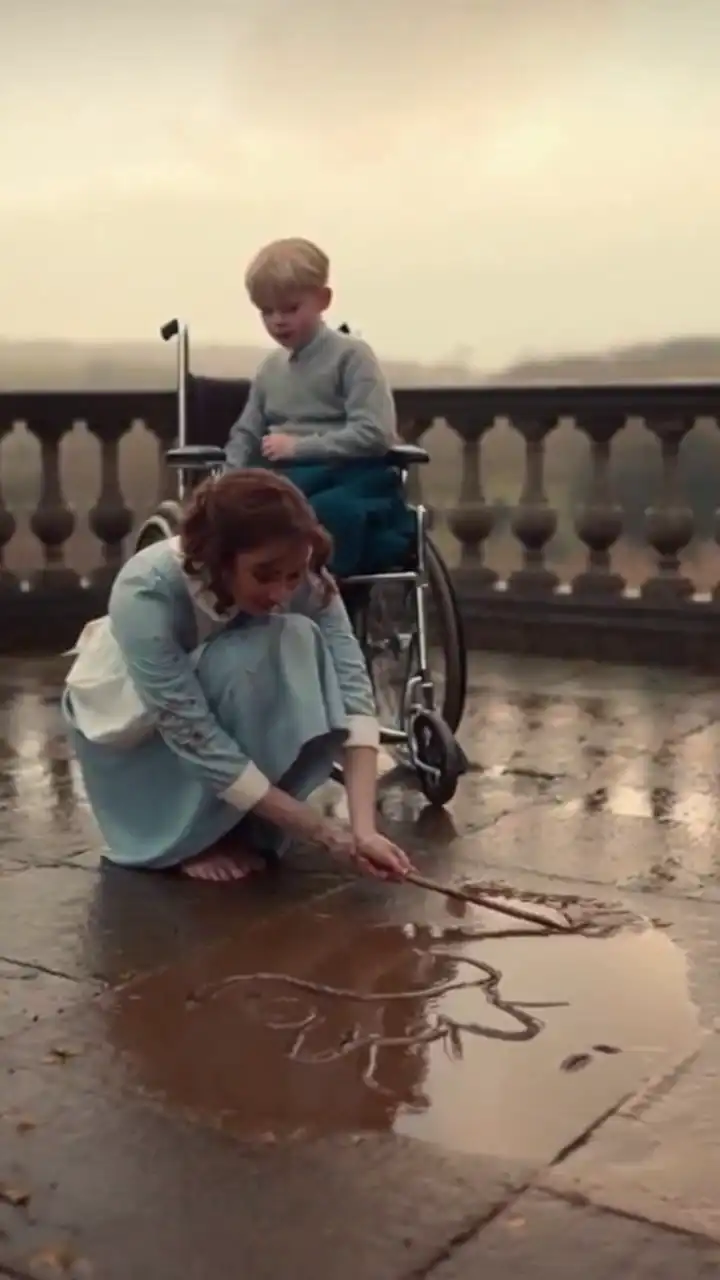
WHEN THE BILLIONAIRE’S SON DRAGGED HIS USELESS LEGS INTO THE MUD FOR THE FIRST TIME, HIS FATHER’S GIRLFRIEND SCREAMED FOR THE NANNY TO STOP
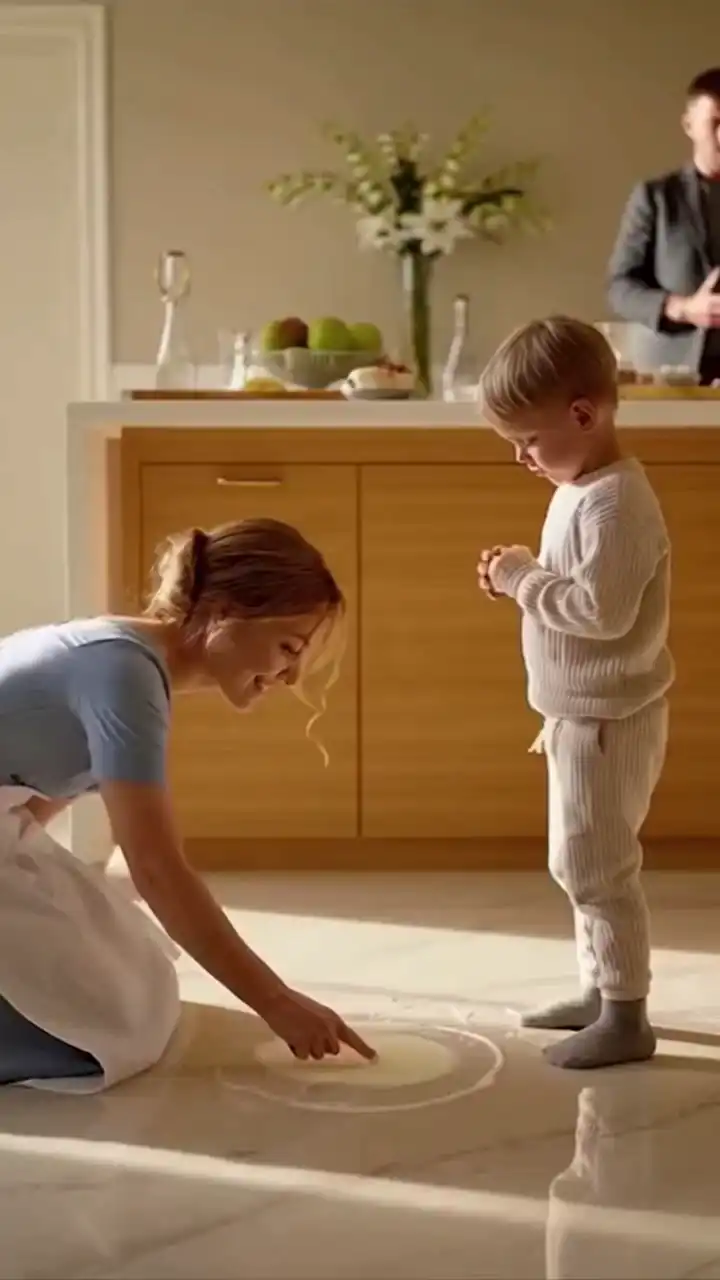
WHEN THE RICHEST MAN ON THE HILL HIRED THE WRONG NANNY, HIS SILENT SON CRAWLED ACROSS THE FLOOR FOR HER
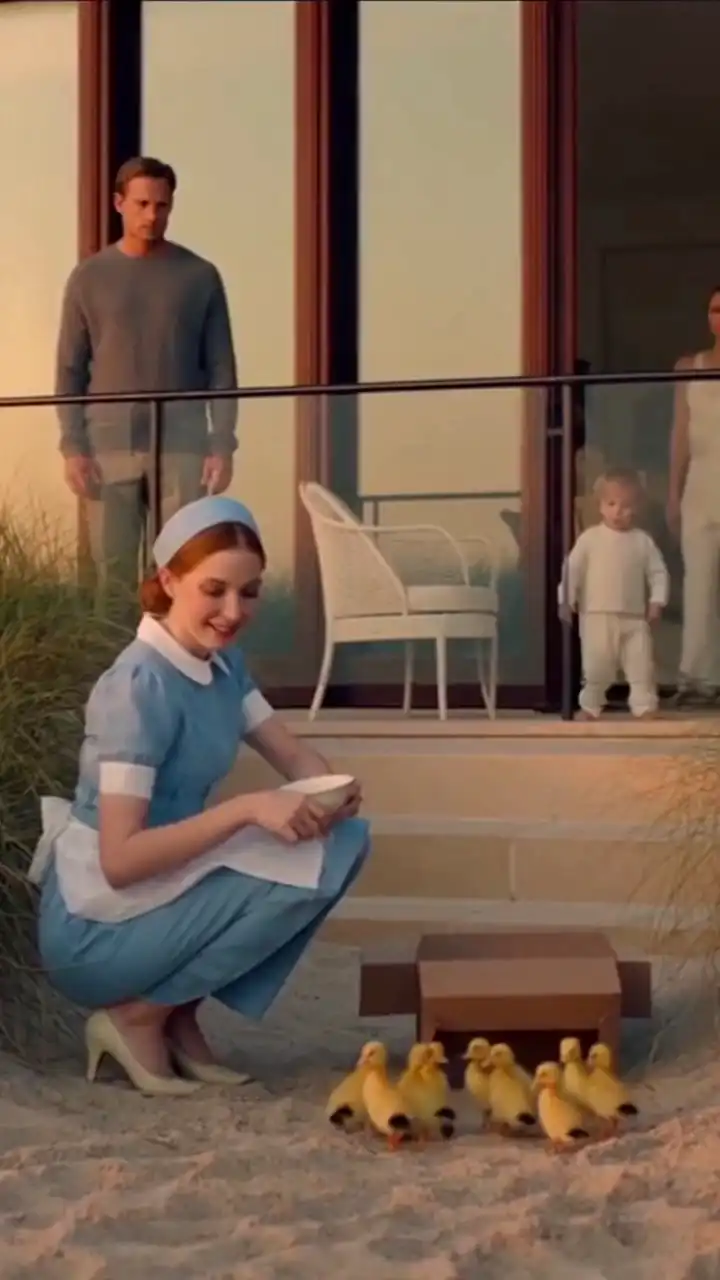
THE NANNY WHO BROUGHT DUCKS TO THE OCEAN HOUSE AND MADE A CHILD WALK TOWARD LIFE