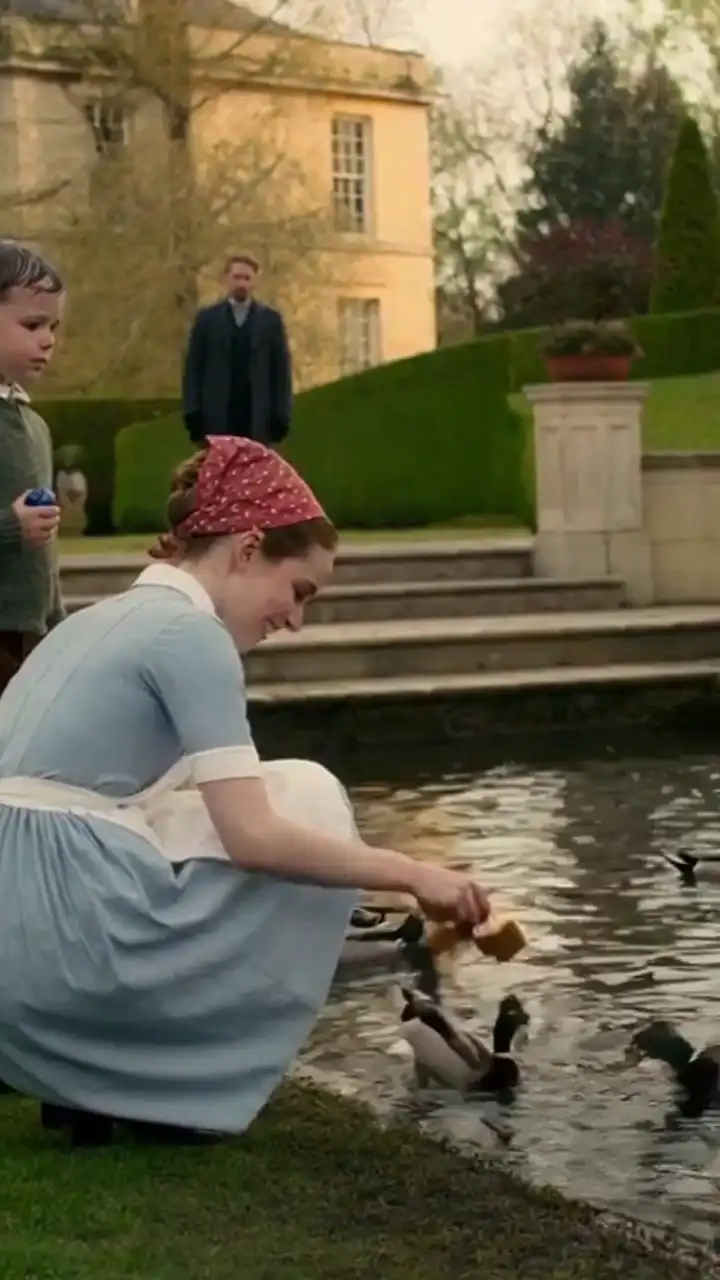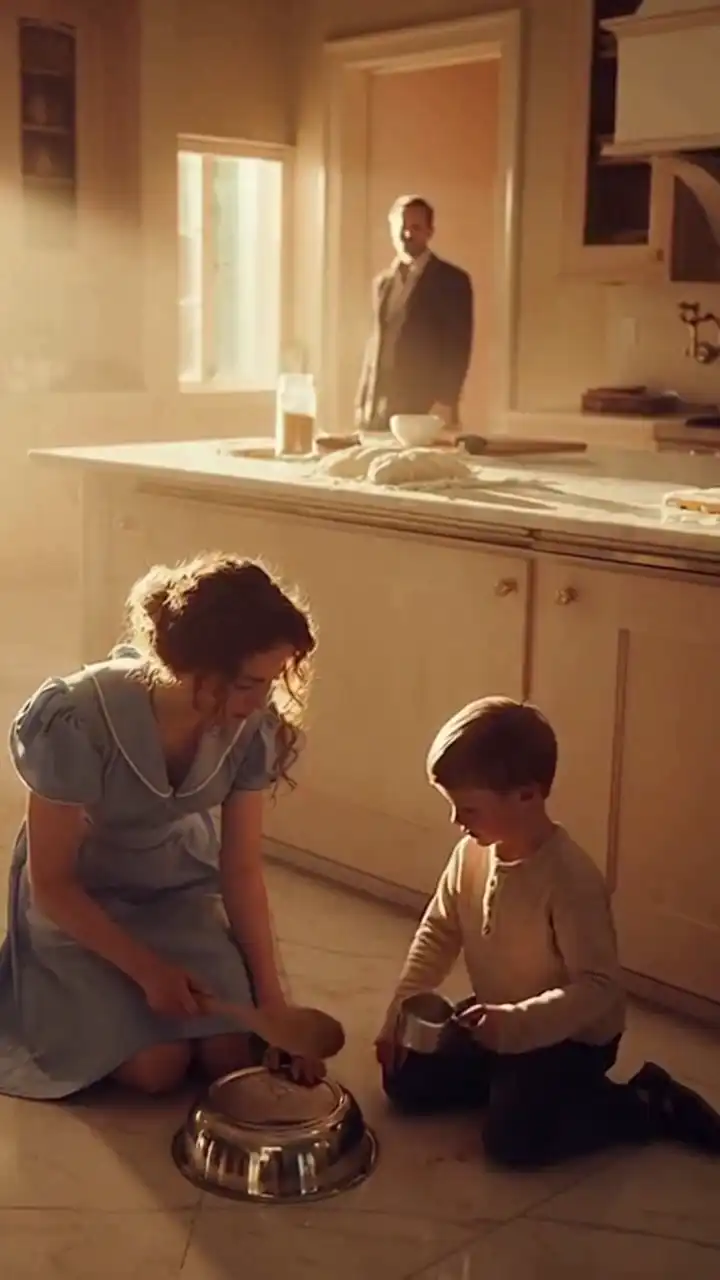
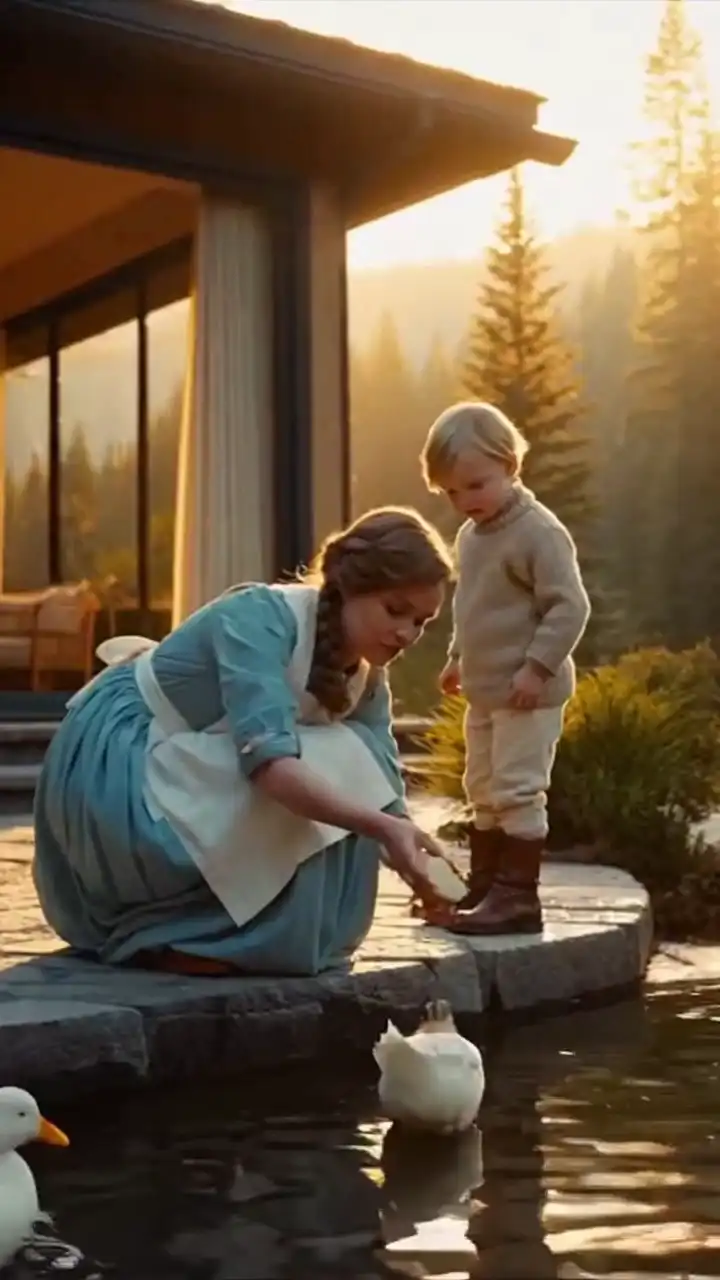
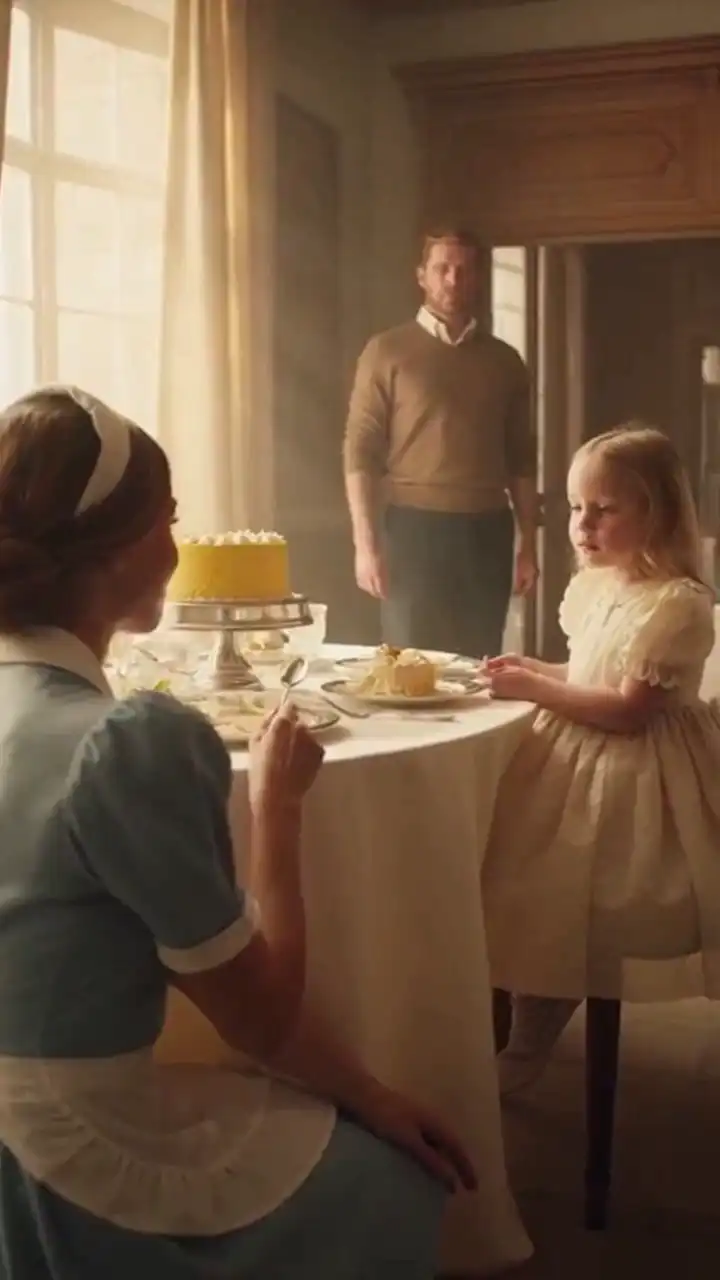

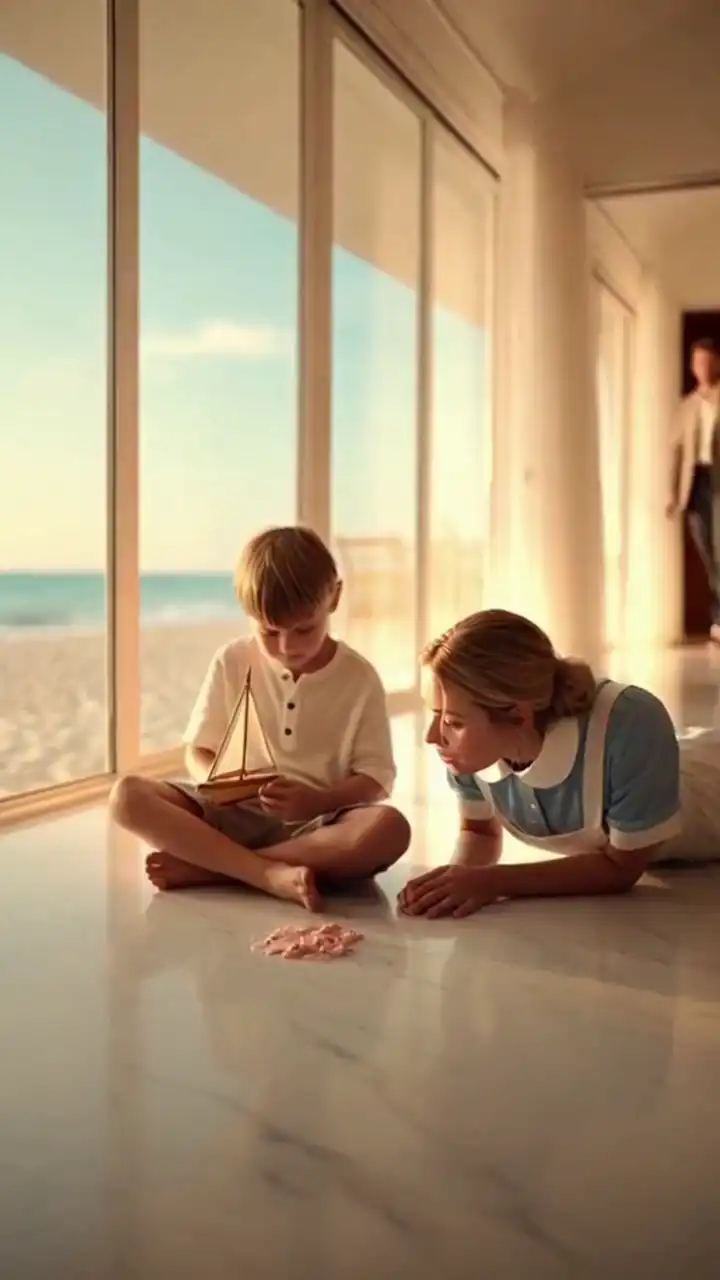
HE LEFT A FORTUNE TO HIS SON, BUT THE ONLY THING THAT REACHED THE BOY WAS A NANNY CRAWLING ACROSS THE FLOOR WITH ICE CREAM ON HER FACE
He had touched her.
It was barely a touch. Two fingers in the fabric of her sleeve. A tiny hold that could have meant nothing to anyone else.
In that house, it felt enormous.
Grant did not move again.
Neither did Lena.
Oliver let go after a second, curled around the little sailboat, and tucked his face toward the window. But he did not push her away. He did not flinch from her staying near him. That alone was more than the last three specialists had managed in months.
The housekeeper exhaled first.
Grant’s voice came back flat and controlled, the way it always did when control was the only thing he had left. “My office. Now.”
Lena wiped the ice cream from her face with the back of her hand and followed him out.
He closed the office door softly, which somehow made the anger sharper.
“You don’t smear food on yourself and crawl on my floor without clearing it first.”
“You hired me because nothing cleared first has worked.”
It was such a direct answer that he almost missed it.
Grant stared at her. She was young, but she wasn’t timid. She had the look of someone who had already worked with children who bit, hid, screamed, or vanished into themselves, and had stopped being impressed by adult status a long time ago.
“He laughed,” Grant said.
“He startled into laughing.”
“That matters.”
“It does,” Lena said. “And if everybody acts like he’s fixed because of one sound, he’ll retreat harder tomorrow.”
Grant’s jaw tightened.
She kept going anyway.
“His nervous system is stuck. He’s watching for impact all the time. Everyone here approaches him like a project or a patient. Quiet voice. careful hands. measured choices. He feels all of it.”
Grant almost objected, but she was not wrong.
The house had become a place of lowered voices and slow steps. Trays set down silently. Doors closed gently. No dropped forks. No barking dog. No music. No mess. No surprise.
They had turned grief into a museum and called it safety.
“What exactly are you saying?” he asked.
“I’m saying his body is trapped in the moment after the worst thing happened. He can’t start living again through instructions. He has to feel something small and strange and harmless enough to come toward. Not be pushed. Come toward.”
Grant looked through the office glass toward the hall. “And if he doesn’t?”
“Then I keep meeting him where he is.”
“You sound very certain for someone who just got here.”
Lena glanced back toward the sunroom. “No. I sound patient.”
That first evening, Oliver regressed.
At dinner he refused the chair and sat under the table instead. When the housekeeper tried to coax him out, he pressed both hands over his ears. When Grant crouched down and said his name, Oliver knocked over a water glass and began breathing too fast.
Old panic.
Old shutdown.
Grant’s shoulders hardened. “This is exactly my concern.”
Lena, standing by the kitchen door with a dish towel over one shoulder, did not argue. She got on the floor herself.
Not talking at him. Not touching him.
Just sitting under the edge of the table where he could see her shoes.
Then she slid a spoon across the wood.
It spun and stopped.
A minute later she slid a second spoon.
Then a napkin ring.
Then a lemon packet that made a tiny papery scratch.
Not a game exactly. Just rhythm. Predictable, low-stakes, silly enough to be ordinary.
Oliver’s breathing slowed by one notch.
Grant watched like a man learning a language too late.
Lena looked at him and spoke without moving her gaze. “No questions. No praise. No reaching.”
He hated taking orders in his own house.
He hated even more that she was right.
So he did nothing.
After six minutes, Oliver crawled out on his own.
Not toward his father.
Toward the spoon.
The next morning Lena broke another unspoken house rule.
Instead of bringing Oliver to the formal breakfast room with polished fruit and untouched pastries, she took a carton of eggs, a bowl, and cheap pancake mix into the back kitchen, the one staff used and the family barely entered. It was warmer there. Louder. Less haunted.
Oliver stood in the doorway in his socks, half-hidden.
Lena cracked an egg one-handed and let shell fall into the bowl on purpose.
“Oh no,” she said to nobody, dead serious. “A disaster.”
No reaction.
She fished out the shell and dropped the next egg by mistake.
It splattered across the counter.
From the doorway came the smallest huff.
Not a laugh. Close.
Lena didn’t look at him.
She whisked too hard and got flour on her shirt. She made a face at the batter. She tapped the spoon against the bowl in an uneven beat.
Tap-tap. Pause. Tap.
Oliver’s fingers moved against his thigh.
Tap-tap. Pause. Tap.
He was matching it.
Lena repeated it.
For the first time, he stepped fully into the room.
Grant, who had paused outside after hearing actual kitchen noise in his own house, felt something unfamiliar then: not relief, exactly, but shame mixed with awe.
He had paid for sensory integration rooms and custom therapeutic tools.
The boy was following spilled flour.
By the fourth day, Lena had learned the shape of Oliver’s retreat.
He shut down fastest when adults crowded a moment, when sound turned sharp, or when happiness became a demand.
If he reached, and someone celebrated, he vanished.
If he looked, and someone asked a question, he froze.
If he laughed, and someone tried to make him do it again, he folded inward like a plant touched too hard.
So she built him tiny exits.
No direct requests.
No “Say this.”
No “Look at me.”
No “Good job.”
Just shared rhythm. Side-by-side tasks. Breathing where he could hear it. Joining the world without being dragged into it.
She drew fog circles on the sliding glass doors in the morning and let him erase them with his sleeve.
She lined up blueberries and let one roll free.
She sat on the floor of the upstairs hall and pushed toy cars backward.
She let him watch her fail safely, over and over again.
A spoon clattering but nobody panicking.
A towel dropping but no one gasping.
Milk spilling and being wiped up without drama.
Life, but manageable.
That was the first week.
The second week was harder.
Because once a child in retreat begins to come forward, he often snaps back.
Lena knew it. Grant did not.
One windy afternoon they were on the covered terrace with paper cups of ice cream. The ocean was gray, and fog moved over the water in strips. Oliver had tolerated sitting near her. That alone had been work.
Lena breathed onto the metal table and drew a crooked fish in the mist.
Oliver watched.
Then, in a tiny act that felt almost sacred, he leaned forward and breathed onto the table himself.
A cloud appeared.
He touched it with one finger.
Grant, watching from the doorway, smiled before he could stop himself.
At that exact second, a gull slammed into the glass rail.
The sound was violent. Sudden. Wings, impact, scraping claws.
Oliver screamed.
It was the first full sound his father had heard from him since the funeral.
Not a word. Terror.
He dropped the cup. Ice cream splashed across his shirt and legs. He slid under the terrace bench, hands over his head, shaking so hard his teeth clicked.
Grant was there in two strides. “Oliver—”
“Stop,” Lena snapped.
He stopped because her voice cut through him.
She got down on the wet stone several feet away, not reaching in, not pulling him out.
The gull recovered and flew off. The sea kept moving. Somewhere inside, a phone rang and rang.
Oliver did not come out.
Grant looked wild. “He’s panicking.”
“Yes,” Lena said. “And if you pull him now, you teach him panic means somebody else takes over his body.”
“What am I supposed to do? Watch this?”
“No. Stay with it.”
She pressed both palms flat to the stone where he could see them. Then she breathed in, slow and audible. Out. Again.
Not for instruction. For co-regulation.
At first he didn’t follow.
Then his shaking shifted.
Not less. Just different.
Lena took the paper napkin from the fallen cup, dabbed a streak of pink ice cream onto the tip of her own nose, and said in the calmest voice, “Terrible storm damage. The seal has been injured.”
Grant nearly laughed from sheer disbelief.
Under the bench, Oliver made a ragged choking sound that turned, impossibly, into a broken little puff of amusement.
Not because the fear was gone.
Because the fear had been met without turning into more fear.
Lena made the seal noise again. Softer this time.
Oliver’s hands loosened from his head.
One came down first. Then the other.
He looked at her through his hair.
She did not rush the opening.
“Seals hate gulls,” she informed the wet stone with complete seriousness.
And there it was.
A second laugh.
Tiny. Trembling. Real.
Grant had to turn away for a moment because his eyes burned so hard.
That night he stood outside Oliver’s room long after the house was dark.
Lena came down the hall carrying folded laundry.
“He asked for you,” Grant said.
She stopped.
“Not with words,” he added quickly, as if he needed to be precise. “He tapped the mattress twice when Mrs. Collins tried to leave, then stopped when you sat down.”
Lena nodded. “That’s still asking.”
Grant looked through the half-open door. Oliver was asleep for the first time without all the lights on.
“How did I miss so much?” he asked.
It was the first honest question he had asked her.
Lena leaned against the wall. “He lost his mother in a way his body still thinks can happen again at any second. You responded like most people with resources do. You built protection. Schedules. experts. perfect conditions.”
“That sounds like criticism.”
“It’s fact.”
He accepted it because he was too tired not to.
“He needed somebody to make the world survivable again,” she said. “Not perfect. Not silent. Survivable.”
He let that sit.
Then, quieter, “I was in a meeting when the accident happened.”
Lena looked at him but said nothing.
“I didn’t answer her second call. I saw it. I sent a text that I’d call back in ten.”
There it was. The polished man cracking open at last.
“When they reached me, my son was still in his car seat on the side of the road with glass in his hair. He wasn’t physically hurt.” Grant swallowed. “After that, every time he stared past me, I thought maybe he was still there. Still waiting.”
Lena did not give him comfort too fast.
She only said, “Then stop trying to erase the waiting. Join him in it.”
The next day he canceled a board lunch.
Then another.
He started coming home before sunset.
At first he was awkward in the new way the house moved. He hovered. Corrected himself. Reached too soon. Spoke too much.
Lena kept stopping him with looks.
Once, when Oliver stacked blueberries on the edge of a plate and one rolled off, Grant said, “That’s okay, buddy, you can just—”
Oliver’s face went blank.
Lena quietly rolled a second blueberry after the first and let it hit the floor.
Grant shut up.
Another day, Oliver sat in the upstairs hall while Lena and Grant folded beach towels on the floor. Not with him. Near him.
Grant folded each towel too neatly.
Lena messed one up on purpose and wore it like a cape.
Oliver watched.
Grant sighed, took another towel, and put it on his own head like an idiot.
Lena looked at him, startled.
Oliver stared.
The towel slid over Grant’s eyes. He walked into the wall.
And Oliver laughed hard enough to make himself hiccup.
Grant sat down on the floor right there, half blind under the towel, and cried without sound.
Oliver stopped laughing when he saw the tears.
The old retreat flashed across his face.
Lena moved fast then, not toward Oliver but toward Grant. She put one hand on his shoulder and squeezed once, hard enough to say pull yourself together.
He did.
He took the towel off, wiped his face, and said only, “Bad driving.”
Oliver kept watching.
No celebration. No collapse. No demand.
The moment held.
That was when trust began to include Grant.
Not all at once. Never that cleanly.
But Oliver started staying in rooms where his father was present.
Then sitting within arm’s reach.
Then, one rainy dawn, wandering into the kitchen while Grant was burning toast and Lena was laughing at him.
The smell should have ruined it.
Instead Oliver stood there, hair sticking up, and stared at the blackened bread in the smoking pan.
Grant looked stricken. “I can fix it.”
Lena snorted. “Maybe don’t.”
Oliver walked closer.
Grant, remembering every lesson at once, said nothing.
Oliver reached out one finger and touched the cold edge of the ruined toast on the plate.
Then he looked up.
Straight at his father.
It lasted maybe two seconds.
For Grant, it felt like a year of closed doors opening one inch.
Weeks passed.
The house changed in ways that would have horrified the old version of itself.
Crayons appeared on the terrace table.
Toy cars under sideboards.
A blanket fort in the den no designer would have approved.
Actual laughter from the kitchen.
Staff stopped whispering.
Mrs. Collins began leaving an extra dish towel on the counter without being asked.
One of the groundskeepers brought in a shoebox because Oliver had become interested in the little hermit crabs near the rocks below the bluff. Lena turned that into washing pebbles in the utility sink, which turned into wet sleeves, which turned into Oliver tolerating being messy without panic.
Not every day was better.
Some mornings he would not come out of his room.
Some sounds still sent him rigid.
If footsteps pounded unexpectedly behind him, he froze.
If Grant’s phone rang too sharply, Oliver’s shoulders would jump straight to his ears.
And once, after a difficult therapy review where the specialist used words like progress markers and verbal emergence, Oliver spent an entire evening under his bed.
Grant almost fired the therapist after that.
Lena stopped him.
“He’s not failing,” she said. “He’s protecting. There’s a difference.”
“What if we lose ground?”
“We will lose ground,” she said bluntly. “Then we find it again.”
That sentence changed him more than any expert report.
Because for the first time since his wife died, progress did not mean defeating pain. It meant staying when pain came back.
Near the end of summer, the wind dropped and the beach below the house went flat and silver. Lena took Oliver down early, before staff set out chairs or anyone else came near.
No therapy bag.
No planned exercise.
Just a cheap plastic bucket from a drugstore and two wooden spoons.
Grant followed at a distance, carrying shoes he forgot to put on.
Oliver did not like open sand at first. Too exposed. Too much sky.
So Lena sat near the dune grass and tapped the bucket with a spoon.
Hollow sound. Again. Again.
Oliver stood still.
She turned the bucket over and made a dull drumbeat on the bottom.
Then she handed the second spoon not to him, but set it in the sand between them.
An invitation with room to refuse.
He stared at it a long time.
The waves breathed in and out.
A gull cried somewhere farther down the shore.
Grant held himself motionless.
Finally Oliver crouched.
Not fully. Just enough.
He picked up the spoon.
Tapped once.
Lena answered with two taps.
He answered with one.
Back and forth they went, a little rhythm crossing the strip of morning between them.
Then a larger wave rushed farther up than expected and soaked all three of them from the knees down.
Cold. Sudden.
Grant lurched forward.
Oliver jerked upright, startled—
—and then laughed.
Not the tiny startled bursts from before.
A real laugh. Open. Bright. Shocked by the water and by being alive inside it.
He looked from Lena to the foamy retreating wave, then over at his father standing there barefoot in expensive rolled-up trousers with his useless shoes in one hand.
And in a hoarse, rusty voice that sounded borrowed from a child he had once been, Oliver said, “Again.”
Grant stopped breathing.
Lena did not gasp. Did not praise. Did not cry.
She only kicked a little water toward the bucket and said, “The ocean heard you.”
Oliver laughed again.
Grant bent double, hands on his knees, because his body simply gave out under the force of it.
When he finally straightened, Oliver was looking at him.
Waiting.
Not frozen. Waiting.
Grant walked closer, slow enough not to break it.
The next wave came in.
This time, Oliver did not back away.
He stayed between them.
Summer ended without any grand declaration.
No miracle specialist note. No speech at sunset. No sudden perfect child restored to a perfect father.
That was not this story.
Oliver still spoke rarely.
Some nights he still needed the hall light on.
He still reached for Lena more easily than anyone else.
And nobody pretended that was small.
Grant offered her a raise first. She refused the way he did it.
“Don’t turn this into gratitude payroll,” she said.
So he tried again.
He set up training funding in her name if she wanted to continue her special-needs certification. He put it in writing that she would stay by choice, not as live-in help without a future. He asked what schedule would let her have a life outside his house. He listened to the answers.
That was new too.
On Lena’s last evening before a planned long weekend off, she found Grant in the kitchen cutting peaches badly while Oliver sat at the table lining up spoons and sea glass.
“Mrs. Collins says you’re taking him down to the beach yourself tomorrow,” Lena said.
Grant looked wary. “That obvious?”
“Yes.”
“He may hate it.”
“He may.”
“He may only go if he thinks you’re coming.”
Lena glanced at Oliver. “Then tell him the truth. You’re still learning.”
Grant gave a short laugh. “That sounds terrible.”
“It sounds honest.”
Oliver nudged one spoon out of line and watched it wobble.
Grant put the knife down. “Will you come back Monday?”
Lena smiled a little. “That depends.”
“On what?”
“On whether this house remembers how to make noise without me.”
The next morning was cool and bright. Lena left before breakfast so the day would belong to them.
From the upstairs guest room where she’d forgotten a charger, she could see the beach path through the side window.
Grant walked down first, too stiff in the shoulders, carrying a bucket and two spoons.
Oliver lagged behind by ten feet.
Then seven.
Then five.
At the last step before the sand, he stopped.
Grant did not turn around right away. He waited.
Wind moved through the beach grass.
After a long moment, Grant sat down right there on the final wooden step instead of urging him forward. He tapped the bucket once with a spoon.
Then once more.
Not performing. Not begging. Just offering a place to join.
Lena watched Oliver’s small body go still with that old caution, the one that had ruled him for so long.
Then she watched something else rise beside it.
Curiosity.
He came down one step.
Then another.
And though she was too far away to hear the exact sound, she saw Grant look up sharply, eyes wide, as if Oliver had said something soft into the wind.
Maybe a word.
Maybe only breath.
Maybe enough.
Lena did not go outside. She stood at the window and let them have the moment.
Below, Grant handed over one spoon.
Oliver took it.
The ocean kept moving toward them and away again, patient as ever.
Nothing was finished.
But the door was open.
Disclaimer: Mention of any brand or trademark is for identification only and does not imply partnership or endorsement
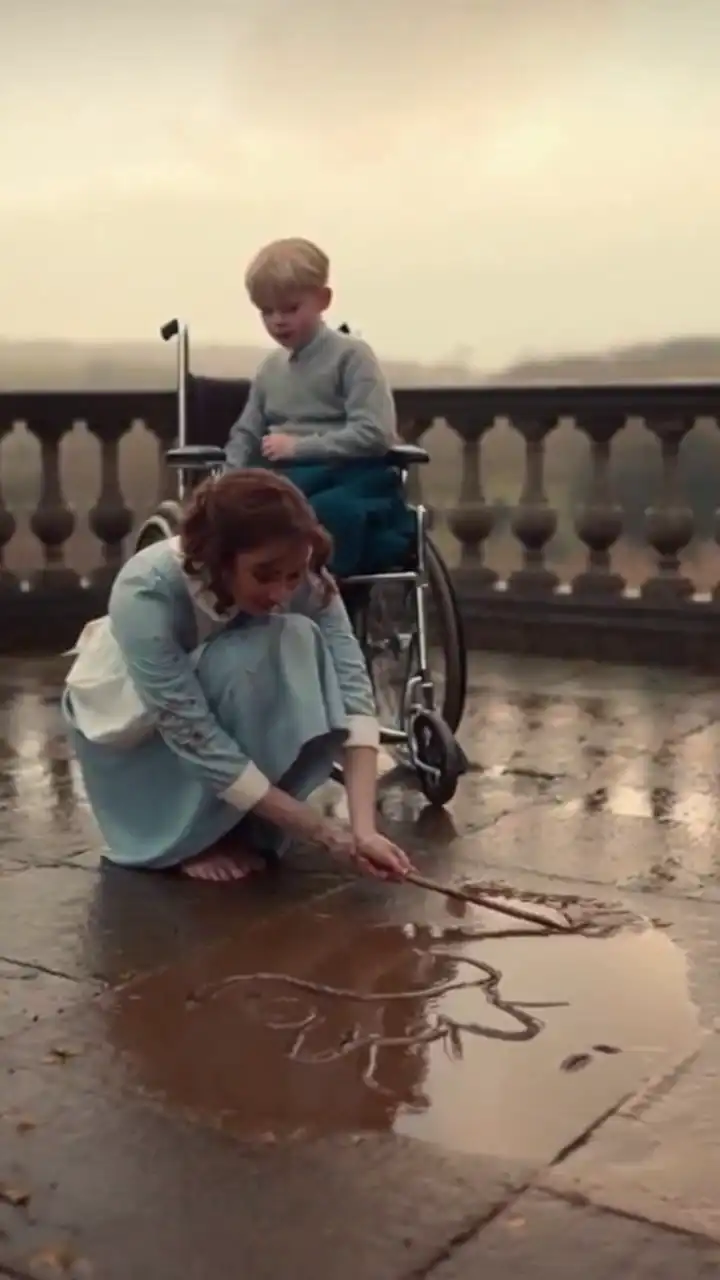
WHEN THE BILLIONAIRE’S SON DRAGGED HIS USELESS LEGS INTO THE MUD FOR THE FIRST TIME, HIS FATHER’S GIRLFRIEND SCREAMED FOR THE NANNY TO STOP
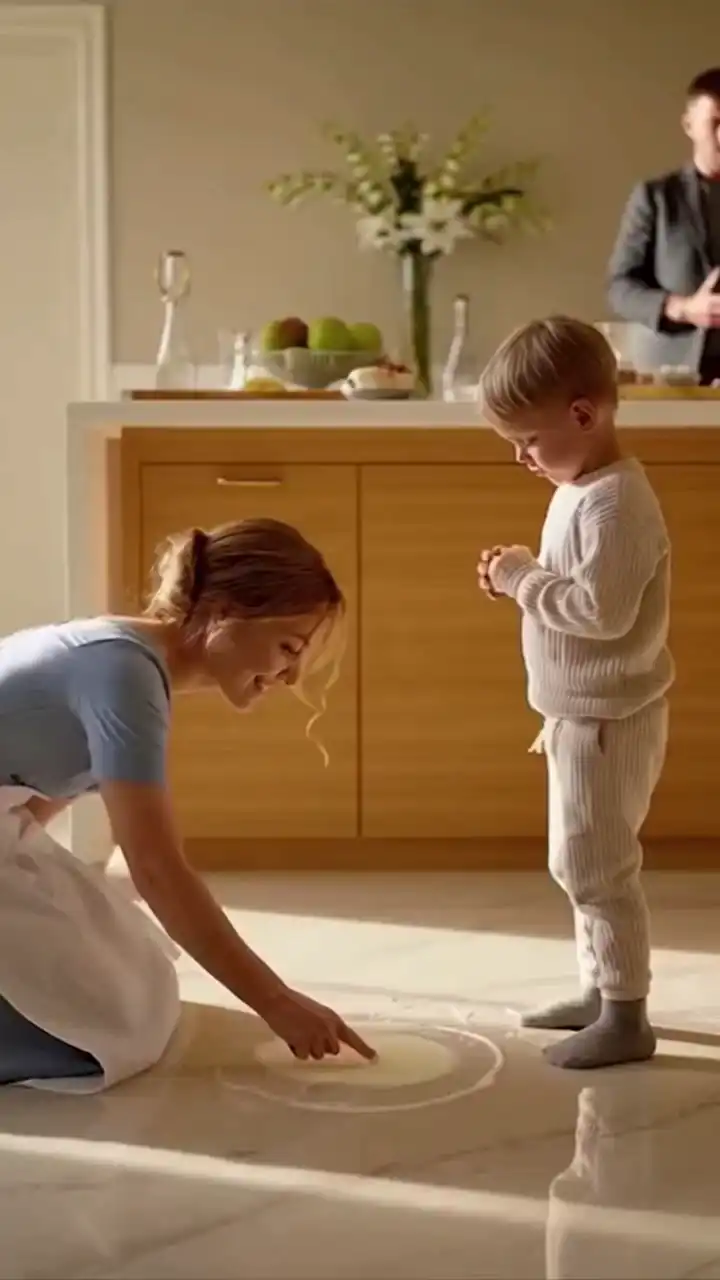
WHEN THE RICHEST MAN ON THE HILL HIRED THE WRONG NANNY, HIS SILENT SON CRAWLED ACROSS THE FLOOR FOR HER
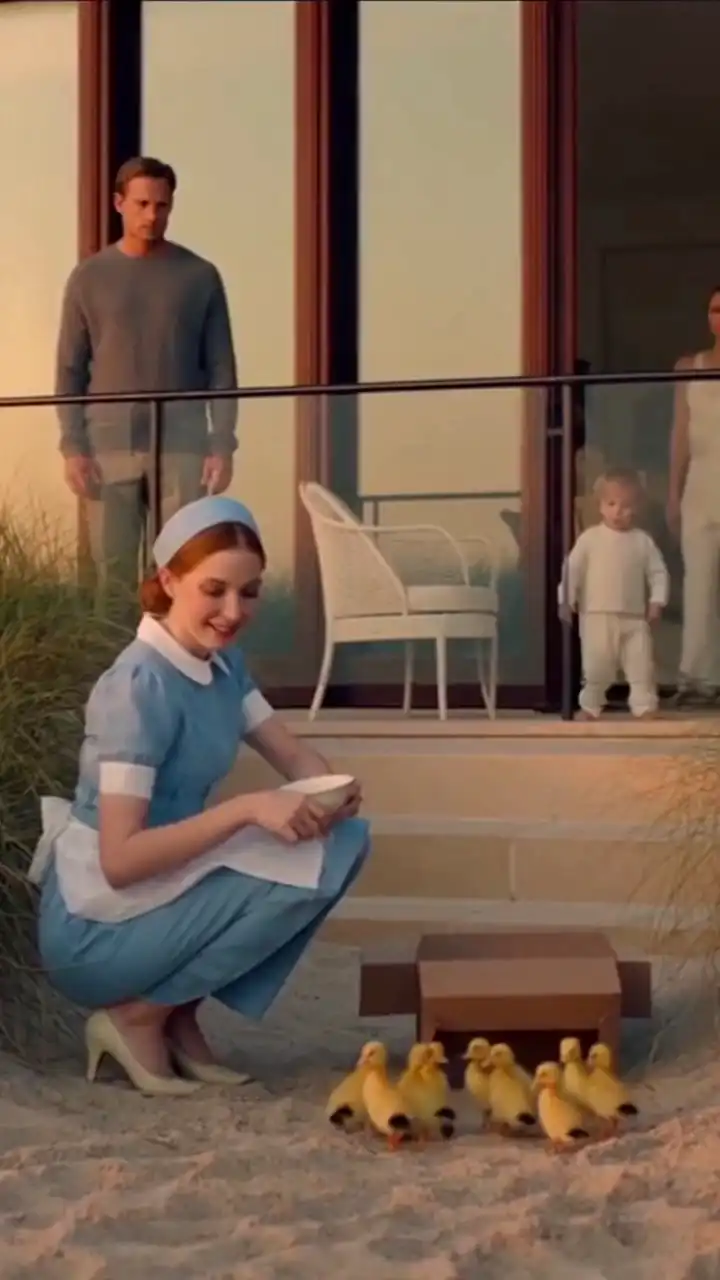
THE NANNY WHO BROUGHT DUCKS TO THE OCEAN HOUSE AND MADE A CHILD WALK TOWARD LIFE