
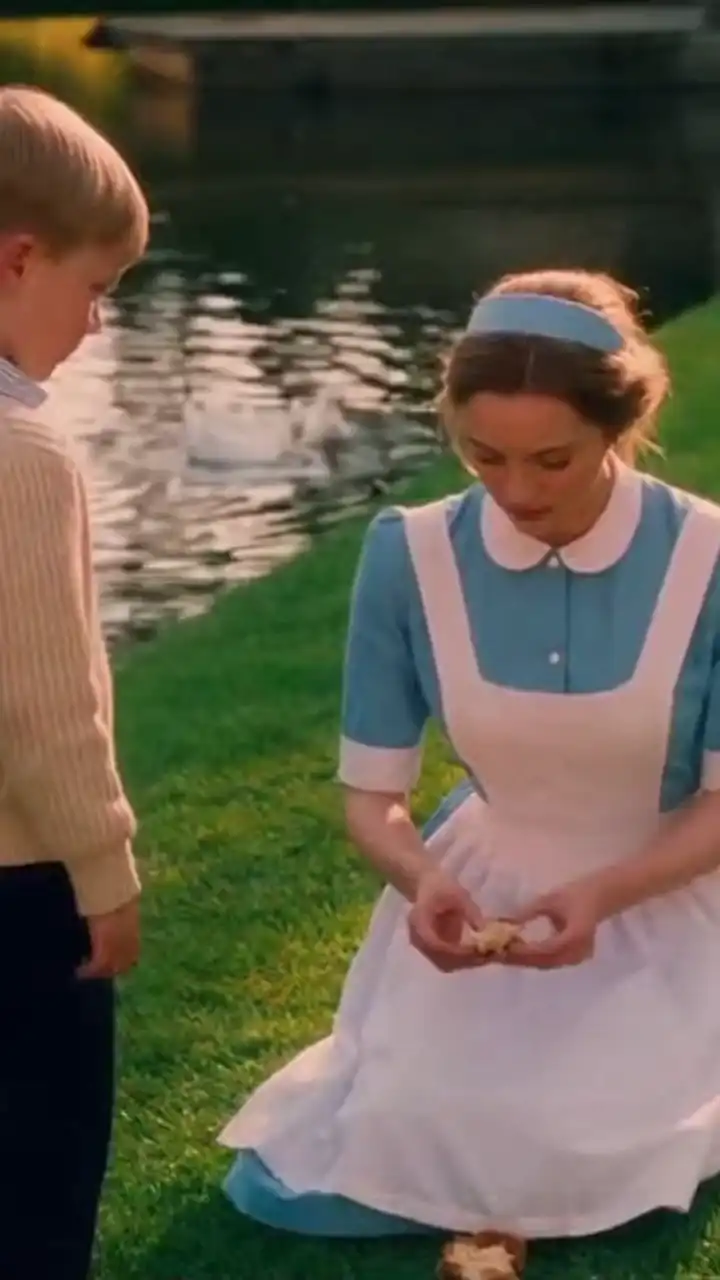
THE RICH FATHER WHO HIRED ANOTHER NANNY LOST HIS SON TO SILENCE UNTIL A GIRL STARTED FEEDING DUCKS ON HIS ESTATE
The laugh lasted less than a second.
The damage it did to Daniel’s control lasted much longer.
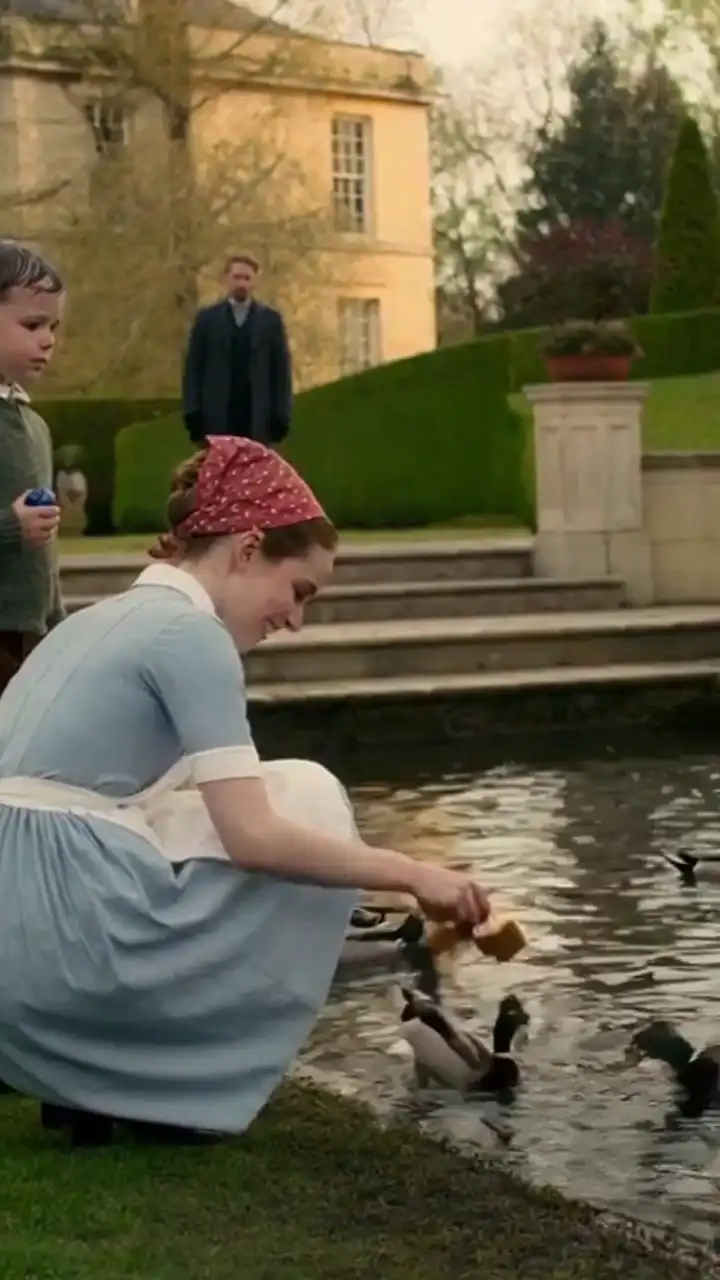
He walked down to the pond fast, shoes sinking into the edge of the lawn. “That’s enough.”
Noah flinched.
Not dramatically. Just that small tightening Daniel had seen a thousand times and still never managed to stop causing.
Emma didn’t argue right away. She held out the last bread piece to Noah. He took it, tossed it badly, and watched one duck miss it completely.
His mouth twitched again.
Daniel stared at that tiny movement like it was a fire starting in a snowstorm.
“He could fall in,” he said.
“He could,” Emma said.
“There are germs in that water.”
“There are ducks in that water. That’s why he came.”
Daniel looked at her like she was reckless, stupid, or both. “He has routines. His specialist said sudden changes trigger stress.”
Emma rose from the grass and brushed off her hands. “Then maybe stop making every change an adult decision that lands on him like a command.”
That should have gotten her fired.
Instead Daniel said, too coldly, “Come to my office in ten minutes.”
She nodded once.
Inside, Noah didn’t go back upstairs.
That was the first thing Daniel noticed.
Usually any interruption sent him racing back to his room, back to the cars, back to the window, back to the safe loop of his own silence. But now he stood by the mudroom door and stared outside toward the pond, one hand still closed around invisible bread crumbs.
The housekeeper, Mrs. Bell, watched him with her hand over her mouth.
Daniel went to his office. Emma came in exactly ten minutes later, damp grass on her sneakers.
He stayed behind the desk because standing felt too personal.
“You do not take my son near water without permission.”
“You hired me to help your son,” she said. “Not protect your schedule.”
“I hired you to follow structure.”
“And how’s that been working?”
The room went dead quiet.
Daniel was a man people obeyed. Board members, assistants, contractors, drivers, teachers. He gave direction, and systems moved. Emma stood in front of his desk like the rules of his world did not automatically apply to her.
He hated how much that unsettled him.
“He has diagnoses in progress,” Daniel said. “Sensory issues. social withdrawal. possible autism spectrum traits. We don’t improvise.”
Emma leaned forward slightly. “He was already at the window watching the ducks before I touched the bread. He was regulating himself with the tapping. He was tracking movement outside. I didn’t drag him anywhere. I went where his attention already was.”
Daniel said nothing.
She kept going, calm and blunt. “Everybody in this house keeps trying to pull him into your world. Eye contact. direct questions. scheduled tasks. neat toys. indoor voices. He doesn’t come because it feels like pressure. So someone has to go into his.”
That line sat in the room longer than he wanted.
He dismissed her with a warning, not because he had won, but because he needed time to understand why she might be right.
For the next three days, he watched.
That was new too.
Before Emma, Daniel monitored progress through reports. Charts. notes. specialist updates. He lived in a different wing of the same problem. Now he started stopping in doorways.
Emma did not chase language.
She built rhythms.
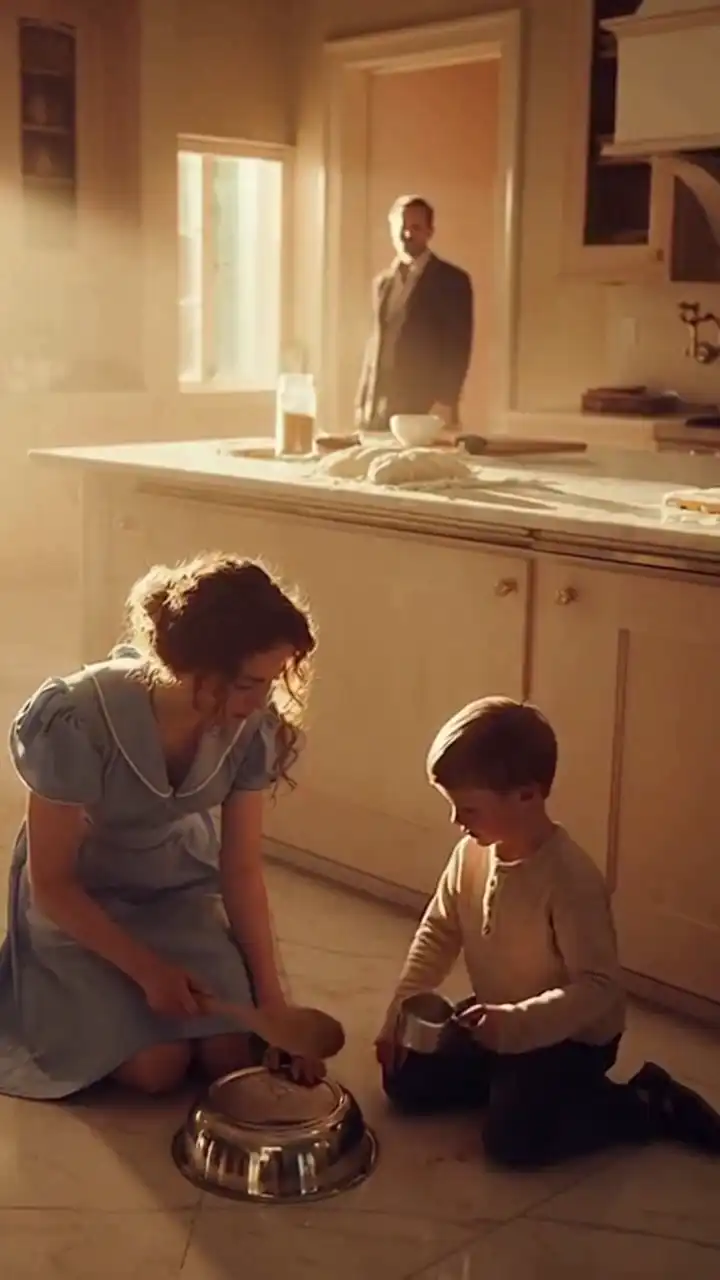
In the kitchen, she turned wooden spoons and bowls into a stupid little drum line while Mrs. Bell muttered that the marble counters were not for “noise experiments.” Noah stood by the doorway the first time, fingers pressed to his ears.
Emma tapped softly. Tap-tap. Pause. Tap.
Noah’s fingers loosened.
She tapped again, matching the pattern he made when he hit the window glass.
Tap-tap. Pause. Tap.
He looked up.
Not at her face. At her hands.
She slid a spoon across the counter without speaking. He didn’t take it that day. But he stayed until the sound stopped.
The next morning she found him in the same spot before breakfast.
Then came the pond again.
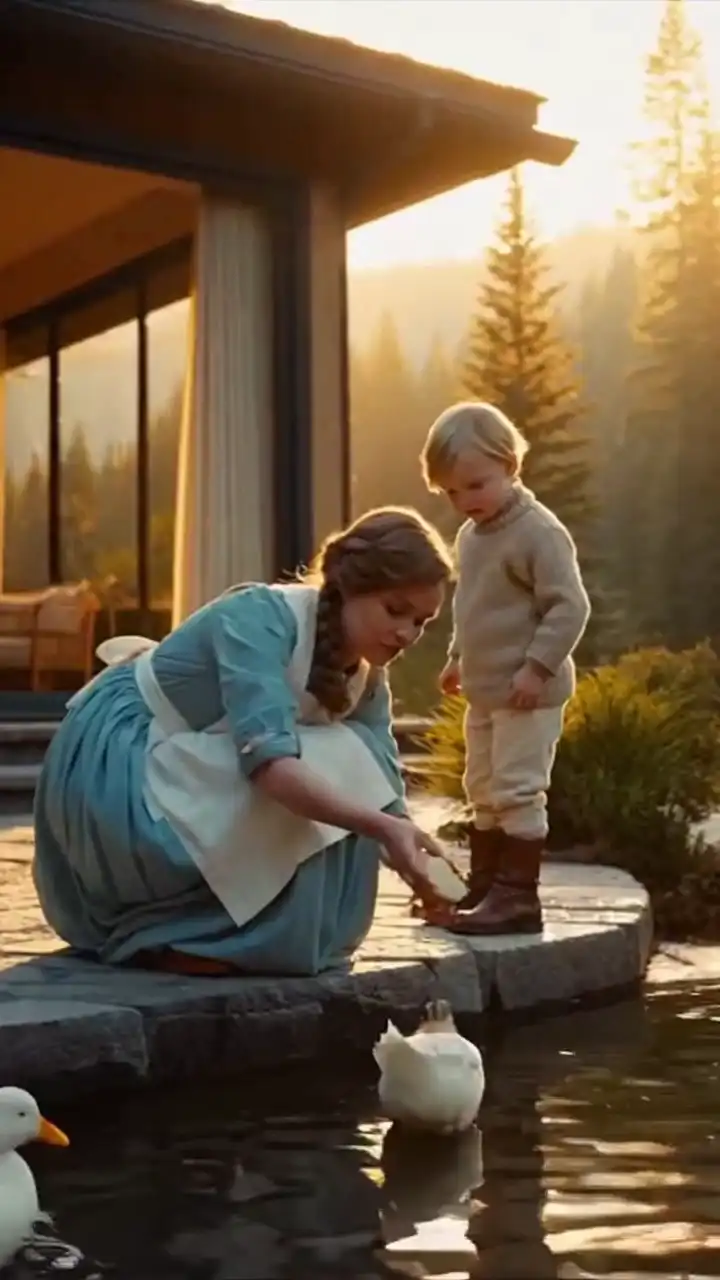
Not every day. She never forced repetition hard enough to turn wonder into duty. Sometimes she took him to the vegetable garden and let him watch robins hop between the rows. Sometimes to the old stable fence where barn cats slipped through sunlight and shadow. Once she sat on an overturned bucket by the side yard and let him toss fish pellets into the estate pond while tiny mouths broke the surface in quick silver circles.
Noah began following her.
Not hand in hand.
Not close.
But following.
Three steps behind. Then two. Then beside her shadow.
It changed the entire household.
Mrs. Bell started leaving crusts aside without being asked.
The groundskeeper, Luis, repaired a loose gate near the pond because “the little guy likes the ducks.”
Even the chef, who had first complained about “farm smells near formal lunch service,” was cutting apple slices into tiny moon shapes because Noah had once eaten half of one while watching birds through the kitchen screen.
Daniel saw all of it.
And still he resisted.
Control had become his grief language.
When Claire was sick, he had mastered appointments, second opinions, private nurses, treatment flights, medication schedules. He had done battle with death using organization, speed, and money. He lost anyway.
After she died, he used the same weapons on Noah.
More structure. More experts. More protection. More distance disguised as management.
He had not meant to outsource fatherhood.
He had just done it one careful decision at a time.
The next crack came on a windy Thursday.
Emma had taken Noah to the far side of the estate where a narrow path ran behind the orchard. Spring birds gathered there in the brush because Luis scattered seed for them.
Daniel spotted them from the terrace and headed down, irritated that she had gone beyond the mapped “approved” areas.
By the time he reached the path, Emma was crouched near a patch of grass, whispering, “Stay low.”
Noah was crouched too.
His usual rigid body had softened into attention. Not relaxed exactly. But engaged.
Two sparrows hopped near the seed.
Then a large pheasant burst out of the brush without warning, wings hammering the air.
The sound was huge.
Noah jerked backward, hit the ground hard, and let out a raw cry.
Daniel ran.
This was the kind of moment he always feared: overstimulation, shock, collapse. He reached for Noah automatically, but Emma lifted one hand sharply without even looking at him.
“Wait.”
“Emma—”
“Wait.”
Noah was breathing fast, face crumpled, hands curling in toward his chest. Daniel could feel panic rising in his own throat.
Emma didn’t touch Noah.
She dropped down onto the grass a few feet away and copied his breathing, loud enough to hear. In. Out. In. Out. Not a command. A pattern.
Then she slapped her palms lightly on her knees in the same rhythm.
Noah’s eyes flicked to her.
She glanced toward the birds that had scattered and said, in a plain almost amused voice, “That bird scared itself too.”
Noah made a broken sound.
Emma answered it with one soft tap on the ground.
Tap.
Pause.
Tap-tap.
The kitchen rhythm.
The window rhythm.
The rhythm she had learned from him and handed back when he needed a bridge.
Noah’s hands loosened.
He made the sound again, smaller this time.
Then the impossible thing happened.
He crawled to Emma.
Not to Daniel.
To Emma.
He pressed his forehead against her shoulder and stayed there, shaking.
Daniel stopped moving.
He had wanted his son safe.
He had not realized safety had to feel human before it could feel controlled.
Emma stayed low and steady. “That was loud. It’s over now.”
Noah whispered something into her sleeve.
Daniel could not catch it.
Emma pulled back just enough to look at him. Her face changed. “Can you say it again?”
Noah swallowed. His lips worked. “Bird.”
One word.
Rough. Small. Barely there.
But a word.
Daniel actually staggered back a step.
He covered his mouth with his hand, then dropped it, because suddenly he hated every polished adult gesture he had learned for containing emotion.
Noah had spoken.
Not in a therapy office with rewards lined up on a table. Not after three prompts and a chart. On the ground. In dirt. After fear. In the arms of the one person who had stopped trying to pull him out like an object stuck in a machine.
Daniel cried where they could both see him.
Emma looked up at him then, not triumphantly, not kindly either. Just honestly.
“He needed somebody to meet him before asking him to come back.”
That night Daniel did not work through dinner.
He sat in the kitchen while Noah pushed peas into little piles and occasionally looked toward the dark window where moths hit the glass outside. Emma tapped a spoon once against her mug. Tap. Pause. Tap-tap.
Noah answered by tapping his fork.
Daniel watched the exchange and felt something ugly in himself: jealousy.
Not romantic jealousy. Not yet anything like that.
Something more shameful.
He was jealous that his son had crossed a bridge built by someone else.
He was jealous that Emma knew Noah’s rhythms better than he did.
He was jealous that one young woman in cheap sneakers had walked into his carefully managed estate and exposed the emptiness of everything he called care.
The old version of Daniel tried to fix that feeling with authority.
The next morning he handed Emma a typed schedule.
Outdoor access limited to two windows per day. No pond without staff backup. No unsupervised animal contact. Structured verbal attempts to be recorded. Meal compliance to be noted.
Emma read it at the breakfast counter and set it down.
“No.”
Daniel blinked. “No?”
“If you turn him into a project again, he’ll disappear again.”
“You don’t make decisions here.”
“I do when the decision is whether I help him or help your anxiety.”
The words hit hard because they were true.
Daniel lowered his voice. “You are an employee.”
Emma nodded. “Then fire me. But don’t make me help you lose him a second time.”
Noah, sitting at the far end of the kitchen with crackers lined in a row, made a distressed humming sound at the tension.
Both adults stopped.
Emma didn’t even look at Daniel. She walked over, sat on the floor near Noah’s chair, and rolled a cracker slowly across the tile like a tiny wheel. Noah watched it. Hummed once more. Then rolled it back.
The crisis passed in ten seconds.
Daniel stood there holding a schedule that suddenly looked obscene.
He tore it in half.
Not dramatically. Just quietly, once, down the middle.
Over the next few weeks, surrender did not come naturally.
Daniel kept trying to step in too early.
If Noah hesitated near the pond, Daniel wanted to direct him.
If Noah stacked apple slices instead of eating them, Daniel wanted to negotiate.
If Noah covered his ears at kitchen noise, Daniel wanted silence restored immediately.
Emma corrected him more than once.
“Give him a second.”
“Don’t ask three questions in a row.”
“He heard you. He’s just not ready.”
“Sit lower. You’re towering.”
“No, don’t move the bird feeder. He knows where it is.”
At first every correction felt like insult.
Then Daniel started noticing what happened when he listened.
Noah did better.
That was all.
One afternoon rain came down hard over the estate, warm and sudden. The ducks crowded near the stone edge of the pond, shaking water off their backs. Noah stood under the covered porch, staring out with that old deep focus.
Emma was off that afternoon. Daniel was alone with him.
The old Daniel would have closed the curtains and redirected him to an indoor activity approved by someone with credentials.
Instead he remembered the first day.
He went to the pantry, found a stale heel of bread Mrs. Bell had saved, and came back with an old waxed jacket.
Noah did not look at him.
Daniel crouched beside him awkwardly. “Ducks,” he said.
Noah’s fingers twitched.
Daniel put on the jacket himself first, then held out Noah’s raincoat without trying to force eye contact.
There was a long pause.
Then Noah lifted one arm.
Daniel helped him into the coat.
They walked out together.
The rain soaked Daniel’s pants within minutes. The lawn was soft. The ducks were louder than he expected. Noah stopped at the path, uncertain.
Daniel almost said come on.
He stopped himself.
Instead he broke the bread and tossed one piece.
A duck lunged for it.
Noah watched.
Daniel tossed another and, feeling ridiculous, made the same low quacking noise Emma had made that first morning.
Noah looked at him.
Actually looked.
Then he made a sound that might have been a laugh trying not to be caught.
Daniel quacked again, worse this time.
Noah stepped forward.
One step. Then another.
He took bread from Daniel’s palm.
Together they fed the ducks in the rain while the staff pretended not to watch from the kitchen windows.
When Noah’s sleeve brushed his, he did not pull away.
When a bird flapped too close, he startled, then looked up at Daniel instead of shutting down completely.
Daniel copied Emma’s breathing pattern. In. Out.
Noah steadied.
After a minute, Noah held out a wet fist with one last piece of bread inside.
Not to the ducks.
To Daniel.
An offering.
A shared turn.
Daniel took it so carefully his hands shook.
“Thanks, buddy,” he whispered.
Noah’s mouth moved.
This time the word was clearer.
“Dad.”
Daniel closed his eyes.
Rain ran down his face, and for once he was grateful for it.
That evening he found Emma in the staff cottage at the edge of the property, halfway through taking off her shoes. He looked like a man who had come without a script.
“He said ‘Dad,’” Daniel told her.
Emma stared at him for one long beat, then smiled in a way that held relief more than victory. “Good.”
Daniel laughed once, broken and embarrassed. “That’s it? Good?”
“What do you want, a parade?”
He almost smiled. Then he got serious again. “I owe you an apology.”
“Yes,” she said.
He accepted that. “I kept trying to control what I was afraid to lose.”
Emma leaned against the doorframe. “Most people with money think help means hiring enough hands so they never have to change. Your son didn’t need a perfect system. He needed somebody willing to be with him when things got messy.”
Daniel nodded slowly. “I’m trying.”
“I know,” she said. “He knows too.”
He started to leave, then turned back. “Stay.”
She crossed her arms. “As an employee?”
“As the person who taught me how to hear my own son.”
She considered him carefully. “I’ll stay if the house changes with him. Not just me carrying him through it.”
So it did.
The formal playroom became a living room children could actually use. The locked cabinet of expensive untouched toys was opened. The kitchen stopped being a museum between meals. Luis built a small bird table near the breakfast terrace so Noah could watch feeders at close range. Mrs. Bell stopped apologizing for crumbs.
Daniel changed most.
He moved meetings instead of moving Noah.
He learned the difference between silence and overload.
He sat on floors.
He waited through pauses.
He stopped treating every difficult moment like a failure report.
Months later, at a small school readiness evaluation, the specialist who had once spoken in cautious percentages watched Noah identify animal cards, tap out a rhythm, and quietly say, “Duck. Fish. Bird.”
Then Noah looked back at the waiting room window where Emma stood near the hall and Daniel sat beside him.
The specialist smiled. “He has a strong anchor now.”
Daniel answered before he could stop himself. “He has a family now.”
The word surprised him because for the first time it felt like an action, not a label.
Summer settled over the estate. The pond turned bright at sunset. The ducks grew bold enough to waddle up near the stone path if they saw Noah coming.
One evening Noah walked out between Daniel and Emma carrying a coffee can full of feed. Not perfectly calm. Not magically healed. Still sensitive. Still sometimes silent. Still needing rhythm and space and warning before big changes.
But he was in the world now.
He stopped near the water and looked up at Daniel.
“More,” he said, pointing to the feed.
Daniel opened the can.
Noah took a handful, threw it wide, and laughed when three ducks chased the same piece.
It was not a small startled laugh this time.
It was a real one. Open. Bright. Alive.
Daniel laughed too, not because the moment was cute, but because he understood what it had cost to get there.
Not money.
Not staff.
Not plans.
Presence.
Emma stood beside them, hands in her jacket pockets, hair blown across her face by the evening wind. She didn’t look like she had been absorbed into wealth. She looked like the wealth had finally been forced to make room for life.
And when Noah reached left for Daniel’s hand and right for Emma’s sleeve, he made the choice that settled everything in the simplest way possible.
He did not choose between them.
He brought them both with him toward the pond.
Disclaimer: Mention of any brand or trademark is for identification only and does not imply partnership or endorsement
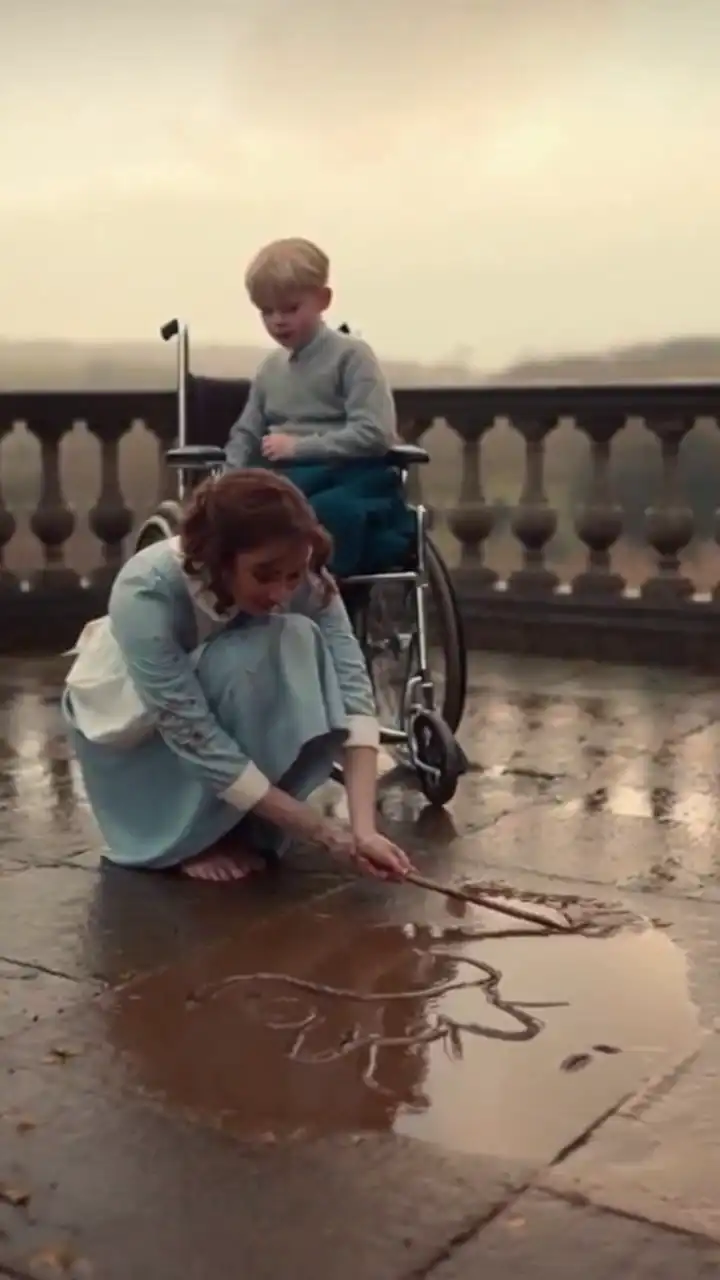
WHEN THE BILLIONAIRE’S SON DRAGGED HIS USELESS LEGS INTO THE MUD FOR THE FIRST TIME, HIS FATHER’S GIRLFRIEND SCREAMED FOR THE NANNY TO STOP
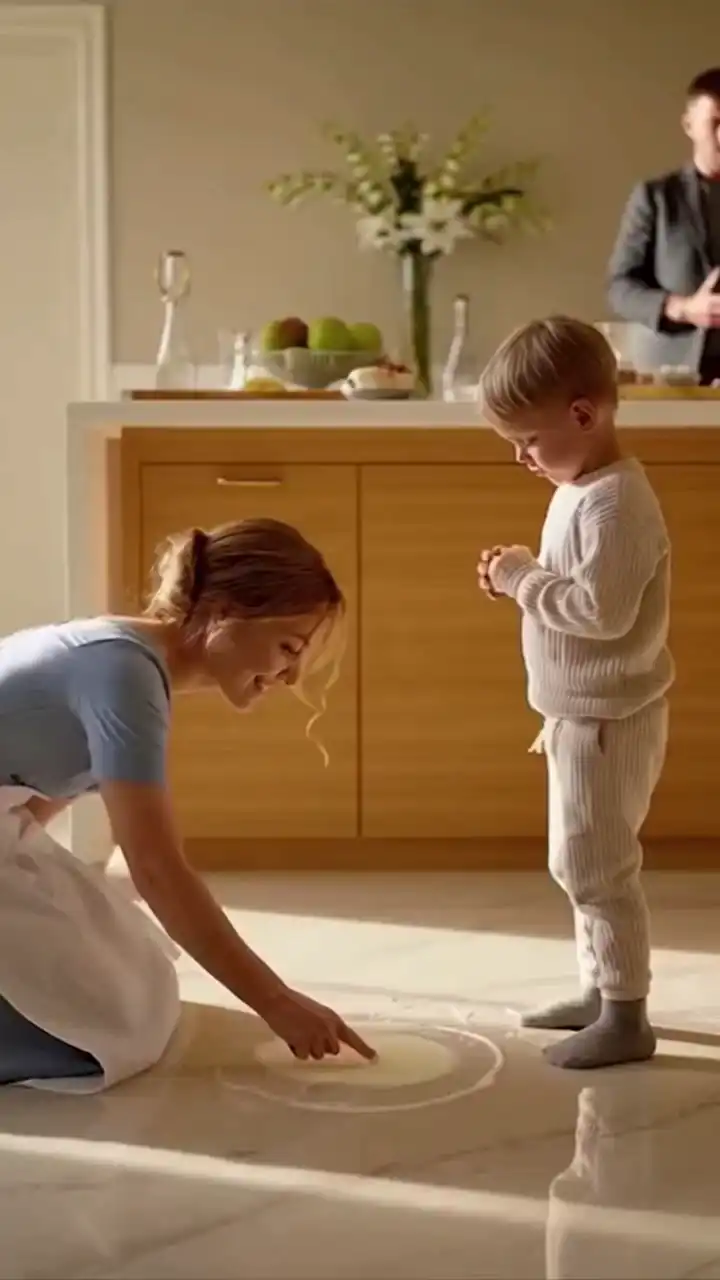
WHEN THE RICHEST MAN ON THE HILL HIRED THE WRONG NANNY, HIS SILENT SON CRAWLED ACROSS THE FLOOR FOR HER
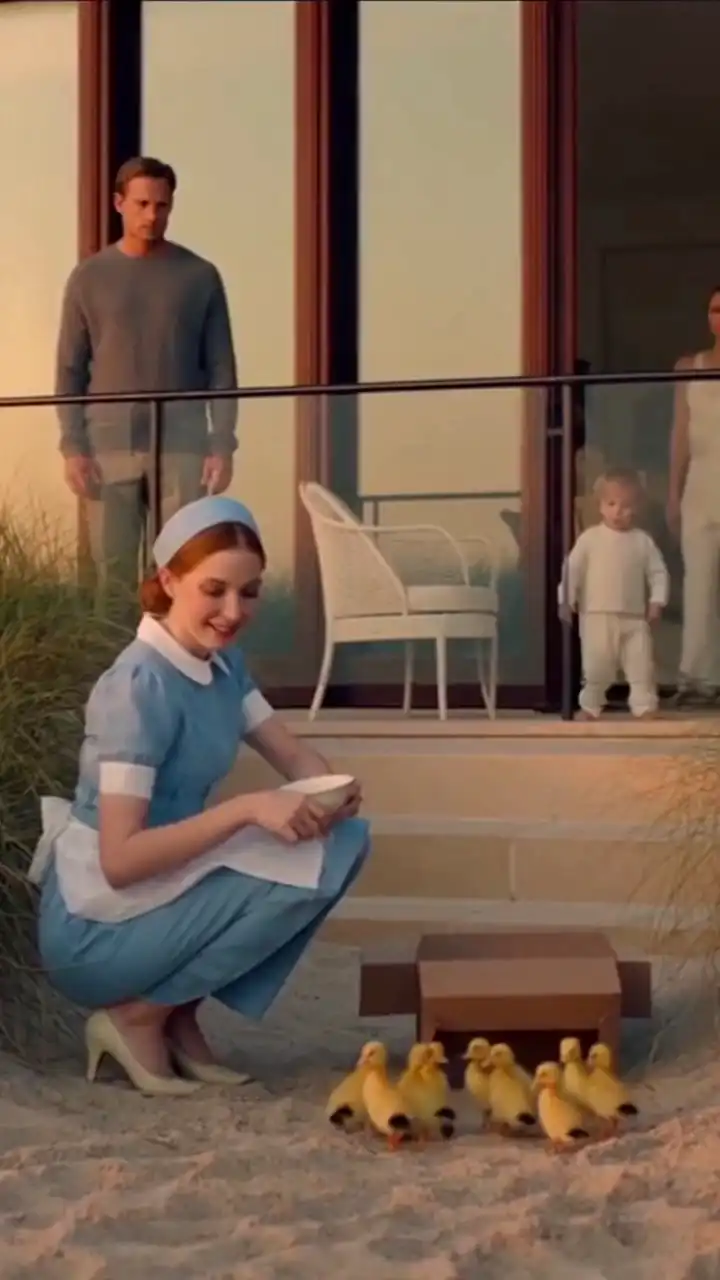
THE NANNY WHO BROUGHT DUCKS TO THE OCEAN HOUSE AND MADE A CHILD WALK TOWARD LIFE