
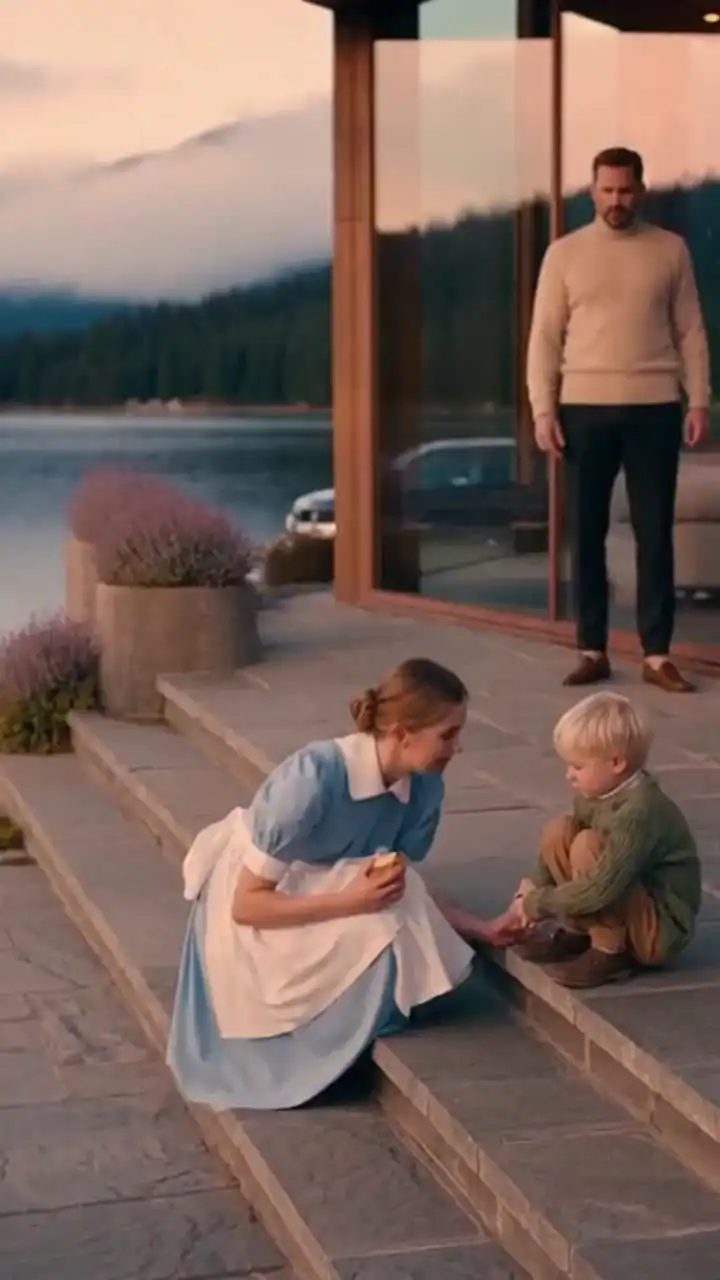
WHEN THE MILLIONAIRE’S SILENT SON FOLLOWED A NANNY INTO THE DUCK POND, HIS FATHER FINALLY SAW WHAT MONEY HAD NEVER FIXED
The SUV door shut with a hard, polished thud that didn’t belong near ducks.
Grant looked from the man climbing out in a navy coat to his son standing at the pond edge, swaying on unsteady legs, one fist still closed around a crumb Lily had tucked into his hand.
For a second, the whole estate seemed split in two.
On one side, the world Grant understood: schedules, signatures, treatment plans, safety clauses, experts with binders. On the other, a kitchen temp with birdseed logic and a boy who had just done something no one in that house had seen him choose for himself in over a year.
The facility director, Dr. Bell, gave a polite nod. “Mr. Holloway. We can review the transition process whenever you’re ready.”
Grant didn’t answer right away.
Lily glanced up, finally sensing she had walked straight into something expensive and serious. Her face changed. Not scared exactly. Just braced.
Owen didn’t look at the new arrival at all. He was watching the ducks with total focus, his body tipped forward, ready for the next movement.
“Give him another piece,” Grant said quietly.
Lily did.
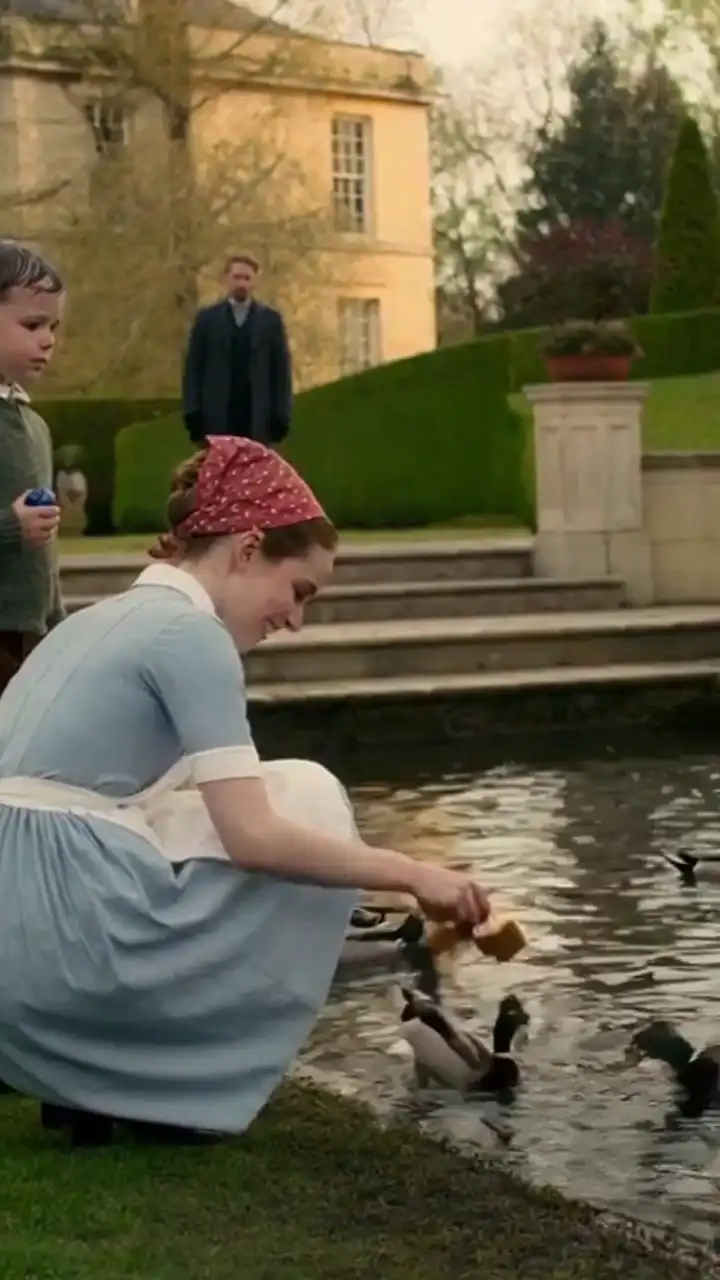
She didn’t hand it to Owen directly. She held it where he could see it, then pointed toward a fat duck circling near the reeds.
“Your turn.”
Owen’s arm jerked. The crumb fell short. The duck still rushed for it.
Owen made that sound again. Half breath, half laugh.
Dr. Bell’s professional smile tightened. “Moments of stimulation can happen in transitional settings. It doesn’t necessarily indicate sustainable progress.”
Grant knew that tone. He had paid for it many times.
Lily didn’t. “He moved because he wanted something,” she said plainly. “Nobody in this house lets him want anything.”
The butler inhaled. Dr. Bell blinked. Grant turned to look at her.
She seemed to realize, one beat too late, that she had just said that out loud to a man whose watch cost more than her car.
But she didn’t take it back.
Dr. Bell opened his leather folder. “Children in post-traumatic developmental shutdown often need structured removal from emotionally loaded environments.”
Lily looked at Owen, not at the doctor. “Or maybe he needs somebody to stop managing him like furniture.”
The house manager stepped in fast. “Miss Moreno, that’s enough.”
Grant should have ended it there. That was what the old version of him would have done. Restore order. Remove the disruption. Sign the papers.
Instead he said, “Doctor, take a walk with me.”
He left Owen at the pond with Lily under the watch of two staff members and walked Dr. Bell toward the terrace. By the time they reached the doors, Dr. Bell was already talking about clinical teams, transitions, developmental baselines, and long-term care outcomes.
Grant heard all of it.
He also heard Owen’s small bursts of sound from the water behind him.
That was the problem. Once a father heard that, the polished language started to sound like surrender.
“I’ll postpone intake,” Grant said.
Dr. Bell stopped walking. “Mr. Holloway, with respect, delaying can worsen attachment instability.”
“My son just followed a stranger down steps he hasn’t touched in months.”
“That may be novelty.”
Grant looked over his shoulder. Owen was still standing. Lily was crouched beside him now, pointing to the water every time a fish surfaced. She wasn’t praising him, wasn’t begging him, wasn’t overreacting. She was sharing the scene.
Not performing progress. Making room for it.
“Then let him have some novelty,” Grant said.
By dinner, the entire house knew intake had been delayed because of the produce girl.
The house manager was offended.
The therapists on contract were skeptical.
The cook was delighted because Lily had somehow gotten the dead kitchen noisy again.
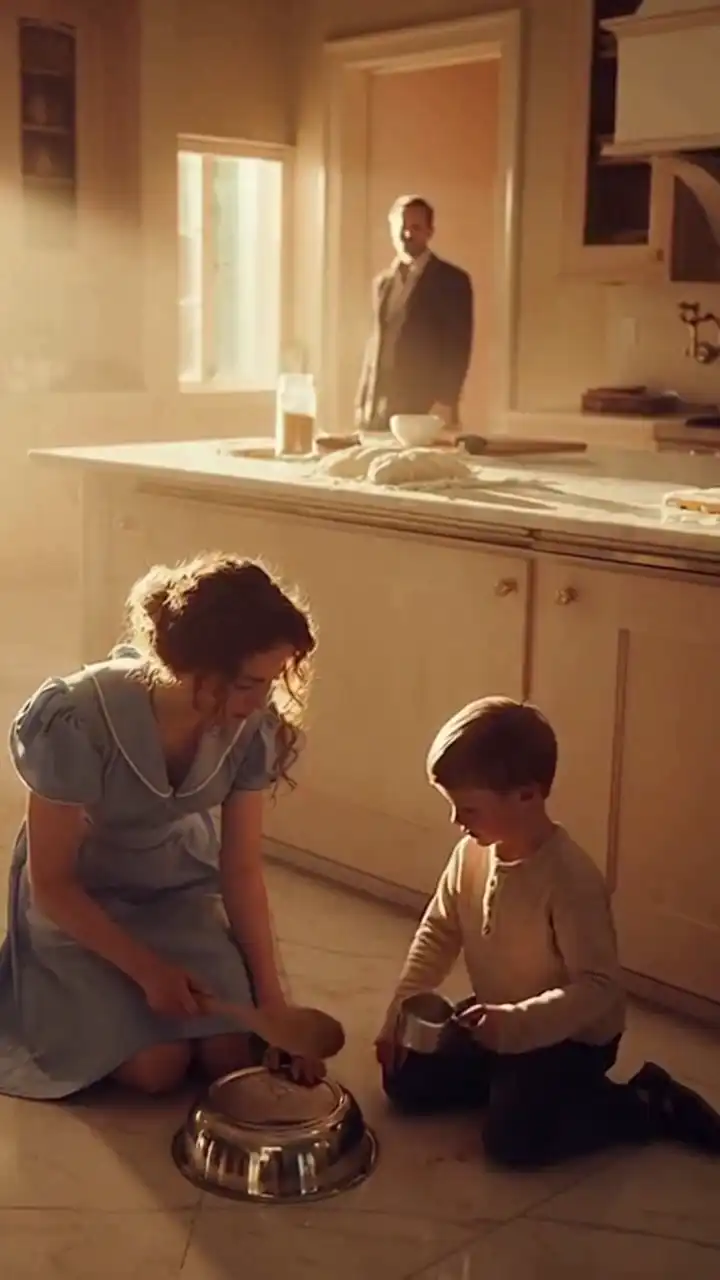
And Owen, for the first time in months, didn’t lock himself in the sensory room after sunset. He stood in the kitchen doorway while Lily rinsed strawberries in a metal colander and slapped dough onto the island for biscuits.
The kitchen had been off-limits to most of the household for years unless food was being plated. Too hot, too crowded, too ordinary. Grant had preferred everything handled cleanly and out of sight.
Lily worked as if no one had told her rich people hated evidence of living.
She hummed badly. She let the faucet run louder than necessary. She lined up carrot peels and called them “rabbit confetti.” She set one empty bowl upside down and drummed on it with a wooden spoon until one of the maids laughed.
Owen stood there, rigid but awake in a different way.
Lily didn’t drag him closer. She peeled, chopped, stirred, and let the room make its case.
After a while she slid a spoon through a bowl of pancake batter and tapped it on the rim. Thick drops plopped back in.
Owen watched.
She tapped again. Plop.
Again. Plop.
Then she set the spoon in his line of sight and turned away on purpose.
Grant was in the doorway, silent, one hand in his pocket, pretending he wasn’t there.
Owen stepped once.
Then another.
He reached the counter and put both palms on the edge.
Grant had sat in specialist offices where professionals warned him not to expect “linear gains.” He had nodded through sessions about sensory regulation, trauma regression, and functional communication. He had written checks and waited for miracles that never came.
Now his son was staring at pancake batter because a girl from the service road made the kitchen feel alive.
Lily finally looked at him. “Want to make a mess?”
Owen didn’t answer.
She dipped two fingers in the batter and dragged a stripe across a tray.
Then she handed him the spoon.
His hand trembled. Batter slid onto his wrist.
He didn’t pull away.
That night he slept five straight hours in his own bed for the first time since the crash.
Grant knew because he sat outside the room listening for the usual thud of pacing or the sharp cry that came from nowhere and from memory at the same time.
At 2:00 a.m. the house was still.
He cried then, but only for a minute, and only because no one was there to see it.
The breakthrough should have bought them peace.
Instead the outside world started pushing back.
By the third day, Grant’s sister Amelia arrived unannounced from Boston. She had not approved of the postponed facility placement. She believed in top-level intervention, formal schooling, and measured boundaries. She also believed, with the confidence of someone who had never spent a full week in that house, that grief should not be run by a temporary worker with no credentials.
She found Lily on the back path with Owen, carrying a paper sack of feed pellets toward the lower pond.
“Grant,” Amelia said sharply, seeing dirt on Owen’s shoes, “why is your son trailing behind kitchen staff?”
Lily stopped.
Owen did too, instantly.
That was the first thing Grant noticed. The boy’s body had already linked tension to stillness. One wrong tone and he froze again.
“She’s helping him,” Grant said.
Amelia looked at the sack in Lily’s hand. “By turning him into a petting-zoo project?”
Lily lowered her eyes, but she didn’t retreat. “The ducks and fish make him track movement. He follows what interests him.”
Amelia laughed once, dry and offended. “And this is medicine now?”
“No,” Lily said. “This is a reason to move.”
Grant felt that line land in him harder than it should have.
Amelia spent the morning on calls. By lunch she had arranged for a developmental specialist from Aspen to drive up that same afternoon. Grant almost told her to cancel. Then he stopped himself.
The old version of him had shut down whatever he didn’t control. Maybe that had been part of the damage. Maybe he needed proof, not just hope.
So he let the specialist come.
Dr. Nina Kessler was younger than Grant expected and less impressed by the estate than everyone else usually was. She watched Owen from a distance first. No clipboard in his face. No forced greeting.
Lily was at the pond tossing feed in tiny arcs. Fish surfaced in flashes. Ducks argued over every piece. Sparrows dived in at the edges and fled.
Owen tracked all of it.
When Lily moved, he moved.
When she paused, he swayed, waiting.
Dr. Kessler watched him for almost ten minutes before speaking.
“He’s not absent,” she said.
Grant almost laughed from the shock of hearing something new.
“He’s overwhelmed,” Dr. Kessler continued. “Most of what’s been built around him is based on reducing unpredictability. That can help some children. But in trauma-linked developmental withdrawal, overcontrol can flatten motivation. He may have stopped initiating because nothing in his environment belongs to him. Every cue arrives prepackaged.”
Amelia crossed her arms. “So ducks are the answer?”
Dr. Kessler looked at her calmly. “No. Agency is. The ducks are just honest.”
Grant glanced at Lily. She looked embarrassed by the attention, as if she had never meant to become evidence.
Dr. Kessler spent the afternoon observing rather than interfering. She had Lily repeat small routines: carry feed, pause at the gate, wait for Owen to close the distance; tap a bowl in the kitchen, stop, let him request continuation through movement; drag a paintbrush through watered-down color across butcher paper on the terrace floor and see whether he tracked the stroke.
That last one changed the week.
The paint had been Lily’s idea. Cheap washable paint from the estate’s neglected craft closet, butcher paper from the pantry, old shirts for smocks.
Amelia hated it on sight.
“On the terrace?” she said. “Absolutely not.”
But Grant had already said yes.
The paper rolled over the stone like a long white road. Lily dipped a brush in blue and made one thick line. Then green. Then yellow circles. Not teaching. Not instructing. Just making bright movement where the house usually demanded restraint.
Owen crouched near the edge, watching the wet colors spread.
Lily handed him another brush.
He didn’t take it.
She shrugged and painted a fish shape. Then a bird. Then a crooked duck with ridiculous orange feet.
One of the ducks from the pond actually wandered up the path and quacked at them through the railing, and Lily laughed out loud.
It was a simple sound, but in that house it hit like something radical.
She painted orange feet again, larger this time.
Owen’s mouth twitched.
Grant saw it before anyone else.
Then Owen reached for the brush.
His grip was awkward. He stabbed at the yellow paint, then dragged it hard across the paper and onto the stone. A crooked streak. Then another.
Lily widened her eyes like he had just created a masterpiece. “That duck is mean.”
And Owen laughed.
A real laugh this time. Short, startled, but unmistakable.
The sound broke something open in Grant so fast he had to look away.
Amelia went quiet. Dr. Kessler did too. No one wanted to disturb the moment by naming it.
But resistance outside the mountain didn’t stop just because the house had shifted.
A gossip site got wind that Grant Holloway had delayed a high-end treatment placement after becoming “overattached to an untrained household worker.” Someone from Dr. Bell’s facility had talked. Then a parent blog picked it up. Then a board member from Grant’s foundation called to “check in.”
He had spent his career mastering public narratives. This one made him furious because it touched the one place he had failed in private.
His legal team suggested distance. Keep the girl temporary. Resume formal care soon. Avoid optics.
That evening Grant found Lily in the staff kitchen packing her things into a canvas tote.
“I didn’t ask to blow up your life,” she said without turning around. “Your manager made that clear.”
“What did he say?”
“That people are talking. That if I cared about Owen, I wouldn’t let the house turn me into a problem.”
Grant leaned against the doorframe. “Are you leaving because he said that?”
“I’m leaving because people like him are usually right about how this ends.”
She finally faced him. She looked exhausted. Young again. Not the steady force she became around Owen, just a woman who knew exactly where class lines usually reappeared.
“He’s your son,” she said. “You can hire every doctor in the country. But if they box him up every time he reaches for something messy or alive, he’ll disappear again.”
Grant took that hit because he had earned it.
He thought of the months after the crash. He had turned the house quieter and quieter, cleaner and cleaner. He had removed anything that might trigger memory. No barking dogs. No neighborhood children. No kitchen clutter. No chaotic family visits. No pond after rain because the path got slippery. No lake toys. No loud music. No surprises.
He had called it protection.
Maybe Owen had felt it as vanishing.
“Stay,” Grant said.
Lily shook her head. “As what? The girl with bread crumbs? The one everyone blames when your son does something they can’t chart?”
Grant had no quick answer, and for once he didn’t try to buy one.
The answer came from Owen.
He had come down the hallway without anyone noticing, barefoot, pajama shirt twisted at one shoulder, holding the crooked orange-streaked painting from the terrace.
He walked straight past Grant.
Straight to Lily.
Then he pressed the paper against her leg and wrapped one arm around her knee.
It wasn’t graceful. It wasn’t long. But it was a choice so clear it made both adults freeze.
Lily slowly set down the canvas tote.
Owen looked up at her and pushed out one rough, effortful word.
“Go?”
Grant closed his eyes for one second.
Lily knelt fast. “No,” she said, voice shaking now. “No, not if you want me here.”
That was the night the decision became public inside the family, whether anyone liked it or not.
Grant dismissed the facility contract.
He reduced the rotating specialists and kept Dr. Kessler in a consulting role only.
He converted one formal sitting room into an open activity space with practical shelves, washable rugs, floor cushions, art bins, and doors that stayed open to the garden.
He reopened the kitchen to the center of the house.
And he fired the manager who had been quietly pressuring staff to isolate Lily.
Amelia did not apologize easily, but she stayed long enough to see what routine looked like when it was built around participation instead of control. She watched Owen carry lettuce leaves to the duck fence with both hands. She watched him wait at the back door every morning for Lily’s boots on the floorboards. She watched him stand on a stool beside the sink and rinse apples while water splashed his shirt.
She stopped calling it chaos.
Weeks passed, and change came the way real change does: not in one giant miracle, but in small acts repeating until they became a life.
Owen began following two-step routines if they led somewhere tangible. Feed first, then pond. Bowl first, then batter. Boots first, then birds.
He made more sounds.
Then words.
Not many. Not pretty. But real.
“Duck.” “More.” “Blue.” “Lily.” And once, standing beside Grant at the window before dawn, pointing toward the lower path: “Go outside.”
Grant nearly laughed from the shock of being bossed by his own son.
He also changed, though more slowly.
He started taking calls from the terrace instead of hiding in his office when Owen was awake.
He learned how long to wait before stepping in.
He stopped treating every difficulty like a failure point.
One cold morning Lily handed him a dented metal bucket of feed and said, “He listens to your footsteps now. If you always stand back, he’ll keep putting you in the background.”
No one had talked to Grant Holloway that way in years.
He took the bucket.
At the pond, he scattered the pellets badly, too many in one place. Ducks crashed together in a mess of wings. Owen stared. Then, to Grant’s surprise, he laughed at his father instead of shutting down.
“Too much,” Lily said.
Grant nodded. “Apparently.”
The next handful was better.
By spring, the gossip had died because there was no scandal left to feed on. There was just a changed house and a child moving through it.
Dr. Kessler suggested something Grant had not expected.
“Lily has instincts some trained adults never develop,” she said after a session. “Not because she knows theory. Because she reads motivation in real time and adjusts without ego. If she wants this kind of work, she should be taught properly.”
Grant found Lily in the greenhouse that afternoon, helping Owen spray herbs with a mister bottle. He asked one question.
“Did you ever want to study early childhood development?”
She laughed like the idea was too far away to touch. “People like me usually want things after rent is paid.”
“That wasn’t my question.”
She went quiet.
Then she admitted that she had left community college after one semester. Her mother got sick. Money got tight. Work came first. It stayed first.
Grant listened. This time he didn’t mistake listening for solving. He waited until she was done.
Then he said, “If you want the education, I’ll fund it. Tuition, transportation, whatever schedule works around Owen’s care, if that’s something you choose to continue. Not as charity. As investment.”
Lily stared at him as if he had switched languages.
“Why?”
Grant looked through the greenhouse glass. Owen was crouched by the herb bed, watching a sparrow peck at spilled seed with total concentration.
“Because you gave my son a way back to us,” he said. “And because the world shouldn’t waste what you can do.”
She cried then, but quietly, wiping her face with the heel of her hand like she was annoyed by it.
By summer, the arrangement had a shape no one in that house could have predicted in the winter.
Lily was no longer temporary help. She was enrolled in a child development program funded by the Holloway family foundation under a new practical-care scholarship Grant created in his late wife’s name. She continued with Owen, but not as a hidden servant doing emotional labor no one respected. She had a title, a salary, coursework, support, and a future.
The scholarship expanded the next year to include other working caregivers without formal access to education.
That part mattered to Lily almost as much as Owen.
As for the family itself, it didn’t become perfect. Grief still moved through it. Owen still had hard days, shutdown days, anniversary days when the sound of tires on wet gravel could empty his face in seconds.
But now there were ways to reach him.
On the first anniversary of the delayed facility placement, Grant did not book a memorial lunch or hide in his office pretending it was just another date.
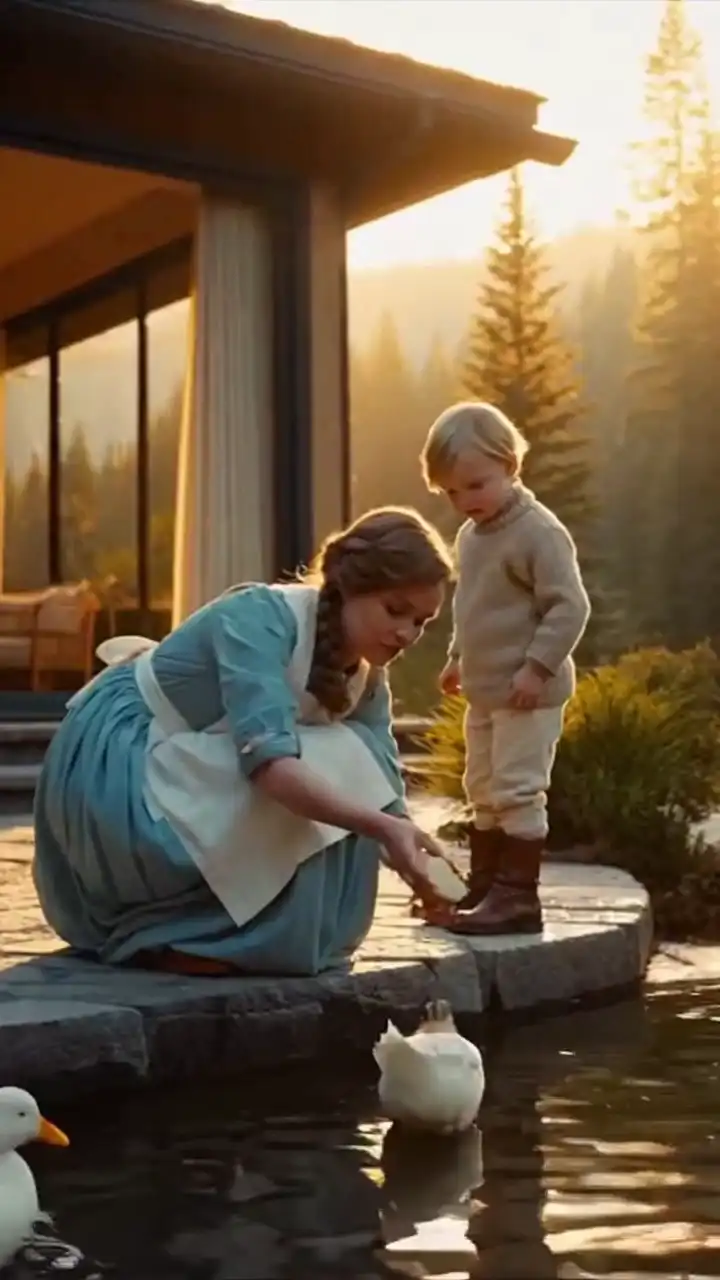
Instead he went with Owen and Lily down to the pond at dusk.
They brought stale bread, pellets, and a cheap foldout paint set from the grocery store in town.
The ducks came first, greedy as ever. Fish flashed under the surface. Birds dipped low over the reeds.
Lily spread paper on the old picnic table.
Owen stood between them, taller now, steadier, one hand already stained blue.
Grant watched his son lean toward the water, then turn back and tap the page with the brush.
One stroke.
Then another.
He pointed at the mess of color, then at the birds.
“Family,” he said.
The word was rough. Hard-won. Small compared to what it meant.
But it was enough to leave all three of them quiet.
Because the mountain estate still had its gates, its long driveway, its private doctor, its polished stone and expensive silence whenever it wanted them.
But at the pond, with duck feed on their shoes and paint on the table and evening wind cutting through the pines, the life that finally reached Owen had come from the one thing that place had looked down on first:
something ordinary, something messy, and a young woman who had walked in through the service entrance and changed all of their futures.
Disclaimer: Mention of any brand or trademark is for identification only and does not imply partnership or endorsement
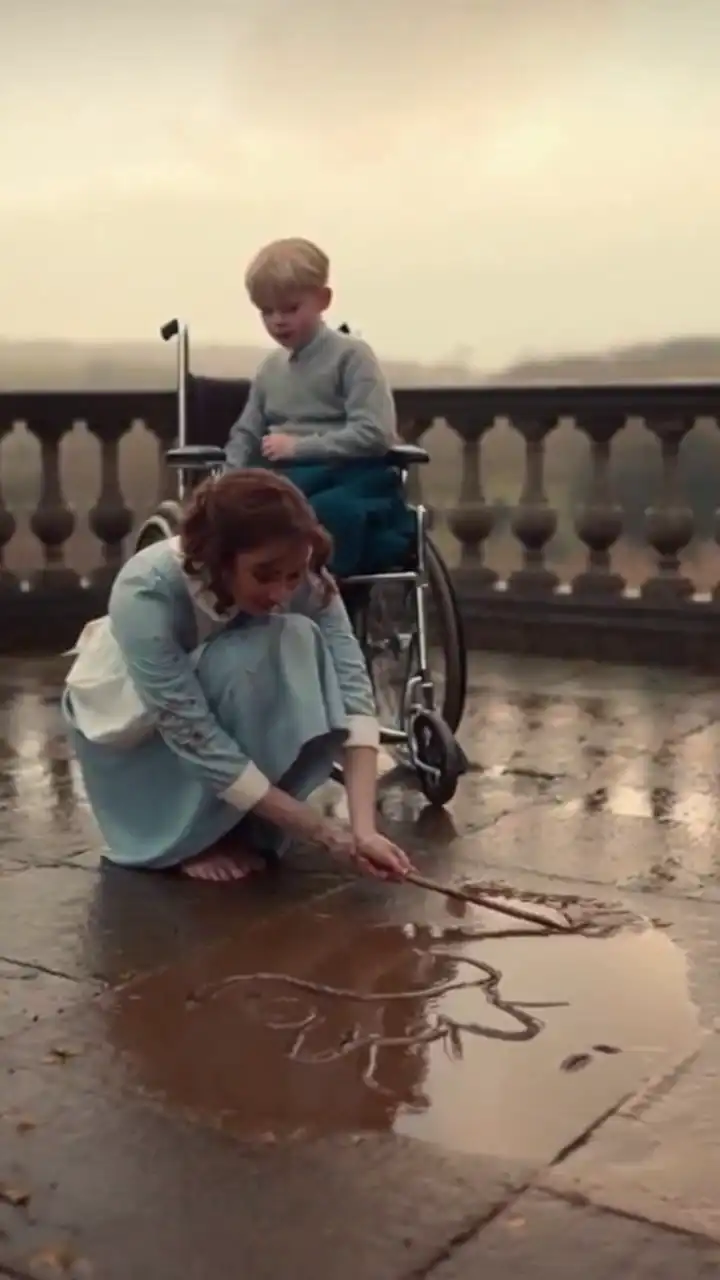
WHEN THE BILLIONAIRE’S SON DRAGGED HIS USELESS LEGS INTO THE MUD FOR THE FIRST TIME, HIS FATHER’S GIRLFRIEND SCREAMED FOR THE NANNY TO STOP
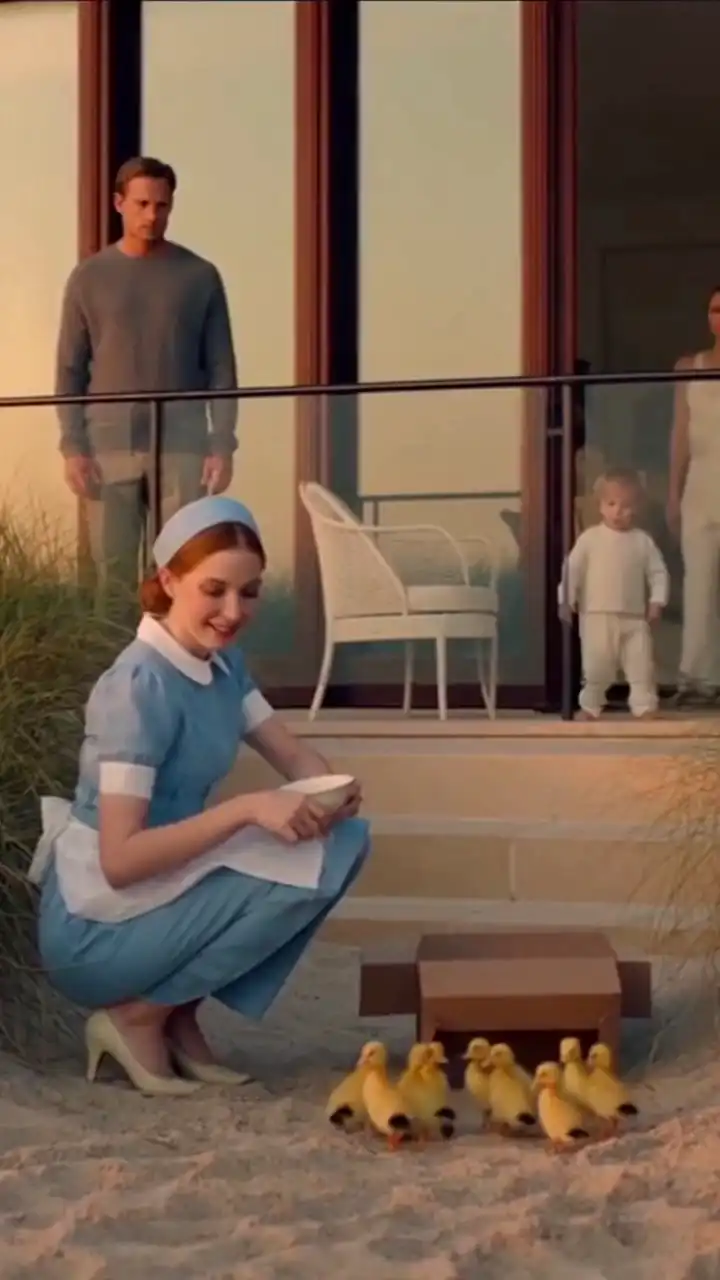
THE NANNY WHO BROUGHT DUCKS TO THE OCEAN HOUSE AND MADE A CHILD WALK TOWARD LIFE
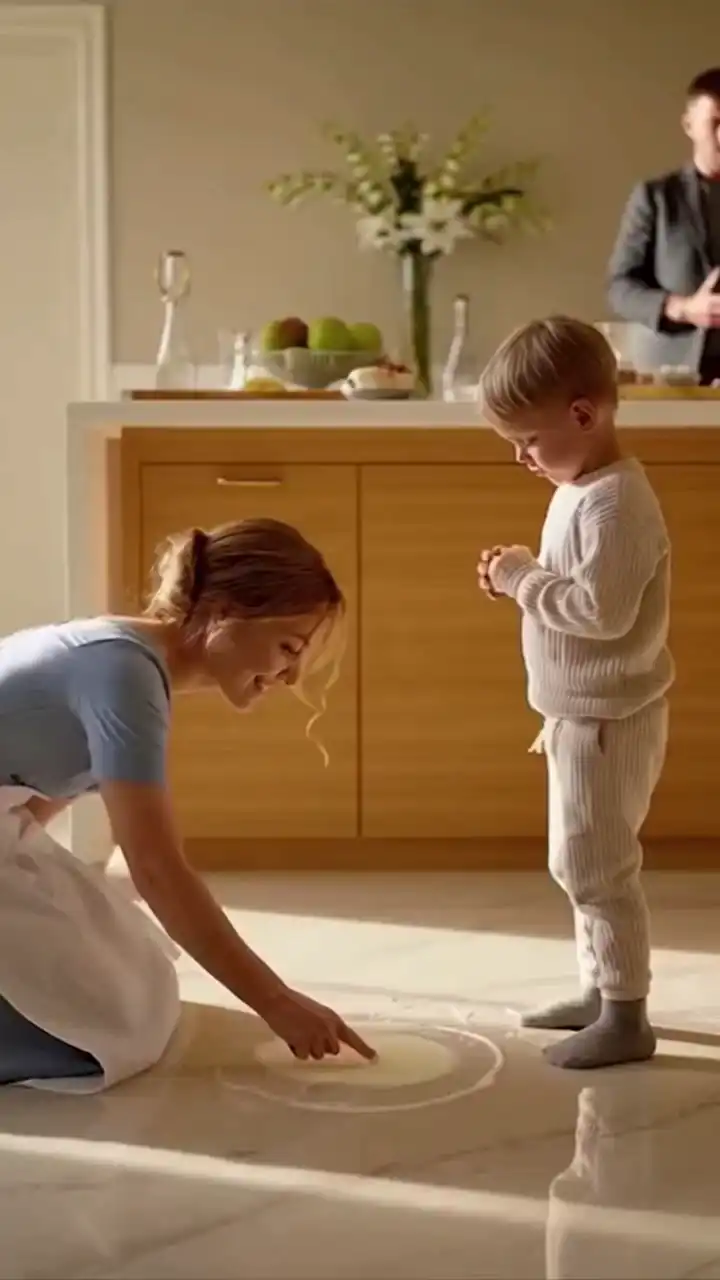
WHEN THE RICHEST MAN ON THE HILL HIRED THE WRONG NANNY, HIS SILENT SON CRAWLED ACROSS THE FLOOR FOR HER