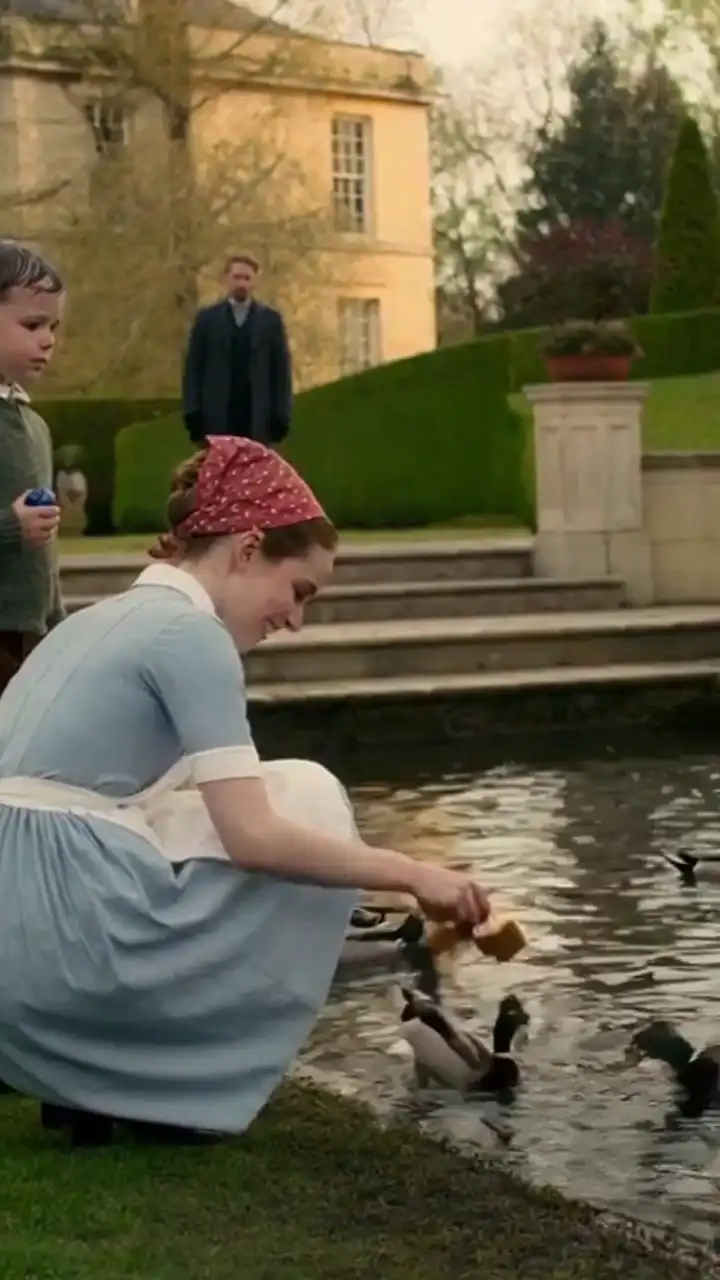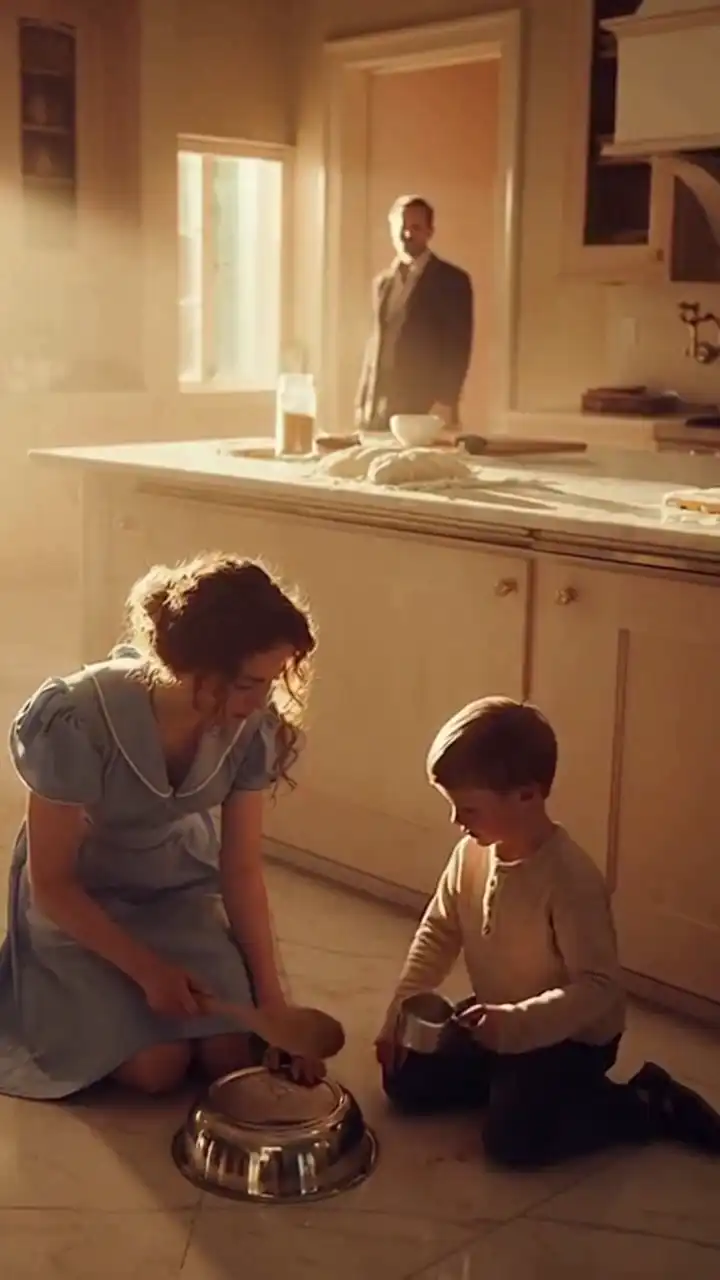
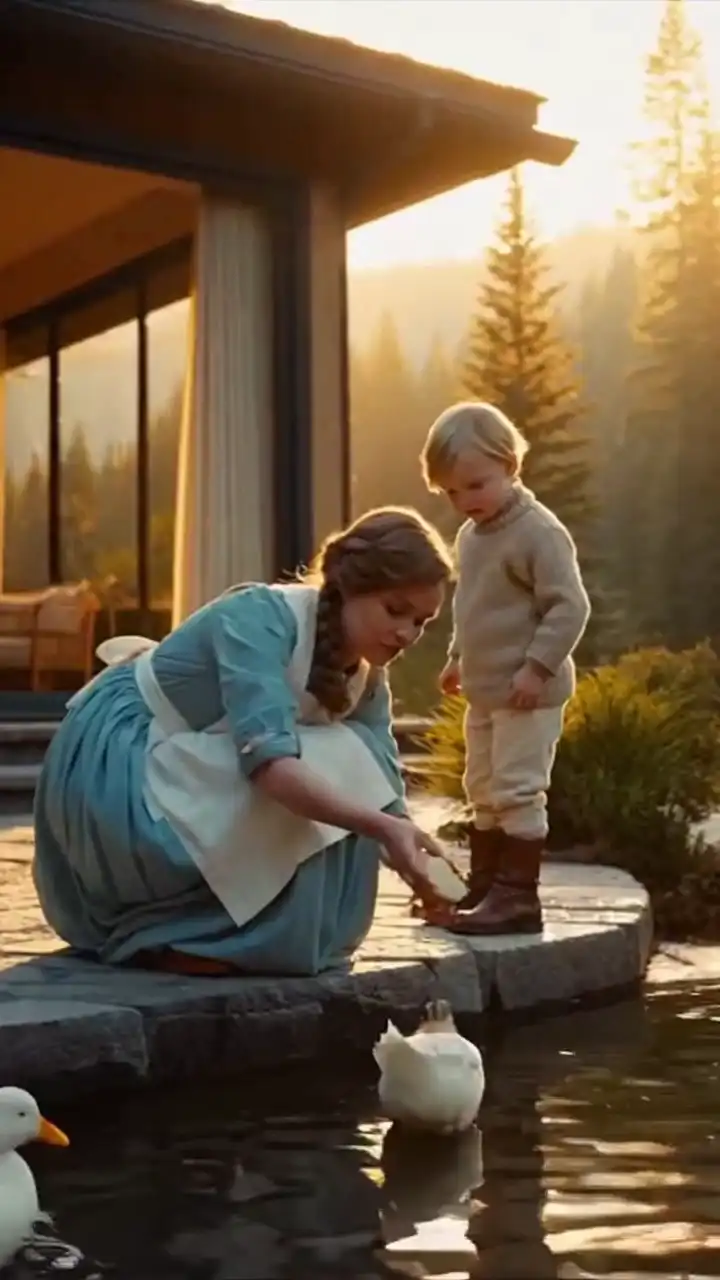
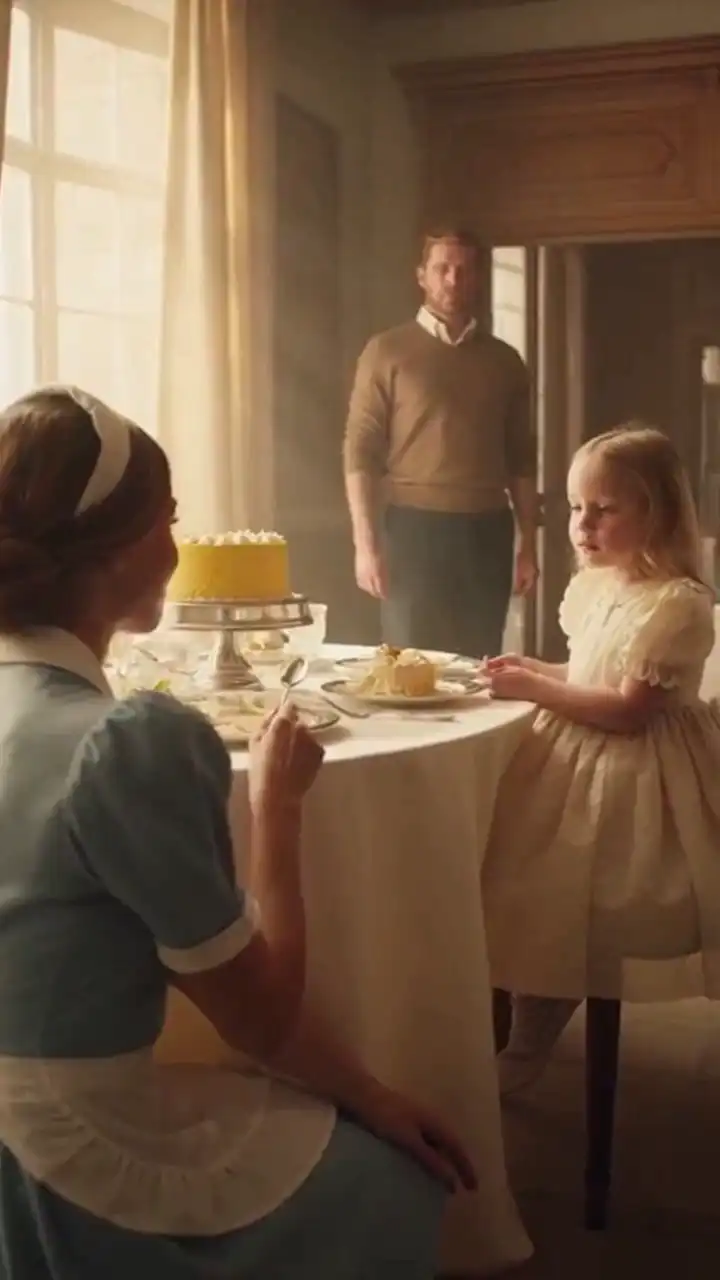

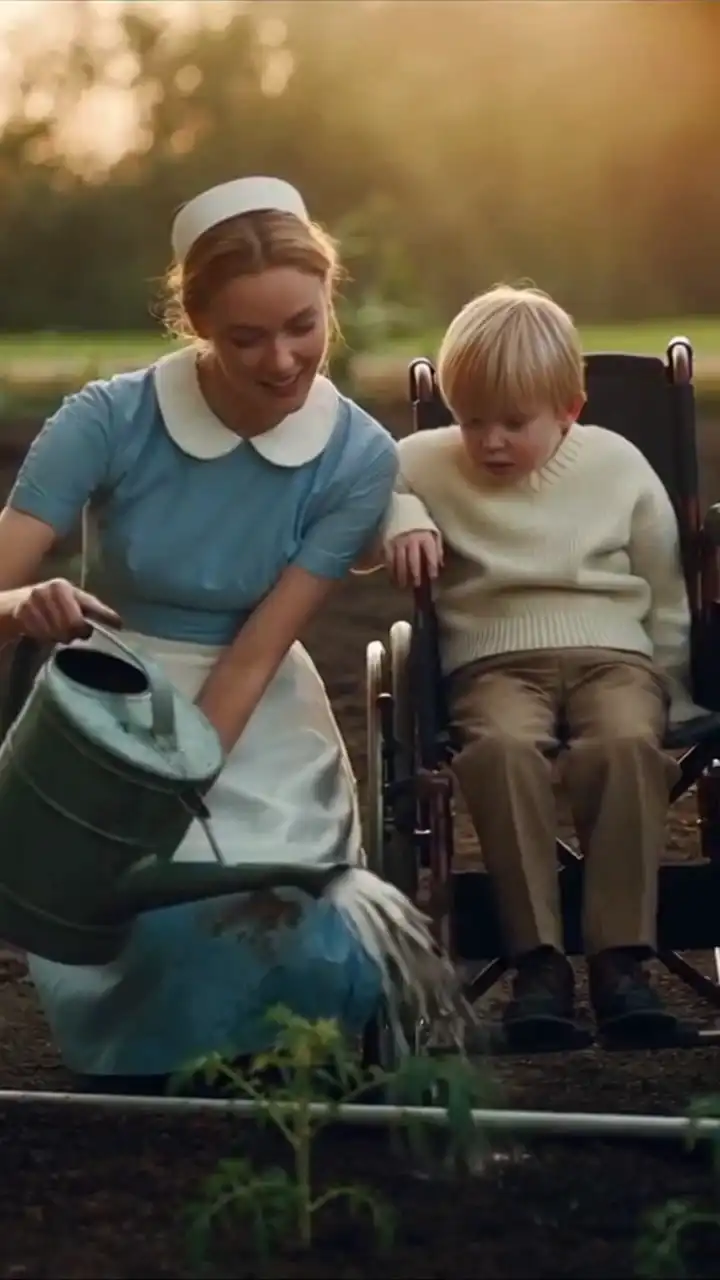
THE RICH MAN’S SON HADN’T TAKEN A STEP IN A YEAR—THEN THE NEW NANNY HANDED HIM A MUDDY WATERING CAN
The second time Noah reached for the watering can, nobody moved to stop him.
Not Ethan.
Not Vanessa.
Not even Mrs. Alvarez, the housekeeper, who had come out to see what the raised voices were about and now stood with one hand over her mouth.
Noah tipped the can badly. Half the water splashed onto the stone. A little ran into the roots of the tomato plant. His arms shook so hard it looked painful.
Lily only slid the pot closer and said, “Good. The plant doesn’t care if it’s pretty.”
Noah looked at the wet dirt.
Then he looked at her.
That alone hit Ethan like a blow. Most people in the house had spent months trying to get Noah to answer, react, or engage. He usually looked through them. Past them. Around them.
But now he was checking Lily’s face, waiting.
For what, Ethan didn’t know.
Permission, maybe. Or maybe just truth.
Vanessa recovered first. “This has gone far enough.”
She stepped down from the terrace in her heels, her voice low and sharp, like the staff wasn’t supposed to hear what came next. “He’s exhausted. He needs proper support, not this performance.”
Lily stood, mud on her hands and all. “It’s not a performance.”
“You are making him crawl in dirt.”
“No,” Lily said. “He’s choosing to move for something that matters.”
Vanessa turned to Ethan. “Say something.”
He should have. Usually he did. Usually he chose order, schedules, the path that looked responsible from the outside.
But his son was still bent over the pot, breathing hard, holding the watering can like it was the first object in the world that belonged to him.
So Ethan said the one thing Vanessa clearly did not expect.
“Let him finish.”
Vanessa stared at him.
Noah watered three plants that morning.
By the end of it, his sleeves were smeared brown, the knees of his pants were ruined, and he was trembling with fatigue. But when Lily reached for the wheelchair handles, he slapped one hand over the armrest and refused to be moved until she let him touch the last tray of seedlings.
That afternoon he slept for two hours, deeper than he had in months.
At dinner, he still didn’t speak. He still didn’t eat much. But when the footman started to clear his plate, Noah put his hand over the fork.
Another tiny refusal. Another choice.
Lily saw it and said nothing.
That became her method.
Not speeches. Not therapy language. Not fake cheerfulness.
She stepped into the dead parts of the day and made them active.
The next morning, she skipped the untouched craft table and took Noah to the potting shed. It smelled like cedar, fertilizer, and damp soil. She gave him seed packets to sort by color. When he dropped them, she didn’t rush to pick them up for him. She sat on the floor and opened them one by one. Marigold. Basil. Snapdragons. Sunflowers. Real things with names and uses. Things that grew if somebody bothered to tend them.
By the third day, Noah was reaching more.
Not dramatically. Not miraculously.
He would brace a hand on the edge of a bench. Shift his weight. Lean toward a tray. Pull a trowel closer. Push a little cart with two pots in it while Lily steadied the side.
Each movement was clumsy and angry, like his body didn’t trust the request. But they were his.
And every movement happened around life, not around treatment.
That was what Ethan began to understand as he watched from too far away.
The specialists had all focused on Noah’s limits. They had measured his reactions, tracked his resistance, adjusted goals, softened language. His grief had become a system. A file. A protected condition.
Lily was the first person who acted like Noah still had a place in the world beyond loss.
The basil needed water. The dead leaves had to be pinched off. The heavy hose dragged awkwardly across the flagstones. The terracotta pots were too big for one child, so she put one side in Noah’s hands and one side in hers and made it a shared job.
She didn’t ask him how he felt every five minutes.
She gave him work.
And the work gave him reason.
Vanessa hated every bit of it.
At first she tried politeness. “I just worry this is confusing for him.”
Then she tried expertise. “Children in fragile states need consistency.”
Then she tried the sharper truth.
One evening, after Lily had taken Noah to wash dirt from under his nails in the mudroom sink, Vanessa cornered Ethan in the study.
“She is getting far too comfortable here.”
Ethan kept signing emails he wasn’t really reading. “She’s helping him.”
“She’s replacing people.”
He looked up then. “What does that mean?”
Vanessa folded her arms. “It means he waits for her. It means he ignores everyone else. It means this house now revolves around a girl your housekeeper brought in from nowhere who talks back to you in the garden.”
Ethan leaned back in his chair. “From nowhere?”
Vanessa realized too late how that sounded, but she didn’t pull it back. “You know what I mean.”
He did know.
And he didn’t like it.
Not because Lily was above criticism. She wasn’t. She broke routine. She fed Noah toast in the kitchen instead of the breakfast room because he seemed calmer there. She let him sit on an old quilt in the orchard and shell peas into a metal bowl because he liked the sound. She turned the polished side door entrance into a trail of dirt twice in one week.
But for the first time since Claire died, Noah was not disappearing.
That should have settled everything.
It didn’t.
Because healing in private is one thing. Healing in front of people is another.
The first explosion came on Sunday.
Vanessa had planned a lunch on the lawn with two friends from the city, the kind of visit designed to make the estate feel alive and orderly again. White umbrellas. Catered food. Linen napkins clipped against the wind.
She had dressed carefully. So had Ethan, though he hadn’t wanted the gathering at all.
Noah was supposed to come out for fifteen minutes, sit in the shaded area, and be seen.
That was how Ethan thought of these things before he admitted it to himself: be seen, endure, retreat.
Lily brought Noah out in simple clothes and sneakers. He looked tense but awake. His hands rested on the wheelchair arms, not clenched in his lap.
Vanessa smiled too brightly. “Doesn’t he look lovely?”
Noah’s face closed at once.
One of Vanessa’s friends leaned down with the pitying voice adults use when they want credit for gentleness. “Hello, sweetheart.”
Noah turned his head away.
Ethan felt the old shame rise—the helplessness, the awkward silence, the social strain that made everybody look at him as if his money should somehow know what to do here.
Then a server passing by tripped over the garden hose stretched near the lower beds.
A tray rattled. A glass cracked. Water sprayed across the grass.
Every adult froze.
Noah didn’t.
His eyes locked onto the hose.
At the far end, one of the new sunflower stakes had fallen sideways.
Lily saw it too.
Before anyone could stop them, she said, “Noah, the flowers.”
It was a plain sentence. Not sugarcoated. Not careful.
Noah shoved both hands against the chair arms.
Vanessa hissed, “Not now.”
But he was already trying.
His body shook with effort as he pushed to stand. He barely made it halfway before his knees buckled. Ethan lurched forward, but Lily lifted one hand toward him without looking away from Noah.
Wait.
It was the hardest thing Ethan had done in months.
Noah tried again.
Not because someone said “good job.” Not because a therapist counted. Not because a room full of adults begged.
Because the flowers were falling, and he had helped plant them.
He got one foot under him.
Then the other.
For one impossible second he was upright, gripping the chair, eyes fixed on the bent stake in the distance.
The lawn went silent.
Then he lurched forward.
One step.
A bad one. Dragged. Uneven.
But his.
Then another, with Lily moving beside him, not carrying him, just close enough to catch disaster if it came.
By the time Ethan reached them, Noah had made three steps across the grass.
Three.
Vanessa’s friends were openly staring.
Vanessa didn’t look embarrassed for Noah.
She looked furious at Lily.
That was the day the house stopped pretending Lily was temporary.
The next morning Vanessa started her real campaign.
She told Ethan that attachment like this was dangerous. That if Lily ever left, Noah would collapse. That a professional boundary had to be restored before things got worse. That the boy was becoming dependent on someone who had no proper place in their life.
Proper place.
The phrase stayed with Ethan all day.
He found Lily in the greenhouse before dinner, helping Noah press basil seeds into starter trays. Warm evening light hit the glass, and the whole room smelled green and alive.
“What if Vanessa is right?” Ethan asked.
Lily didn’t look up. “About which part?”
“That he’s attaching too hard.”
Noah kept pressing holes into the soil with one finger. Careful. Focused.
Lily finally stood. “He’s a child.”
“I know that.”
“He lost his mother. Then everybody turned him into a project because they were scared of making it worse. He doesn’t need less attachment. He needs attachment that doesn’t vanish every time it gets inconvenient or messy.”
Ethan had no answer for that.
Because it was too close to the truth.
Claire had been sick for a long time before she died. During that year, Ethan had thrown money at help because there was always another crisis, another meeting, another impossible task. He had outsourced meals, transport, schedules, bedtime, stories, even comfort sometimes, because he told himself survival required management.
After she died, management was all he had left.
He had made the house quieter and cleaner and safer.
And in doing that, he had made it easier for Noah to disappear inside it.
A week later, the threatened separation came from somewhere Ethan did not expect: himself.
Not because he wanted Lily gone.
Because he got scared by how much she mattered.
A hospital-based pediatric rehab program had finally offered Noah a residential evaluation slot. Four weeks. Intense structure. Elite staff. Every credential in the world.
Old Ethan would have signed immediately.
This time he hesitated.
Vanessa pushed hard. “This is exactly what should happen. You can’t let a garden routine replace medical care.”
He told Lily that evening.
She went still in a way he had never seen before. Not angry. Hurt.
“When?” she asked.
“Monday.”
Noah was on the floor mat in the sunroom sorting seed labels into crooked piles. He heard the word Monday and looked up.
Lily crouched beside him. “You’re going somewhere for a little while.”
His hand flattened over the labels.
“We’ll pack your things,” Ethan said, hating how formal he sounded.
Noah’s breathing changed.
The old panic came fast. His shoulders rose. His body locked. He looked from Ethan to Lily and back again, as if trying to find the break in the sentence that would make it unreal.
Lily did not lie to him. “I’m not going with you.”
That did it.
Noah shoved the seed trays away so hard they scattered across the rug. Then he dragged himself—not backward into shutdown, but forward, toward Lily with a speed Ethan had never seen from him.
It was raw. Desperate. Uncoordinated.
He grabbed her leg with both arms and held on.
Ethan stared.
Noah had resisted touch for months. He tolerated almost no one. Even comfort could make him flinch.
Now he was clinging.
Lily knelt and put one muddy hand on the back of his head. “Hey. Hey. It’s okay.”
Noah made a broken sound.
Then another.
And then, hoarse from disuse, one clear word.
“No.”
Ethan shut his eyes.
His son’s first real word in months was not Mama. Not Dad.
No.
But it was chosen. Directed. Alive.
Vanessa, who had entered behind Ethan and seen the whole thing, said quietly, “This is exactly what I meant. This is unhealthy.”
Ethan turned around so sharply it surprised them both. “No. What was unhealthy was my son not moving, not speaking, and everybody calling it stability.”
Vanessa’s face hardened. “So now the nanny runs your decisions?”
“No,” he said. “My son does.”
That was the beginning of the end for her.
She lasted another forty-eight hours in the house, and every one of them was colder than the last. She complained about dirt in the entryway. About staff boundaries. About emotional confusion. About appearances.
What she could not survive was this simple fact: Noah reached for Lily when he was frightened, and for Ethan when he was tired, and for no one at all when Vanessa came near.
Children ruined polished lies faster than adults did.
By Sunday evening, Vanessa packed her things and left with all the dignity she could salvage. She told Ethan he was making a sentimental mistake.
He didn’t stop her.
Monday morning, Ethan called the rehab program himself and declined the residential placement.
He did not reject treatment altogether. That would have been another form of pride. Instead, for the first time, he built care around Noah’s actual life instead of replacing it. He arranged for a physical therapist willing to work in the garden and on the grounds. He shifted meetings. Canceled travel. Started showing up in old clothes instead of office shoes.
The first time Lily handed him the other side of a heavy planter and said, “Lift with your legs, not your ego,” Mrs. Alvarez nearly dropped a tray laughing.
Noah noticed that too.
And smiled.
The changes after that were not magical. They were earned.
Noah still had hard days. Rainy days could trap him inside his body. Grief still hit him in strange moments—at the piano no one played anymore, at the sight of Claire’s sunhat still hanging in the mudroom, at the smell of the lavender soap she used.
On those days Lily didn’t force brightness on him. She adjusted.
They planted indoors. Sorted bulbs. Washed pots. Made cuttings in jars on the kitchen windowsill. Blew soap bubbles across the back terrace when movement felt too heavy for work and Noah needed a reason to track, reach, and follow.
One windy evening, Lily dipped the wand and sent a string of silver bubbles across the grass. Noah, holding the side table for balance, took two quick steps after one before it popped against his sleeve.
He laughed properly then—head tipped back, startled by himself.
Ethan heard it from the porch and had to sit down.
By early fall, Noah could cross short distances with support. By October he could get from the terrace to the first garden bed with a walker and stubborn concentration. He spoke in small pieces now. Not many words. But real ones.
Water. Again. Mine. Wait. Lily. Dad.
That last one nearly undid Ethan.
The estate changed with him.
The breakfast room stopped being the stage for untouched trays because Noah preferred eating toast at the kitchen island while Lily sliced strawberries and Mrs. Alvarez argued with the cook about cinnamon. The staff relaxed. The silence broke. Doors stayed open. Mud appeared where mud should appear in a house with land and weather and a child in it.
One afternoon, months after Lily’s first day in the dirt, Ethan found Noah and Lily in the lower garden transplanting rosemary. Noah was seated on a low stool, passing clumps of soil with both hands. Carefully. Proudly.
“Too much root exposed,” Lily told him.
Noah frowned and pushed dirt in around the base.
“Better,” she said.
Ethan stood there longer than either of them noticed.
Then Noah looked up and held out a spare trowel toward him.
Not to Lily.
To him.
It was such a small motion. But Ethan understood exactly what it meant.
Join.
So he walked into the bed, sank expensive shoes into soft earth, and took the trowel.
Lily glanced at him with the faintest smile. Not flirtation. Not triumph. Just acknowledgment.
He had finally entered his own son’s life instead of supervising it.
Winter approached. The formal question everyone in the house had avoided finally had to be asked.
What was Lily now?
She had been hired as temporary help through family connection. Then as Noah’s caregiver. Then, somehow, as the center of the house’s recovery.
Ethan asked her to sit with him in the library one evening after Noah had gone to sleep upstairs, worn out from helping cover the rose beds before frost.
He had a contract on the table.
Lily eyed it like it might bite. “That bad?”
“Better than what came before,” he said.
He had created a permanent position for her with a real title, salary, benefits, and full authority over Noah’s daily home routine in coordination with therapy and school support. He had also included tuition funding if she wanted to continue the early childhood education program she had dropped when her own mother got sick years earlier.
Lily read the pages slowly.
Then she looked up. “This is too much.”
“It isn’t enough.”
“For gardening with a sad kid?”
“For bringing my son back into the world,” Ethan said.
She went quiet.
In another kind of story, that would have been the moment for a confession, a kiss, something neat and dramatic.
This was not that moment.
This moment belonged to truth.
“I can stay,” Lily said at last. “But not if this turns into gratitude dressed up as guilt. And not if everybody forgets the point and puts me on some pedestal. Noah still needs his father. Not a replacement.”
Ethan nodded immediately. “I know.”
She held his gaze another second, making sure he really did.
Then she signed.
When spring returned to the estate, the garden looked nothing like it had the year before.
There were crooked beds and overgrown herbs and child-painted markers stuck into the soil at odd angles. The tomatoes leaned. The marigolds were too dense. The path by the greenhouse had never quite recovered from Noah dragging the hose wherever he pleased.
It was imperfect.
It was alive.
On the anniversary of Claire’s death, Ethan expected the day to crush the house again. For months he had dreaded it.
Instead, Lily suggested they plant something for her.
Not a memorial stone. Not a formal tribute.
A pear tree near the lower field, where the ground got full afternoon sun.
Noah insisted on helping. The hole took forever. Ethan dug. Lily steadied the sapling. Noah, red-faced with effort, pushed soil back in with a hand shovel and patted it down with both palms.
When it was done, the three of them stood there in the cool light with dirt on their clothes and wind in the grass.
Noah reached for Lily’s hand with one hand.
For Ethan’s with the other.
And this time he was standing when he did it.
Lily stayed.
Not as a girl passing through the servants’ entrance. Not as a disposable fix. Not as the wrong kind of person in the right kind of house.
She stayed because the child chose life with her in it, and because the father finally learned that care was not something to outsource and inspect from a distance.
People in town still talked, of course. Wealthy houses always generated stories.
They said the Mercers’ new nanny had changed everything.
They were only half right.
She had not just changed the boy.
She had broken the dead order that kept him frozen—and when the house cracked open, they all had to start living inside it for real.
Disclaimer: Mention of any brand or trademark is for identification only and does not imply partnership or endorsement
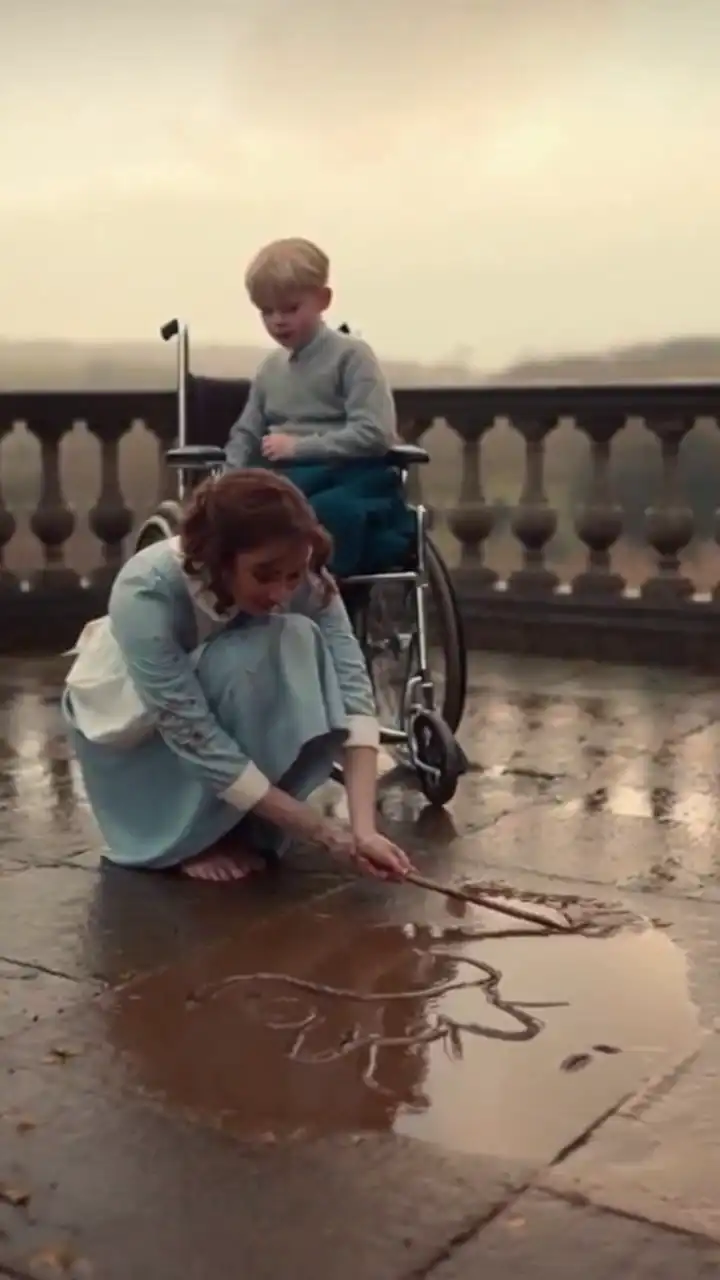
WHEN THE BILLIONAIRE’S SON DRAGGED HIS USELESS LEGS INTO THE MUD FOR THE FIRST TIME, HIS FATHER’S GIRLFRIEND SCREAMED FOR THE NANNY TO STOP
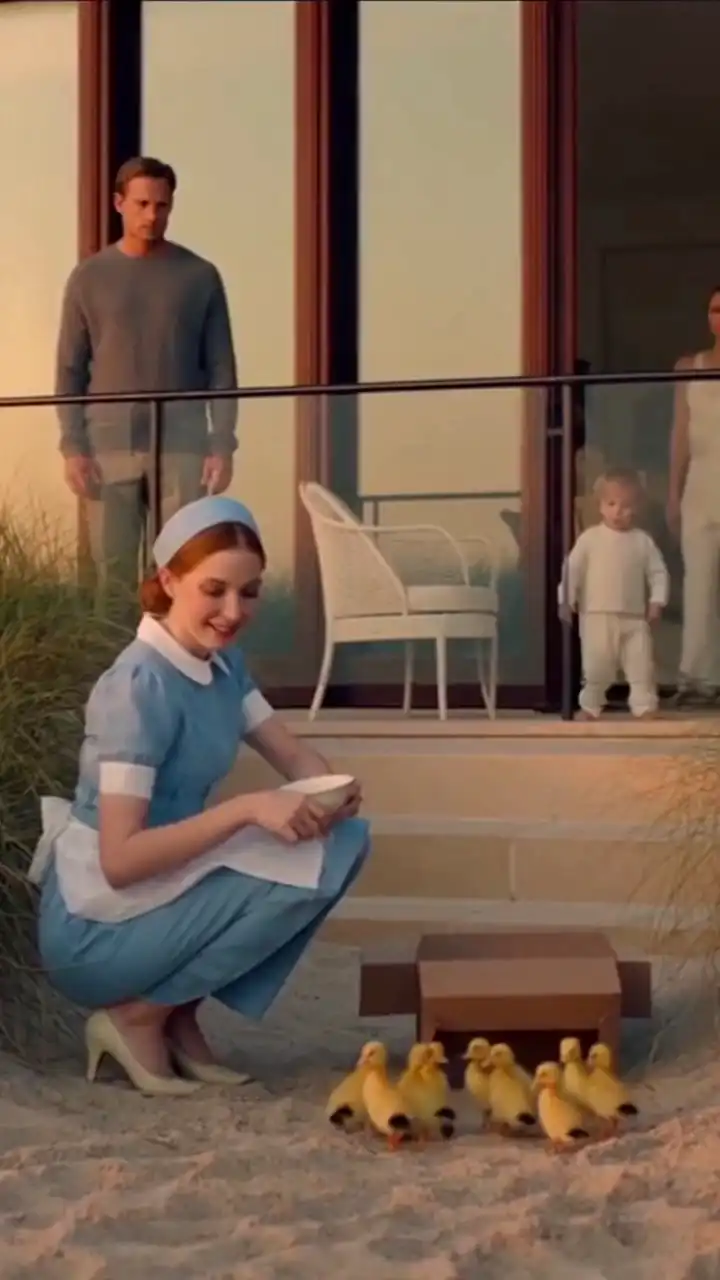
THE NANNY WHO BROUGHT DUCKS TO THE OCEAN HOUSE AND MADE A CHILD WALK TOWARD LIFE

WHEN THE RICHEST MAN ON THE HILL HIRED THE WRONG NANNY, HIS SILENT SON CRAWLED ACROSS THE FLOOR FOR HER